
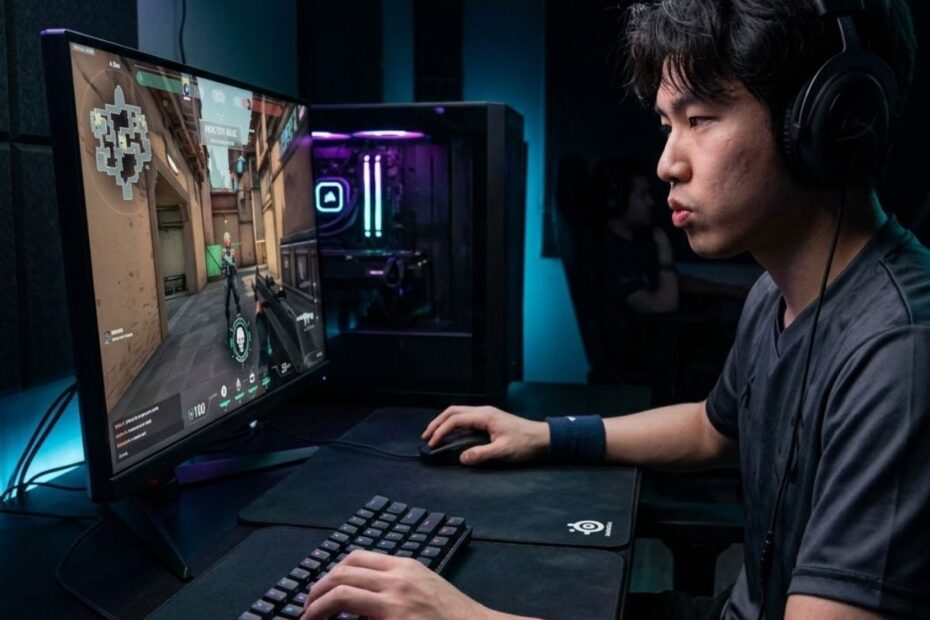
Tactical aiming in Valorant is a method that helps players combine crosshair placement, movement discipline, positioning, timing, and mouse control to win gunfights more consistently. Instead of relying only on fast reactions, tactical aiming focuses on making every duel easier before the enemy appears on screen.
Many Valorant players believe better flick shots are the key to ranking up. In reality, most successful gunfights are won before the shot is fired. When your crosshair is already near the enemy’s head, your movement is stable, and your position limits exposure to a single threat, aiming becomes significantly easier.
This guide explains what tactical aiming in Valorant is, how it works during real gunfights, and how to practice it effectively. You will learn how professional players use crosshair placement, movement discipline, angle control, and positioning to create more consistent ranked performance.
Tactical aiming is not about reacting faster. It is about creating easier shots through better positioning, crosshair placement, and decision-making.
What Tactical Aiming in Valorant Is and Why It Matters
Tactical aiming in Valorant is a method that helps players create easier gunfights through better crosshair placement, movement discipline, positioning, and decision-making. Instead of relying on panic reactions, tactical aiming focuses on preparing for fights before they happen, reducing unnecessary mouse movement and increasing shot consistency.
In simple terms, tactical aiming is about preparing your aim before the fight begins. Players with strong tactical aiming do not wait until an enemy appears before making decisions. They already understand the most likely enemy position, the correct head level, and the safest way to expose themselves during a duel.
This is why tactical aiming often looks calm and controlled. Instead of relying on large emergency flicks, the player’s crosshair is already close to the target. As a result, only small micro-adjustments are needed to secure the kill, making aim more reliable under pressure.
In short, tactical aiming helps players win more consistent gunfights by reducing the amount of aiming correction needed during combat. The better your preparation before contact, the easier your shots become when the fight finally starts.
How Tactical Aiming Differs From Raw Aim in Valorant
Tactical aiming and raw aim are different because tactical aiming helps players create easier gunfights through preparation, while raw aim relies more on reaction speed, flicking, and hand-eye coordination. Both skills are valuable in Valorant, but tactical aiming is often more consistent in ranked matches because it reduces the need for difficult emergency shots.
A player with strong raw aim can win difficult duels through fast reactions and accurate flicks. A player with strong tactical aiming tries to avoid unnecessary difficult duels altogether. This difference becomes increasingly important as player skill levels rise because consistency is usually more valuable than occasional highlight plays.
This does not mean flicking is useless. Flick shots remain important when unexpected situations occur. However, flicking should support your tactical fundamentals rather than replace them. If you want to improve that specific mechanical skill, you can study the Valorant flick shot aiming guide after building stronger tactical habits.
The table below compares the main differences between tactical aiming and other core aiming skills used in Valorant:
| Skill Type | Main Focus | Best Use Case |
|---|---|---|
| Raw Aim | Reaction speed and flick accuracy | Unexpected close fights |
| Tactical Aim | Preparation and positioning | Controlled ranked duels |
| Tracking | Following moving targets | Spray transfers and moving enemies |
| Click Timing | Firing at the correct moment | Precision first bullet fights |
Note: Tactical aiming does not replace raw aim, tracking, or click timing. Instead, it helps players use those mechanical skills more effectively by creating easier and more predictable gunfights.
The best Valorant players combine tactical aiming, raw aim, tracking, and click timing into one complete aiming system. Tactical aiming remains the foundation because it reduces mechanical pressure and makes every other aiming skill easier to execute under stress.
Why Tactical Aiming Wins More Gunfights Than Pure Flicking
Tactical aiming wins more gunfights than pure flicking because it helps players create easier, more predictable duels before the enemy appears. Valorant rewards preparation, first bullet accuracy, and controlled positioning more than constant emergency flicks, making tactical aiming a more reliable approach in ranked matches.
Valorant is not a game where you can sprint around the map and shoot accurately without thinking. Movement errors, poor crosshair placement, and bad peeks get punished quickly. Tactical aiming reduces these mistakes by making your fights cleaner and more predictable.
If you always need a huge flick to win a duel, something before the shot probably went wrong. Your crosshair may have been too low. Your angle may have been too wide. Your movement may have been unstable. Tactical aiming helps fix those problems before they turn into missed shots.
Why Tactical Aiming Is More Consistent Than Pure Flicking in Valorant:
| Pure Flicking | Tactical Aiming |
|---|---|
| Reacts after contact | Prepares before contact |
| Relies on large corrections | Uses small corrections |
| Creates more mechanical pressure | Creates cleaner fight conditions |
| Harder to repeat consistently | Easier to repeat in ranked matches |
| Best for emergencies | Best for most controlled gunfights |
Tactical aiming creates easier fights, while pure flicking reacts to harder ones.
Note: Flicking is still valuable, but tactical aiming reduces the number of emergency flicks you need.
In short, tactical aiming increases consistency by reducing the number of difficult shots you need to take. The easier the duel becomes before contact, the less pressure your mechanics need to handle during the fight.
Why Shorter Crosshair Travel Improves Tactical Aiming in Valorant
Shorter crosshair travel improves tactical aiming because it helps players make smaller, faster, and more accurate corrections during gunfights. When the crosshair starts closer to the enemy’s head, less mouse movement is required, making shots easier to control under pressure.
Good tactical players do not rely on reacting faster in every situation. Instead, they place their crosshair near the most likely enemy position before contact occurs. This reduces the distance the crosshair needs to travel and increases first-shot consistency.
When your crosshair is already near head level, only a small correction is needed to secure the kill. Small corrections are easier to control than large emergency flicks, especially when you are nervous, low on health, or playing an important round.
Players who use lower sensitivity often benefit from this approach because lower sensitivity supports smoother micro-adjustments. If your current aim feels shaky, the guide on low sensitivity aiming in Valorant explains why many tactical FPS players prefer slower and more controlled mouse movement.
First bullet accuracy decides many Valorant fights
First bullet accuracy decides many Valorant fights because the player who lands the first accurate shot often gains an immediate advantage. Tactical aiming supports this by keeping your crosshair ready, your movement controlled, and your timing aligned before firing.
This is why good tactical players often look patient. They do not shoot instantly just because they saw movement. They wait for the clean moment where their crosshair, movement, and timing line up.
That discipline makes a huge difference in ranked games. A calm first bullet often beats a rushed spray, even if the rushed player has faster hands.
The table below compares how tactical aiming and panic flicking affect consistency during Valorant gunfights:
| Panic Flicking | Tactical Aiming |
|---|---|
| Reacts after seeing the enemy | Prepares before contact |
| Needs large mouse movement | Uses small corrections |
| Often shoots while unstable | Stops before firing |
| Depends on highlight mechanics | Depends on repeatable fundamentals |
| Feels inconsistent under pressure | Stays reliable in ranked games |
Tactical aiming prioritizes preparation and control, while panic flicking relies on reactive mechanics.
Note: Tactical aiming creates more repeatable results because it reduces the need for difficult emergency shots.
Flicking can look impressive, but tactical aim wins more ordinary rounds. Ranked climbing is mostly built on winning ordinary rounds again and again.
Crosshair Placement Is the Core of Tactical Aiming
Crosshair placement is the foundation of tactical aiming because it helps players reduce unnecessary mouse movement and create easier gunfights. When the crosshair starts near the enemy’s head, fewer corrections are needed, making shots faster, cleaner, and more consistent.
The image below shows how proper crosshair placement keeps the crosshair closer to the target, reducing the need for large flicks during combat:
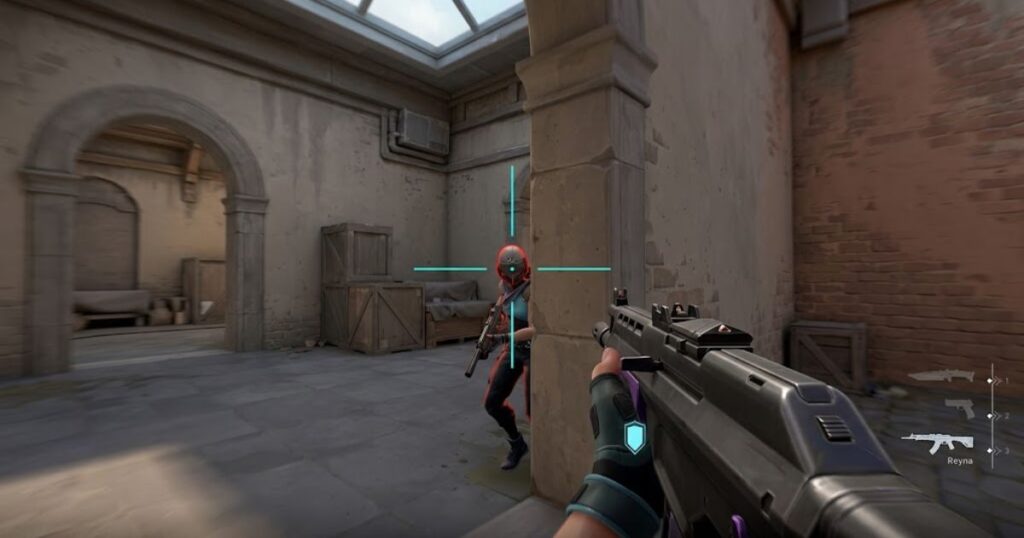
Many players believe they miss because their reaction time is slow. In reality, they often miss because their crosshair was not ready. Poor placement forces the hand to do too much work in too little time.
Good crosshair placement means your crosshair is always positioned near the most likely enemy head location. This habit should continue while walking, rotating, holding, clearing, and retaking.
In short, crosshair placement makes tactical aiming more effective by reducing the amount of correction needed during each duel. The closer your crosshair starts to the target, the easier it becomes to land accurate shots consistently.
Keep your crosshair at head level
Head-level placement removes unnecessary vertical correction. This matters because vertical aiming errors are common among lower-ranked players. They often walk with their crosshair near the floor, then need to flick upward when an enemy appears.
To fix this, use map objects as reference points. Boxes, wall edges, ropes, door frames, and horizontal lines can help you estimate enemy head height. Over time, your crosshair will naturally stay closer to the correct level.
If you want a deeper explanation of this skill, read the guide on crosshair placement in Valorant. It connects directly with tactical aiming because better placement reduces the difficulty of every duel.
Pre-aim common enemy positions
Pre-aiming common enemy positions helps players clear angles more efficiently by placing the crosshair near likely threats before contact occurs. This reduces reaction pressure, shortens crosshair travel distance, and makes tactical gunfights easier to control.
Pre-aiming works best when you understand common defender spots. Every map has predictable angles where players like to hold. Once you learn these positions, your crosshair movement becomes more structured.
Use the following process to pre-aim angles more effectively during Valorant matches:
- Identify the most likely enemy position.
- Place your crosshair before exposing your body.
- Peek with controlled movement.
- Confirm the angle before moving to the next one.
- Reset your crosshair after each cleared position.
This simple process turns chaotic entries into controlled angle clearing. It also helps you avoid wide swings that expose you to too many threats at once.
The table below compares common crosshair mistakes with better tactical aiming habits:
| Bad Crosshair Habit | Better Tactical Habit |
|---|---|
| Aiming at the floor while moving | Keeping crosshair at head level |
| Looking at walls during rotations | Holding likely contact points |
| Clearing angles randomly | Pre-aiming common positions |
| Reacting after contact | Preparing before contact |
In short, pre-aiming common enemy positions helps players reduce reaction pressure and create easier gunfights. The more predictable your crosshair path becomes, the more consistent your tactical aiming will feel.
Movement Discipline Makes Tactical Aiming in Valorant More Consistent
Tactical aiming in Valorant works best when movement is controlled and intentional. Accurate shots depend on stopping before firing, maintaining stable positioning, and avoiding unnecessary movement that reduces first-bullet accuracy.
The image below illustrates how disciplined movement supports accurate crosshair control and cleaner engagements in tactical FPS games:
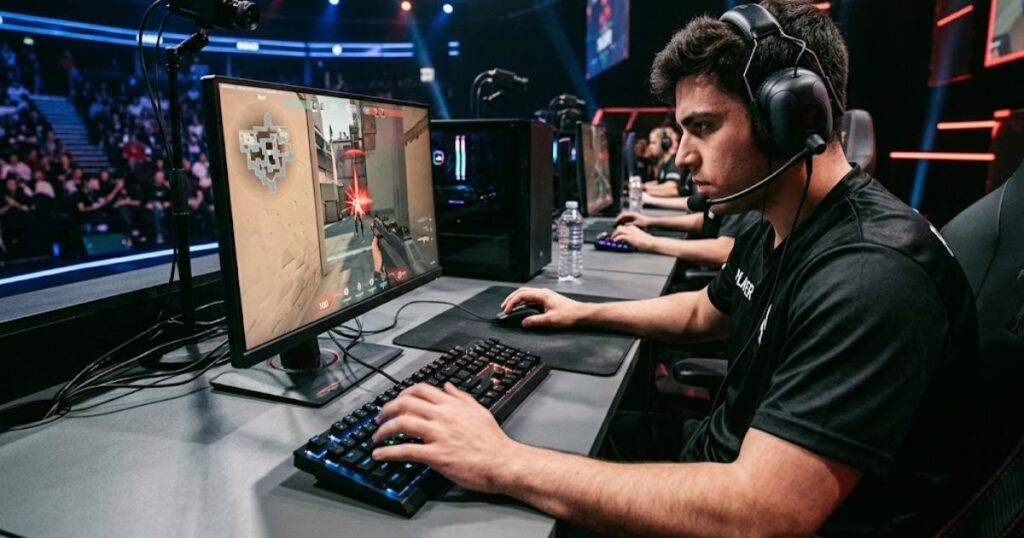
A lot of players miss not because their mouse aim is terrible, but because their movement ruins their accuracy. They shoot too early, strafe randomly, or crouch out of panic. Tactical aiming requires calmer movement decisions.
Common movement mistakes that hurt tactical aiming include:
- Shooting before fully stopping.
- Wide swinging without preparation.
- Panic crouching during fights.
- Constant unnecessary strafing.
- Repositioning without crosshair discipline.
Good movement makes your crosshair easier to control. Bad movement forces your aim to fight against your own body positioning.
Stop before firing
You should stop before firing most accurate shots in Valorant. This sounds basic, but many players still shoot while their movement has not fully settled. The result is bullets that feel random even when the crosshair looks correct.
Practicing stop timing helps your first bullet become more reliable. In real matches, this means peeking, stopping, placing the shot, and then deciding whether to continue the fight or reposition.
This habit is especially important when using rifles like the Vandal or Phantom. First-shot accuracy matters, and poor movement timing can waste a perfect crosshair placement.
How to Avoid Panic Movement During Valorant Duels
Panic movement reduces tactical aiming consistency because unnecessary strafing, crouching, and wide swings make crosshair control less predictable. Staying calm and moving with purpose helps Valorant players maintain accuracy during duels.
Tactical players move with purpose. They strafe to dodge, reposition, or reset the fight. They do not move randomly just because they are scared.
Players can reduce panic movement by following a few simple habits during engagements:
- Stop before shooting.
- Use short, controlled strafes.
- Avoid unnecessary crouch spam.
- Do not wide swing without information.
- Reset behind cover when the fight becomes bad.
Movement should support your aim, not fight against it. Once your movement becomes cleaner, your shots will feel more stable even without changing your sensitivity.
The table below shows common panic movement mistakes, why they hurt accuracy, and practical ways to fix them during Valorant duels:
| Movement Mistake | Why It Hurts Aim | Tactical Fix |
|---|---|---|
| Shooting while moving | Bullets become inaccurate | Stop before firing |
| Panic crouching | Crosshair rhythm breaks | Crouch only with purpose |
| Random strafing | Mouse control becomes messy | Use controlled movement |
| Over-peeking | Multiple enemies can see you | Clear one angle at a time |
Controlled movement improves accuracy, while panic movement often creates unnecessary aiming errors.
Note: Most aiming problems during duels are not caused by mouse control alone. Improving movement discipline often creates faster results than constantly changing sensitivity settings.
Movement discipline is one of the most important foundations of tactical aiming in Valorant. Players who stay calm, gather information, and move deliberately often win more duels than players who rely on raw mouse speed alone.
Angle Control and Positioning Decide Duel Difficulty
Angle control and positioning help players create easier gunfights by reducing exposure to unnecessary threats before contact occurs. In Valorant, strong positioning often matters as much as mechanical aim because it determines how favorable the duel becomes before the first shot is fired.
The image below demonstrates how strong positioning allows a player to isolate a single angle and reduce the number of threats they must manage during a duel:
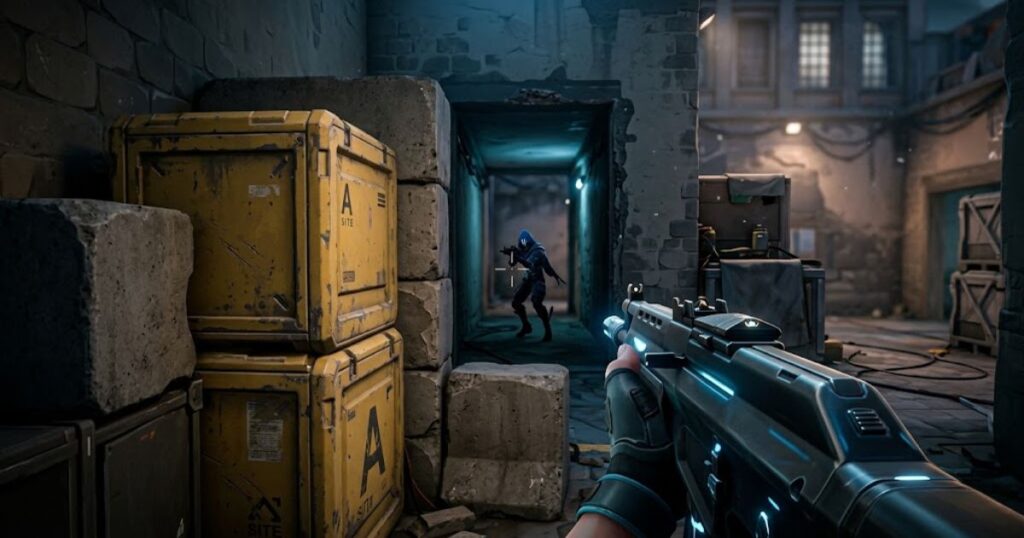
Many Valorant players spend hours practicing aim but still lose winnable duels because of poor positioning. Exposing yourself to multiple angles, standing in predictable locations, or peeking without information often creates unnecessary pressure on your mechanics.
Tactical aiming treats positioning as part of aiming itself. By controlling angles and limiting exposure, players can make gunfights easier before any crosshair adjustment is required.
The table below compares positioning habits that make gunfights easier versus habits that make duels more difficult in Valorant:
| Poor Positioning Habit | Better Tactical Positioning |
|---|---|
| Peeking multiple angles at once | Isolating one angle at a time |
| Standing in predictable spots | Using varied positions |
| Holding wide exposed angles | Using cover effectively |
| Taking fights without information | Gathering information first |
| Overcommitting to bad duels | Repositioning when needed |
Note: Positioning does not replace mechanical aim, but it often determines how difficult the shot will be before the duel begins.
In short, angle control and positioning are core parts of tactical aiming because they shape the difficulty of every gunfight. Players who consistently take favorable fights often need less mechanical effort to secure kills.
Isolate one fight at a time
Isolating fights means exposing yourself to only one enemy angle whenever possible. This makes your aim easier because your brain only needs to process one threat. It also reduces the chance of getting traded instantly.
If you swing into three possible enemy positions at once, your crosshair cannot cover everything. You are forcing yourself into a guessing game. Tactical players avoid this by slicing angles carefully.
This connects closely with Valorant peeker advantage, because timing, angle distance, and exposure all affect who gets the cleaner first shot.
Use cover to control the fight
Cover gives you options. When you hold or peek near cover, you can take a shot and reset if the fight becomes unfavorable. When you stand in the open, you are forced to commit fully.
Tactical aim works best when you always have a next move. A good position should let you shoot, fall back, reposition, or play with a teammate. If your position gives you no escape, it needs to be chosen carefully.
- Hold angles near cover.
- Avoid standing in the open after taking contact.
- Use off-angles when they give you surprise and escape options.
- Do not repeat the same position every round.
- Think about how the enemy will pre-aim you.
Positioning is aim before the shot. If your position is smart, your crosshair has less work to do.
| Weak Position | Strong Tactical Position |
|---|---|
| Exposed to multiple angles | Visible to one main threat |
| No cover nearby | Easy retreat path |
| Predictable common spot | Occasional off-angle |
| Hard to trade with teammates | Supports team spacing |
Better positioning lowers mechanical pressure. You will still need to aim, but you will no longer need miracle shots every round.
Mouse Control Still Matters for Tactical Aiming
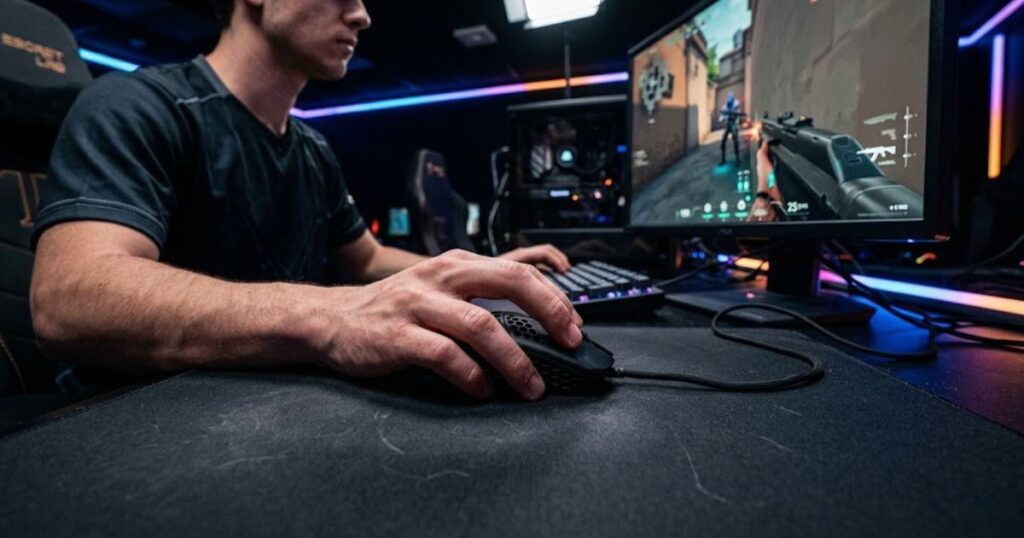
Mouse control still matters because tactical aiming does not remove the need to execute shots. It only makes the shot easier. Once your positioning and crosshair placement create the opportunity, your hand still needs to make a clean correction and click at the right moment.
Valorant aim is often about small adjustments. You rarely need giant mouse movements if your tactical fundamentals are solid. Most fights are won through tiny corrections around head level.
This is where sensitivity, DPI, grip style, and mouse shape become relevant. The right setup will not aim for you, but it can make tactical control easier. Because tactical aiming depends on stable micro-adjustments, your mouse should support control instead of forcing extra tension. If you want to understand the broader setup factors behind aim consistency, the guide on gaming mouse for FPS games explains what matters most when choosing a mouse for tactical shooters.The best grip is the one.
Micro-adjustments matter more than giant flicks
Micro-adjustments are the small mouse movements used to correct your crosshair onto the enemy’s head. Tactical aiming creates more micro-adjustment fights and fewer emergency flick fights. That is exactly what you want.
If you constantly overshoot small corrections, your sensitivity may be too fast or your hand tension may be too high. If you constantly undershoot, your setup may feel too slow or your arm movement may be restricted.
For a stronger baseline, review best DPI for Valorant. DPI is not magic, but a stable DPI and sensitivity combination makes tactical aim easier to repeat.
Grip style affects stability
Your grip style influences how easily you control small movements. Palm grip may feel stable but slower. Claw grip can offer a balance between control and speed. Fingertip grip can feel fast but may require more finger control.
The best grip is the one that lets you aim comfortably without tension. If you are constantly readjusting your hand during matches, your grip may be hurting your consistency. If your mouse feels unstable when holding angles or making small corrections, the issue may not only be your grip. You can also compare shape, weight, sensor feel, and comfort in the best gaming mouse for Valorant guide before changing your aim habits too much.
You can compare grip options in the guide on best grip style for Valorant. This is useful if your aim feels good in practice but unstable during real fights.
| Mouse Control Factor | How It Affects Tactical Aim |
|---|---|
| DPI and sensitivity | Controls micro-adjustment speed |
| Grip style | Affects stability and tension |
| Mouse shape | Influences comfort during long sessions |
| Mouse weight | Changes stopping control and fatigue |
| Mousepad surface | Affects glide, friction, and precision |
Your setup should support your tactical habits. If your gear makes small corrections feel unstable, your aiming fundamentals will feel harder than they need to be.
How Tactical Players Clear Angles Efficiently
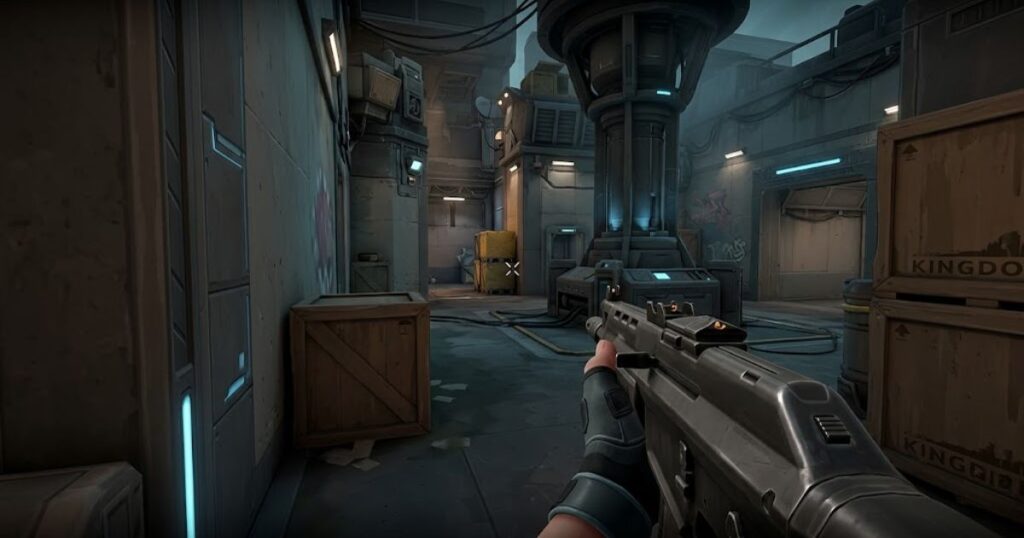
Tactical players clear angles efficiently by breaking dangerous spaces into smaller problems. Instead of swinging into a site and reacting to everything at once, they clear one threat at a time. This keeps crosshair movement controlled and reduces surprise fights.
Angle clearing is one of the most practical tactical aiming skills because it appears in every round. Whether you are attacking, defending, retaking, lurking, or rotating, you constantly need to manage potential enemy positions.
If your angle clearing is messy, your aim will feel messy too. Clean clearing gives your crosshair a logical path to follow.
Slice the angle slowly when information is limited
Slicing the angle means revealing a position gradually instead of wide swinging into the entire area. This helps you isolate enemies and keeps your crosshair ready for each specific threat.
When you have no information, slow angle clearing is usually safer. It lets you control how much of your body is exposed and prevents multiple enemies from seeing you at the same time.
This method is not always the right choice. Sometimes a fast swing is better when you have teammate support, utility, or timing advantage. Tactical aiming is about choosing the correct peek for the situation.
Use smooth crosshair pathing
Smooth crosshair pathing improves tactical aiming because it keeps the crosshair moving through likely enemy positions instead of random areas of the map. This reduces unnecessary corrections, shortens reaction distance, and makes angle clearing more efficient.
When clearing a site, your crosshair should travel through common enemy positions in a logical sequence. Instead of drifting toward walls, floors, or empty space, the crosshair should remain near likely head-level contact points.
If your crosshair movement feels too wrist-heavy or shaky while clearing large spaces, you may benefit from learning arm aiming in Valorant. Arm aiming can help with smoother horizontal movement, especially on lower sensitivities.
Use the following process to build smoother crosshair pathing while clearing angles:
- Start with the closest threat.
- Place your crosshair at head level.
- Reveal the angle gradually.
- Confirm the position is clear.
- Move your crosshair smoothly to the next likely angle.
The table below compares inefficient crosshair pathing habits with more effective tactical clearing techniques:
| Bad Angle Clearing | Efficient Tactical Clearing |
|---|---|
| Wide swinging blindly | Revealing space gradually |
| Checking too many angles at once | Clearing one threat at a time |
| Crosshair drifting randomly | Following likely head positions |
| Ignoring cover | Staying near reset options |
Note: Good crosshair pathing reduces unnecessary movement and helps players transition between angles more consistently.
Efficient clearing makes your aim feel calmer. You are no longer surprised by every enemy because your crosshair is already following the correct logic.
How to Practice Tactical Aiming in Valorant
The best way to practice tactical aiming is to use real game situations with clear goals. Aim trainers can support your mechanics, but tactical aiming needs map awareness, movement timing, and decision-making. Those skills develop best inside Valorant itself.
You do not need complicated routines to improve. You need focused repetition. Every practice session should target one specific weakness instead of randomly chasing kills.
If you practice tactical aim correctly, your ranked games will start feeling more controlled. You will enter fights with clearer purpose and fewer panic reactions.
Use Deathmatch for crosshair discipline
Deathmatch helps improve tactical aiming when it is used to build consistent habits rather than chase kills or leaderboard positions. Practicing crosshair placement, movement discipline, and angle clearing in Deathmatch can create skills that transfer directly into ranked matches.
Focus on keeping your crosshair at head level, stopping before shooting, and clearing angles properly. If you catch yourself staring at the ground or panic spraying, slow down and reset the habit.
Try using each Deathmatch session to focus on one tactical aiming habit at a time:
- Play one Deathmatch focusing only on head-level placement.
- Play one Deathmatch focusing only on stopping before shooting.
- Play one Deathmatch focusing only on clearing angles cleanly.
- Ignore the scoreboard during practice rounds.
In short, Deathmatch is one of the most effective ways to practice tactical aiming because it provides frequent gunfight repetitions without ranked pressure. Consistent habits developed in practice modes often carry directly into competitive matches.
Review your own gameplay
Reviewing your own gameplay helps improve tactical aiming because it reveals mistakes that are difficult to notice during live matches. Watching replays allows players to identify positioning errors, poor peeks, crosshair placement mistakes, and movement habits that reduce consistency.
You do not need to analyze every second of a match. Start by reviewing your deaths and asking what happened before the duel began. Many lost fights are caused by poor preparation, positioning, or decision-making rather than mechanical aim alone.
Use the following review process to identify tactical aiming mistakes more effectively:
- Watch each death without blaming aim first.
- Check your crosshair height before contact.
- Check whether you exposed yourself to multiple angles.
- Check whether you stopped before shooting.
- Write one mistake to fix in the next match.
The table below compares common practice methods and the specific tactical aiming skills they help develop:
| Practice Method | Main Benefit | Best Focus |
|---|---|---|
| Deathmatch | Builds repeatable gunfight habits | Crosshair placement and movement |
| Custom games | Improves map knowledge | Pre-aim spots and angle routes |
| VOD review | Reveals tactical mistakes | Deaths and bad peeks |
| Aim trainers | Supports mechanics | Micro-adjustments and click timing |
| Ranked matches | Tests pressure control | Decision-making under stress |
Different practice methods improve different aspects of tactical aiming and gunfight consistency.
Note: VOD review is often the fastest way to identify tactical mistakes because it exposes the decisions that happened before the duel started.
In short, gameplay review turns mistakes into actionable improvements by showing exactly what needs to be fixed. Tactical aiming becomes more consistent when players understand not only how they died, but why the duel became difficult in the first place.
Common Tactical Aiming Mistakes That Hold Players Back
Most tactical aiming mistakes come from impatience, poor crosshair discipline, and bad fight selection. These mistakes make your aim look worse than it actually is. Once you fix them, your mechanical skill often feels more consistent immediately.
The frustrating part is that these mistakes can become invisible during ranked games. You may think you lost because the enemy had better aim, but the real problem started before the duel.
Learning to identify these patterns is one of the fastest ways to improve.
Over-peeking too many angles
Over-peeking happens when you expose yourself to more space than you can control. This is one of the most common tactical aiming mistakes. Your crosshair can only hold one position at a time, so exposing yourself to multiple angles creates unnecessary risk.
To fix this, slow down your clears and use cover better. Only reveal the next angle when your crosshair is ready. This makes fights easier and reduces panic reactions.
Changing sensitivity too often
Changing sensitivity too often makes tactical consistency harder because your hand never gets enough time to adapt. Many players blame settings when the real issue is crosshair placement or movement discipline.
Before changing sensitivity again, review your gameplay. If your crosshair is constantly too low or your peeks are too wide, settings are probably not the main problem.
Relying on crouch spray too early
Relying on crouch spray too early can hurt tactical aiming because it removes movement options and commits you to a fight before enough information is available. While crouching has situational value, many Valorant players use it automatically instead of making a deliberate decision.
Use crouching with purpose rather than as a panic reaction. In many situations, controlled strafing, accurate first bullets, and repositioning create more consistent results than immediately committing to a crouch spray.
The table below highlights common tactical aiming mistakes, why they create problems, and the habits that help correct them:
| Mistake | Why It Hurts | Better Habit |
|---|---|---|
| Over-peeking | Creates too many threats | Clear one angle at a time |
| Crosshair too low | Forces upward flicks | Maintain head level |
| Random crouching | Removes movement options | Crouch only with intention |
| Constant sensitivity changes | Breaks adaptation | Keep settings stable |
| Panic spraying | Reduces first bullet discipline | Reset and fire controlled shots |
Note: Small improvements in positioning, movement, and crosshair discipline often have a bigger impact than mechanical aim alone.
In short, avoiding common tactical aiming mistakes makes gunfights easier to manage and more consistent over time. Cleaner habits reduce unnecessary pressure and allow mechanical skill to work more effectively during real matches.
FAQ About Tactical Aiming in Valorant
Tactical aiming can feel broad because it includes aim, movement, positioning, and decision-making. These questions answer the most common problems players face when trying to build tactical consistency.
What is tactical aiming in Valorant?
Tactical aiming in Valorant is the skill of using crosshair placement, movement control, positioning, and prediction to create easier gunfights. It helps you win more duels without relying only on raw flick speed.
Is tactical aiming more important than flick aim?
For most players, tactical aiming is more important because it improves consistency. Flick aim is useful in emergencies, but tactical aim prevents many emergencies from happening.
How do I improve tactical aiming?
You improve tactical aiming by practicing head-level crosshair placement, clearing angles one at a time, stopping before shooting, and reviewing your deaths. Focus on one habit at a time instead of trying to fix everything at once.
Does sensitivity affect tactical aiming?
Yes, sensitivity affects tactical aiming because it changes how easily you can make small corrections. A stable sensitivity helps you control micro-adjustments during head-level fights.
Why do I lose fights even when my aim feels good?
You may be losing because of bad positioning, poor movement timing, or weak crosshair placement. Aim can feel good in practice but still fail if your fight setup is poor.
Should I practice tactical aim in Deathmatch?
Yes, Deathmatch is useful if you practice with a clear goal. Focus on crosshair placement, stopping before shooting, and clean angle clearing instead of only trying to top the scoreboard.
What is the biggest tactical aiming mistake?
The biggest mistake is exposing yourself to too many angles at once. This forces your aim to cover more space than it realistically can.
Does crosshair placement matter more than reaction time?
In many Valorant fights, yes. Good crosshair placement reduces the amount of reaction needed because your aim is already close to the target.
Can better positioning make my aim better?
Better positioning can make your aim feel better because it creates easier shots. You still need mechanics, but you no longer need to make difficult corrections every fight.
How long does tactical aim take to improve?
Most players can notice improvement within a few weeks if they practice consistently. The fastest improvements usually come from fixing crosshair height, movement timing, and over-peeking.
Do I need a lightweight mouse for tactical aiming?
You do not need one, but a comfortable mouse can help with control and fatigue. The best mouse is the one that lets you make stable micro-adjustments without tension. You do not need one, but a comfortable mouse can help with control and fatigue. The best mouse is the one that lets you make stable micro-adjustments without tension. If you want more options beyond Valorant-specific picks, you can check the top best gaming mouse for FPS games in 2026 list.
Is tactical aiming useful for beginners?
Yes, tactical aiming is very useful for beginners because it builds good habits early. Beginners who learn crosshair placement and movement discipline often improve faster than players who only practice flicks.
Final Thoughts on Tactical Aiming in Valorant
Tactical aiming in Valorant is about making better fights before you need better shots. Instead of depending on panic flicks, you use crosshair placement, movement discipline, positioning, and angle control to create easier duels. This makes your aim more reliable under pressure.
The most important lesson is simple. Your aim does not start when the enemy appears. It starts when you choose where to stand, how to peek, where to place your crosshair, and when to fire. Every decision before the duel affects how difficult the shot becomes.
If you want to improve quickly, do not chase every advanced technique at once. Start with head-level crosshair placement, controlled movement, and cleaner angle clearing. These fundamentals are not flashy, but they win rounds consistently.
As your tactical aiming improves, your mechanical aim will also feel smoother. You will need fewer emergency flicks, fewer panic sprays, and fewer lucky shots. Your fights will feel calmer because you are preparing them better.
Thank you for reading this guide on tactical aiming in Valorant. Hope it helps you build cleaner fundamentals, smarter gunfights, and more consistent ranked performance.