
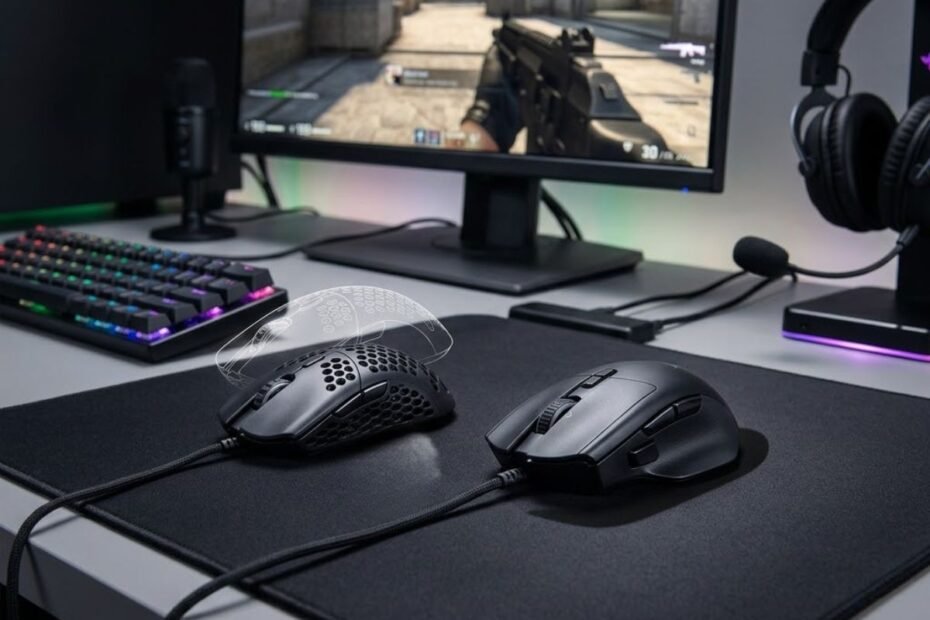
Choosing between a lightweight vs heavy gaming mouse is not just about picking the lighter or heavier option. It is about finding the mouse weight that matches your aim style, sensitivity, grip comfort, and the FPS games you play most often.
For most competitive FPS players, a lightweight gaming mouse is usually the better choice because it helps with faster flicks, easier micro-adjustments, and lower fatigue during long sessions. A heavy gaming mouse can still make sense if you prefer a more stable, planted feel or use the same mouse for both gaming and productivity.
The goal is not to say every player must use the lightest mouse possible. The better question is whether your current mouse weight helps you control your aim or forces your hand to fight against the mouse.
What Is the Real Difference Between Lightweight and Heavy Gaming Mice?
Lightweight and heavy gaming mice are different because they change how much effort it takes to start, stop, and control mouse movement. This helps explain why mouse weight affects flick speed, tracking stability, fatigue, and overall comfort in FPS games.
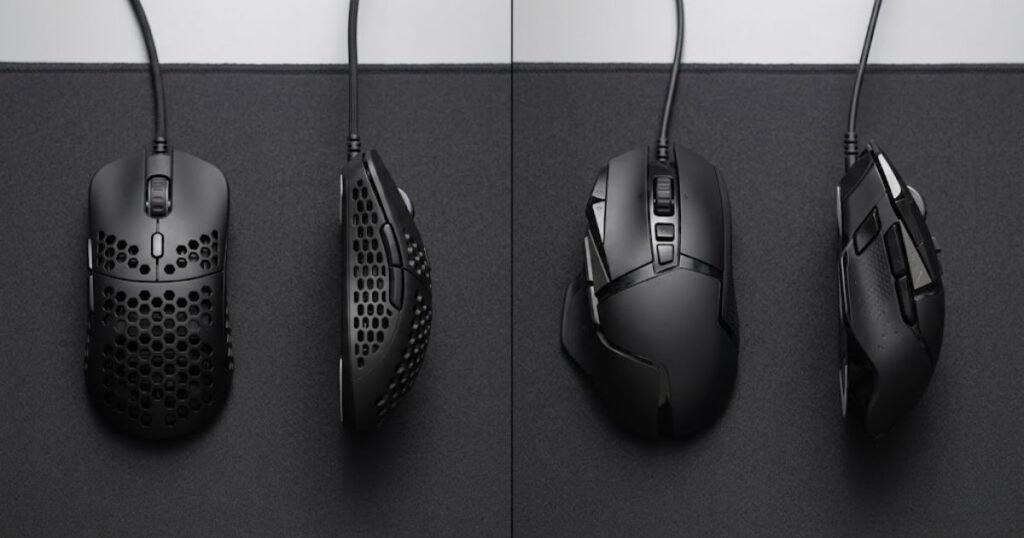
A lightweight mouse usually feels easier to move because it needs less physical effort to accelerate across the mouse pad. A heavy mouse usually feels more planted because the extra mass creates more momentum and resistance during movement.
The comparison below shows how lightweight and heavy gaming mice differ in physical design and movement feel:
This difference matters most in FPS games because aim is built from repeated small decisions. Every flick, correction, spray transfer, and tracking movement becomes slightly easier or harder depending on how naturally the mouse responds to your hand.
How Gaming Mouse Weight Categories Are Commonly Defined
Gaming mouse weight categories are commonly defined by total mouse weight in grams. This helps players compare mice more clearly instead of relying only on vague labels like light, medium, or heavy.
There is no single universal rule that every brand follows, but most FPS mouse discussions use practical weight ranges. These ranges are useful because they help players understand where a mouse fits before testing it in-game.
The table below explains common gaming mouse weight categories used by many FPS players when comparing mouse feel:
| Mouse Weight Category | Common Weight Range | Typical FPS Feel |
|---|---|---|
| Ultra Lightweight | Under 60g | Very fast, very easy to move, may feel too light for some players |
| Lightweight | 60g to 80g | Fast, controlled, and comfortable for most competitive FPS players |
| Medium Weight | 80g to 100g | Balanced feel with more stability but less effortless movement |
| Heavy | Over 100g | Stable and planted, but harder to move quickly for FPS aiming |
For FPS players, the safest starting point is usually the lightweight range because it gives enough speed without feeling uncontrollable for most users.
Why Mouse Weight Changes How a Mouse Feels During Gameplay
Mouse weight changes gameplay feel because it affects how much force your hand needs to move and stop the mouse. This helps explain why two mice with the same sensor and DPI can still feel completely different in a match.
A lighter mouse usually makes quick direction changes feel easier. This can help when you need to clear angles, adjust to a moving target, or recover after an overflick.
A heavier mouse usually makes movement feel slower and more grounded. Some players like that because it can reduce the feeling of shaky aim, especially if they use higher sensitivity.
The important point is that weight affects control style, not just speed. A mouse can be technically excellent but still feel wrong if its weight does not match how your hand naturally aims.
Why Mouse Weight Has Become a Major Buying Factor for FPS Players
Mouse weight has become a major buying factor because competitive FPS players want gear that reduces effort without reducing control. This helps players stay consistent across long sessions instead of fighting fatigue or sluggish movement.
Older gaming mice often focused on extra buttons, aggressive shapes, and heavier builds. Modern FPS mice focus more on clean shapes, lower weight, reliable sensors, and faster movement because those features matter more during aim-heavy gameplay.
This shift does not mean heavy mice are useless. It means FPS players now care more about how efficiently a mouse supports aiming instead of judging quality by size, bulk, or extra features.
The real difference between lightweight and heavy gaming mice comes down to movement efficiency. Once you understand that, the rest of the buying decision becomes much easier.
Why Lightweight Gaming Mice Have Become the Standard for Competitive FPS Players
Lightweight gaming mice have become the standard for competitive FPS players because they help reduce movement effort, improve quick corrections, and lower fatigue during long gaming sessions. This helps players stay more consistent when every small aim adjustment matters.
In FPS games, most aiming mistakes are not caused by one huge movement. They happen when a player is slightly late, slightly overcorrects, or cannot stop the mouse cleanly after a fast flick.
The image below illustrates why lightweight gaming mice have become common in competitive FPS gaming:
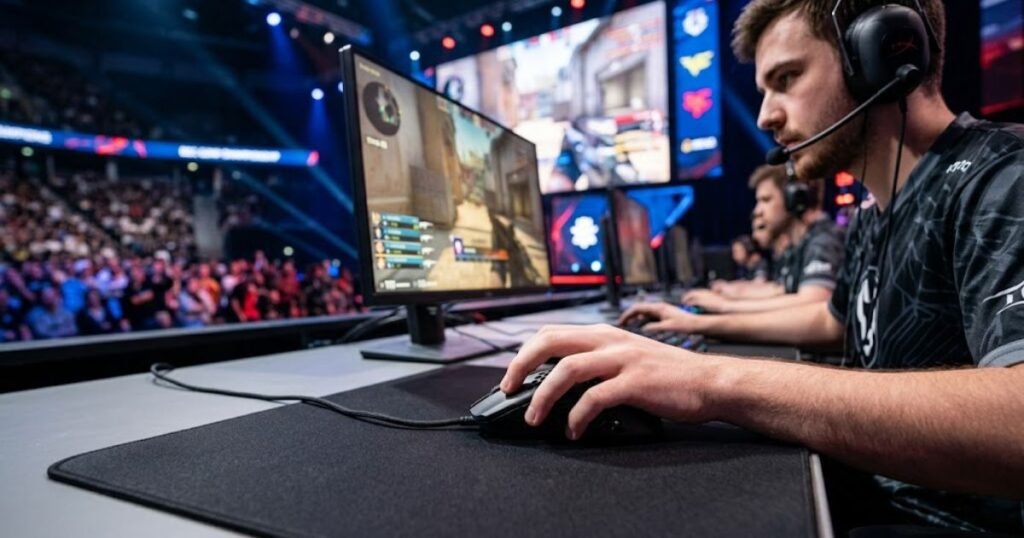
A lighter mouse does not automatically make someone accurate. It simply gives the hand less resistance to fight, which can make good mechanics easier to repeat.
How Lightweight Mice Improve Flick Shot Speed
Lightweight mice improve flick shot speed by making it easier to accelerate the mouse quickly toward a target. This helps FPS players react faster when they need to snap from one angle to another.
A flick shot depends on fast movement, clean stopping, and fast correction if the first movement is not perfect. When the mouse is lighter, the initial movement usually feels less delayed because the hand does not need to push as much weight.
This is especially useful in tactical FPS games where the first accurate shot often matters more than spraying. If your mouse feels slow to start, your crosshair may arrive late even when your reaction was correct.
Lightweight mice support flicking best when they are paired with a shape you can control. Low weight helps speed, but shape still decides whether you can stop the mouse confidently.
Why Lightweight Mice Make Micro Adjustments Easier
Lightweight mice make micro adjustments easier because small corrections require less physical pressure from your fingers, wrist, or arm. This helps players fine-tune crosshair placement without feeling like the mouse is resisting them.
Micro adjustments are the tiny movements you make after your crosshair is close to the target but not perfectly lined up. These movements matter in Valorant, CS2, Apex Legends, and almost every aim-heavy FPS game.
If the mouse is too heavy for your hand, small corrections can feel delayed or forced. That can lead to overshooting, undershooting, or hesitating when you need to make a clean final adjustment.
For a deeper breakdown of this mouse category, you can read our guide on what makes a lightweight gaming mouse different from a regular gaming mouse.
Micro adjustment quality is one of the biggest reasons lightweight mice became popular. They make small aim corrections feel more natural without forcing the player to use extra effort.
How Lower Weight Helps Reduce Fatigue During Long Gaming Sessions
Lower weight helps reduce fatigue because your hand, wrist, and arm spend less energy moving the mouse repeatedly. This helps FPS players maintain cleaner aim during long practice sessions, ranked matches, or scrims.
Fatigue does not always feel obvious at first. It can show up as slower reactions, shakier tracking, weaker stopping control, or inconsistent crosshair placement after playing for a while.
A lighter mouse can reduce that physical load, especially for low-sensitivity players who move the mouse across a larger area of the mouse pad. However, the most suitable weight still depends on how you aim, how far you move the mouse, and how you prefer to control it during long sessions. Those factors all matter when choosing the right mouse weight.
A lighter mouse can reduce that physical load, especially for low-sensitivity players who move the mouse across a larger area of the mouse pad. Less weight means every swipe costs slightly less energy.
The benefits below explain why lightweight gaming mice are commonly preferred by competitive FPS players:
- Faster movement: A lighter mouse usually feels easier to accelerate during flicks and quick angle changes.
- Easier corrections: Small crosshair adjustments often feel smoother because less force is needed.
- Lower fatigue: Long sessions can feel more comfortable because the hand does not need to move as much weight.
- Better recovery: Players can correct missed flicks or tracking errors with less physical resistance.
- Cleaner low-sensitivity play: Large arm movements usually feel more manageable with a lighter mouse.
These advantages explain why lightweight mice dominate many competitive FPS setups. They do not replace aim training, but they can make good aiming habits easier to repeat.
For most FPS players, lightweight mice are popular because they reduce unnecessary effort. That makes them a strong default choice before considering heavier options.
What Advantages Heavy Gaming Mice Still Offer in Modern Gaming
Heavy gaming mice still offer advantages because some players prefer a more stable, deliberate, and controlled movement style. While lightweight mice dominate competitive FPS gaming, heavier mice continue to appeal to users who value consistency, comfort, and a planted feel.
The example below highlights the larger and more substantial feel that some players prefer:
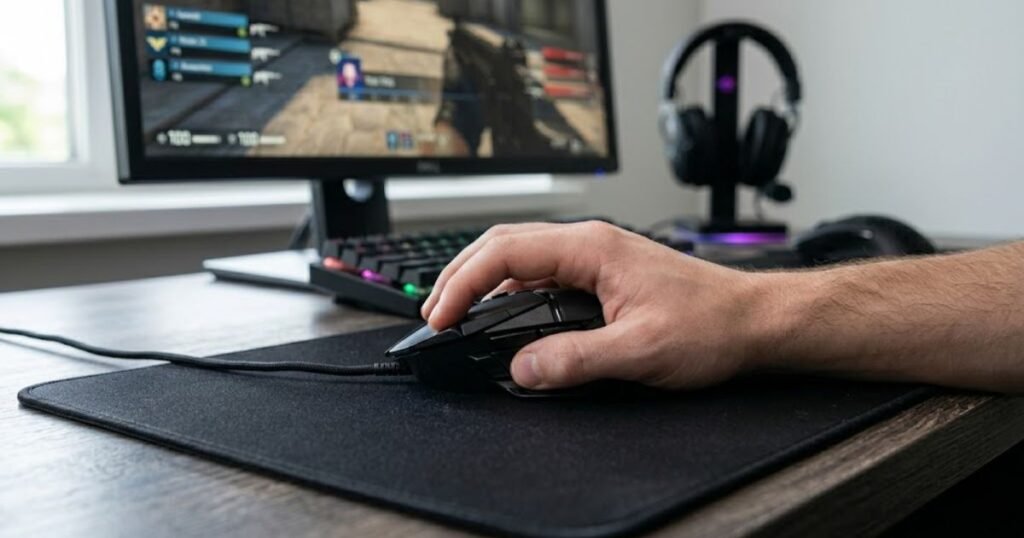
The discussion around mouse weight often becomes overly simplified. Many players assume lighter automatically means better, but mouse preference is highly individual. A mouse that feels perfect for one player can feel uncomfortable or difficult to control for another.
The goal is not to determine whether heavy mice are superior. Instead, it is important to understand the situations where additional weight can provide genuine benefits.
Why Heavy Mice Can Feel More Stable During Tracking
Heavy mice can feel more stable during tracking because additional weight creates greater momentum during continuous movement. This helps some players maintain smoother cursor paths when following moving targets.
Tracking requires a player to continuously follow a target instead of repeatedly stopping and restarting the mouse. In these situations, some users find that a heavier mouse reduces the sensation of overreacting to small hand movements.
This preference is often psychological as much as physical. Some players simply trust their aim more when the mouse feels firmly connected to the surface rather than extremely light and agile.
For these players, stability can feel more important than maximum movement speed.
How Added Weight Creates a Different Sense of Control
Added weight creates a different sense of control because the mouse resists sudden movement changes more than a lightweight model. This can make aiming feel calmer and more deliberate for certain users.
A heavier mouse often encourages slower, more measured movements. Some players enjoy this feeling because it reduces the perception of jittery or nervous aim, especially when using higher sensitivity settings.
This does not mean heavier mice are objectively more accurate. Instead, they can create a movement profile that feels more predictable for specific aiming habits.
Players who enjoy this type of movement often point to the unique advantages of heavy gaming mice when explaining their preference despite modern lightweight trends.
Ultimately, control is partly mechanical and partly psychological. Confidence in your mouse can influence performance just as much as technical specifications.
Why Some Players Prefer Heavy Mice for Gaming and Productivity
Some players prefer heavy mice because they split their time between gaming, work, content creation, and general computer use. A heavier mouse can feel comfortable when precision cursor movement matters outside gaming.
Many gaming mice today are designed primarily for FPS performance. However, not every user spends all day playing competitive shooters. Some people value versatility more than maximizing every competitive advantage.
A heavier mouse can feel more substantial when navigating large displays, editing content, managing spreadsheets, or performing detailed productivity tasks.
The advantages below explain why some users still prefer heavier gaming mice:
- Movement stability: Additional weight can make tracking feel smoother for some users.
- Deliberate control: Slower movement can create a stronger sense of precision.
- Productivity comfort: Some office and creative tasks feel better with a more substantial mouse.
- Reduced overcorrection: Extra momentum may help certain players avoid overly aggressive adjustments.
- Personal preference: Some users simply enjoy the feel of a heavier mouse regardless of trends.
These benefits explain why heavy gaming mice continue to exist even though lightweight models dominate competitive FPS discussions.
The most important lesson is that mouse weight should support your preferred movement style rather than force you into someone else’s definition of optimal performance.
How Mouse Weight Affects Different FPS Aiming Styles and Sensitivity Settings
The ideal mouse weight depends heavily on aiming style and sensitivity settings because different players move the mouse in different ways. A weight that feels perfect at one sensitivity may feel uncomfortable at another.
Many mouse weight discussions ignore this factor. Instead of asking whether a mouse is light or heavy, FPS players should ask whether the weight complements how they actually aim.
Sensitivity, movement range, and aiming mechanics all influence which weight category feels most natural.
Why Low-Sensitivity FPS Players Usually Prefer Lightweight Mice
Low-sensitivity FPS players usually prefer lightweight mice because they move the mouse much farther across the mouse pad. Lower weight helps reduce physical effort during these large movements.
Players using low sensitivity often rely heavily on arm aiming. Every flick, correction, and target transition requires significantly more travel distance compared to high-sensitivity setups.
When a mouse becomes heavier, those repeated movements require more energy throughout a gaming session. Over time, this can contribute to fatigue and slower movement efficiency.
This is one reason why lightweight mice have become extremely common among competitive Valorant and CS2 players who use lower sensitivity ranges.
For low-sensitivity users, reduced effort often creates a more sustainable aiming experience during long sessions.
How High-Sensitivity Players May Benefit From Different Weight Ranges
High-sensitivity players may benefit from different weight ranges because they use smaller movements and rely less on large arm swipes. This allows them to tolerate a wider range of mouse weights.
Since movement distances are shorter, additional mouse weight does not create the same level of physical demand that low-sensitivity players experience.
Some high-sensitivity users actually prefer medium-weight mice because they enjoy the additional stability and controlled feel that comes with slightly more mass.
This does not automatically make heavier mice better for high sensitivity. It simply means weight becomes a less critical factor than it is for low-sensitivity setups.
The relationship between sensitivity and weight is about movement efficiency rather than strict rules.
How Mouse Weight Interacts With Arm Aiming and Wrist Aiming
Mouse weight interacts differently with arm aiming and wrist aiming because these techniques use different muscle groups and movement patterns. Understanding this relationship can help players choose a more suitable mouse.
Arm aiming relies on larger movements generated by the forearm and shoulder. Since these movements cover greater distances, lighter mice often feel easier to control and less tiring.
Wrist aiming relies on shorter, more compact movements generated by the wrist and fingers. Because movement distances are smaller, weight often has a reduced impact on endurance.
Neither aiming style is universally better. The key is understanding how your preferred movement method influences the amount of weight you can comfortably control.
Your aiming technique is only one part of the decision. Grip style, sensitivity, preferred FPS titles, and movement habits all work together to determine the ideal mouse weight. If you want a more practical framework, see our guide on choosing the right mouse weight based on your playstyle.
The table below explains common mouse weight recommendations based on aiming style and sensitivity preferences:
| Player Type | Recommended Weight Range | Main Reason |
|---|---|---|
| Low-Sensitivity Arm Aimer | Lightweight | Reduces effort during large movements |
| Medium-Sensitivity Hybrid Player | Lightweight to Medium | Balances speed and stability |
| High-Sensitivity Wrist Aimer | Medium Weight | Can benefit from additional control |
| Tactical FPS Player | Lightweight | Supports rapid target transitions |
| Mixed Gaming and Productivity User | Medium to Heavy | Provides versatility across tasks |
Choosing a mouse weight that matches your aiming style is often more valuable than blindly following current trends.
Lightweight vs Heavy Gaming Mouse for Valorant, CS2, Apex Legends, and Other FPS Games
Different FPS games place different demands on aiming mechanics, movement patterns, and target engagement. This helps explain why the ideal mouse weight can vary depending on the games you play most often.
A mouse weight that feels excellent in one FPS title may feel less suitable in another. The reason is not the game itself, but the type of aiming challenges the game creates throughout a match.
The image below represents how different FPS genres place different demands on mouse movement:
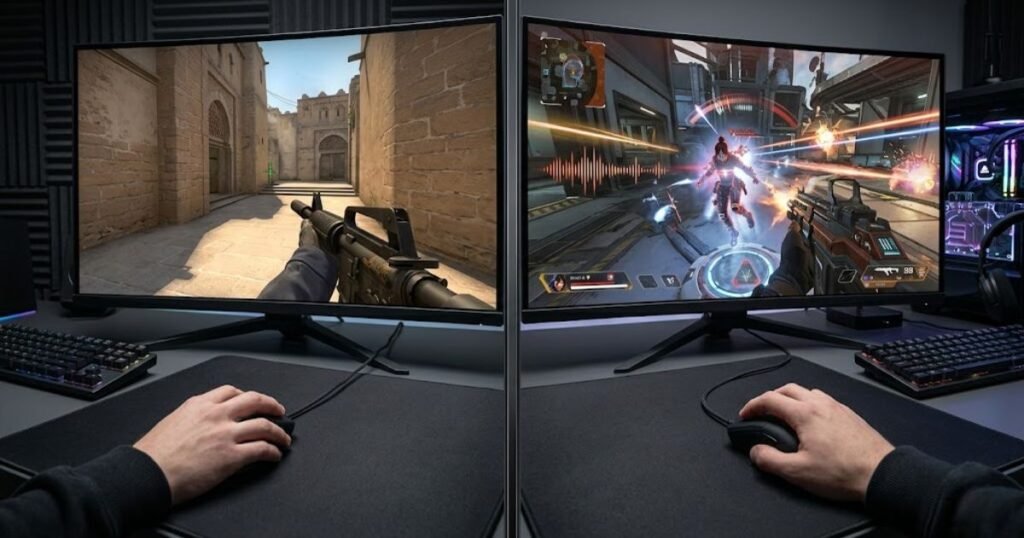
Understanding these differences allows players to choose a mouse weight based on gameplay requirements instead of relying on general recommendations.
Which Mouse Weight Works Best for Tactical FPS Games
Lightweight gaming mice usually work best for tactical FPS games because these titles reward fast target acquisition, precise crosshair placement, and rapid directional changes.
Games such as Valorant and Counter-Strike 2 place a strong emphasis on first-shot accuracy. Players frequently clear angles, peek corners, and reposition their crosshair between multiple potential threats.
Because engagements often end within a fraction of a second, many competitive players prefer equipment that feels responsive and effortless to move.
A lighter mouse can help maintain fluid movement during these situations, especially when targets appear unexpectedly or when players must rapidly transition between angles.
For tactical shooters, responsiveness is usually valued more than movement resistance.
Which Mouse Weight Works Best for Tracking-Heavy FPS Games
Tracking-heavy FPS games generally favor lightweight mice as well, although some players may feel comfortable using slightly heavier models depending on personal preference.
Games such as Apex Legends, Overwatch 2, and The Finals often require players to follow moving targets continuously rather than relying solely on single-shot precision.
During extended tracking sequences, players constantly adjust their aim while maintaining visual contact with fast-moving opponents. This creates a gameplay environment where fluid movement becomes extremely important.
Many players therefore prefer lighter mice because they allow rapid directional corrections without creating unnecessary movement resistance.
Even in tracking-focused games, lightweight mice remain the most common choice among competitive players.
How Competitive FPS Requirements Influence Mouse Weight Preferences
Competitive FPS requirements influence mouse weight preferences because different games reward different movement behaviors. The more demanding the game becomes mechanically, the more noticeable mouse weight tends to feel.
Players looking to build a complete competitive setup often evaluate mouse weight alongside shape, sensor performance, click feel, and overall ergonomics.
If your primary goal is maximizing FPS performance across multiple genres, choosing the right gaming mouse for FPS games requires understanding how all of these factors work together.
The table below explains common mouse weight recommendations across popular FPS genres:
| Game Type | Examples | Recommended Weight | Main Reason |
|---|---|---|---|
| Tactical FPS | Valorant, CS2 | Lightweight | Supports fast target acquisition and angle clearing |
| Tracking FPS | Apex Legends, Overwatch 2 | Lightweight | Supports continuous movement adjustments |
| Arena FPS | Quake Champions | Lightweight | Rewards rapid movement speed |
| Casual FPS | Various titles | Medium Weight | Greater flexibility and comfort |
| Mixed Gaming | FPS + Other Genres | Medium to Heavy | Balanced experience across different activities |
However, player comfort should always remain part of the final decision because personal preference can influence performance just as much as technical recommendations.
Does Mouse Weight Actually Improve Aim Accuracy and Overall Performance?
Mouse weight does not directly improve aim accuracy, but it can influence how efficiently a player performs aiming movements. This distinction is important because many players confuse equipment preference with actual aiming skill.
A gaming mouse cannot create accuracy on its own. Accuracy comes from mechanics, positioning, crosshair placement, practice habits, and experience.
What mouse weight can do is make certain movement patterns easier or harder to execute consistently.
Why Mouse Weight Influences Mouse Control Rather Than Raw Accuracy
Mouse weight influences control rather than raw accuracy because it changes how movement feels instead of changing where the cursor goes. The sensor still tracks movement based on physical input from the player.
If two players have identical mechanics, changing mouse weight will not suddenly make one player more accurate than the other. The underlying skill remains the same.
What often changes is movement efficiency. A player may find that one weight allows them to perform familiar actions more comfortably or more consistently.
This is why discussions about mouse weight should focus on control preferences rather than magical performance gains.
Better control can support better results, but it does not replace proper aim fundamentals.
How Weight Affects Consistency Over Long Gaming Sessions
Weight can affect consistency because comfort influences how reliably a player repeats the same movements over time. Equipment that feels natural is often easier to use consistently across multiple matches.
Consistency is one of the most valuable qualities in competitive gaming. A setup that feels great for ten minutes but uncomfortable after two hours may create performance fluctuations during longer sessions.
This is one reason many players spend significant time experimenting with mouse weight. They are not searching for accuracy itself. They are searching for repeatability.
The best weight is usually the one that disappears from your attention and allows you to focus entirely on gameplay.
When equipment stops distracting the player, consistency becomes easier to maintain.
Common Myths About Lightweight and Heavy Gaming Mice
Many mouse weight discussions are influenced by misconceptions that oversimplify how gaming performance actually works. Understanding these myths can help players make better decisions.
The factors below explain some of the most common mouse weight myths:
- Lighter always means better: A lightweight mouse is popular, but personal comfort still matters.
- Heavy mice are outdated: Some players continue to perform well with heavier mice because their preferences differ.
- Weight automatically improves aim: Mouse weight influences feel, not mechanical skill.
- Professional players all use the same weight: Pros often use different mice despite broader trends.
- The lightest mouse is always the fastest: Shape, grip style, and control also influence movement speed.
These misconceptions often lead players to chase specifications instead of focusing on practical performance.
The most useful approach is to view mouse weight as one component of a complete aiming setup rather than the single factor that determines success.
Lightweight vs Heavy Gaming Mouse Performance Comparison Across Key FPS Factors
Lightweight and heavy gaming mice perform differently across key FPS metrics such as movement responsiveness, stability, comfort, and long-term usability. Comparing these factors side by side makes it easier to determine which weight category aligns with your priorities.
At this stage, the goal is not to identify a universally superior option. Instead, it is to understand where each category performs best and where compromises begin to appear.
Many players discover that their ideal mouse weight depends less on specifications and more on which performance traits they value most during gameplay.
Movement Speed and Flick Performance Comparison
Movement speed and flick performance generally favor lightweight gaming mice because lower mass requires less effort to accelerate and stop. This creates a more responsive feeling during fast directional changes.
In competitive environments, small differences in responsiveness can influence how comfortable a player feels when reacting to unexpected situations. Lightweight mice often provide a sense of freedom that supports rapid transitions between targets.
Heavy mice remain capable of excellent performance, but they typically prioritize a different movement style rather than maximum responsiveness.
For players who value quick movement above all else, lightweight mice usually hold a clear advantage.
Precision and Stability Comparison
Precision and stability depend more on user preference than many players realize. Some users associate lightweight mice with effortless control, while others prefer the planted feeling created by additional weight.
Neither category owns precision outright because precision ultimately comes from execution rather than hardware. However, different weight classes can influence how comfortable that execution feels.
A lightweight mouse often encourages agility and rapid corrections. A heavier mouse often promotes steadier movement and deliberate control.
The best choice depends on which sensation helps you perform confidently during real matches.
Comfort and Endurance Comparison
Comfort and endurance vary significantly between users, but lightweight mice have become increasingly popular because many players find them easier to use during extended gaming sessions.
The growing demand for lower-weight designs did not happen by accident. Manufacturers responded to player feedback and competitive trends that favored more efficient movement characteristics.
If you want to understand the industry shift in greater detail, our guide explains why lightweight gaming mice became popular across competitive gaming communities.
Comfort remains highly personal, but modern FPS trends clearly show strong demand for lighter designs.
The table below compares lightweight and heavy gaming mice across the factors most relevant to FPS players:
| Performance Factor | Lightweight Mouse | Heavy Mouse |
|---|---|---|
| Movement Responsiveness | Excellent | Moderate |
| Fast Direction Changes | Excellent | Good |
| Tracking Stability | Good | Very Good |
| General FPS Performance | Excellent | Good |
| Long-Term Comfort | Excellent | Moderate |
| Mixed Productivity Use | Good | Very Good |
| Competitive Popularity | Very High | Low |
Neither option is objectively perfect, but the performance trends clearly favor lightweight designs for competitive play.
How to Choose the Right Gaming Mouse Weight Based on Your Playstyle
Choosing the right gaming mouse weight requires evaluating how you play, what you value, and what type of experience feels most natural. The best mouse weight is the one that supports your habits instead of fighting them.
The example below shows how FPS players evaluate gaming mice before making a purchase decision:
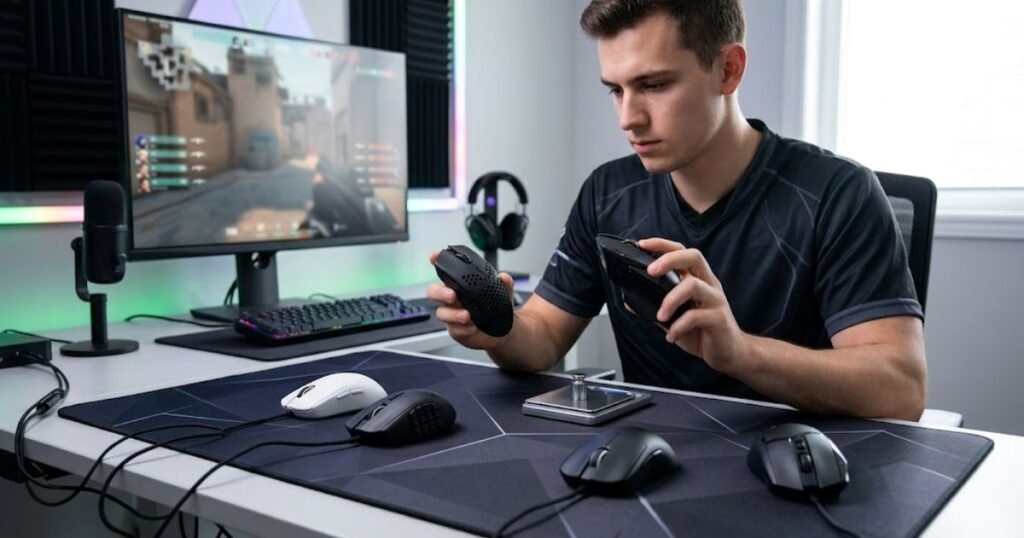
Many players spend too much time chasing trends and not enough time evaluating their own preferences. The decision becomes easier when you follow a structured selection process.
How to Evaluate Your Sensitivity and Mouse Control Habits
Your first step is understanding how you naturally control a mouse. Some players prefer effortless movement, while others enjoy a more deliberate feel.
Instead of focusing on specifications alone, pay attention to how comfortable your current setup feels during real gameplay. Small frustrations often reveal whether a mouse is too light, too heavy, or appropriately balanced.
Understanding your movement habits creates a stronger foundation for selecting the correct weight category.
How Grip Style Influences Your Ideal Mouse Weight
Grip style influences how weight is distributed across the hand and how movement is generated. Different grip styles may react differently to the same mouse weight.
Players who rely heavily on finger adjustments often prefer a mouse that feels easy to reposition. Others may prioritize a more stable feel depending on how they interact with the mouse during gameplay.
Weight should complement grip mechanics rather than create unnecessary resistance.
Finding balance between shape and weight is often more important than optimizing either factor independently.
How to Match Mouse Weight to Your Main FPS Games
The final step is matching your preferred mouse weight to the games you spend the most time playing. Different genres reward different movement characteristics, making game selection an important factor in the buying process.
Players researching complete setups often compare mouse weight alongside shape, sensor performance, build quality, and overall value.
For recommendations across multiple categories, you can explore our list of the best gaming mouse for FPS games currently available.
The following process can help identify the most suitable mouse weight for your needs:
- Evaluate your current setup: Identify what you like and dislike about your existing mouse.
- Review your primary games: Consider the movement demands created by your most-played titles.
- Assess your comfort preferences: Decide whether you prefer agility or stability.
- Consider long-term usability: Think about how the mouse feels after multiple hours of use.
- Test when possible: Personal experience remains the most reliable evaluation method.
Following a structured process often produces better results than choosing a mouse based solely on trends or specifications.
The ideal mouse weight is the one that feels natural enough to disappear from your attention during gameplay.
Should You Buy a Lightweight or Heavy Gaming Mouse for FPS Gaming?
Most FPS players should buy a lightweight gaming mouse because it provides the best balance of responsiveness, comfort, and versatility across modern competitive games. Heavy gaming mice remain viable for users who specifically enjoy a more stable and deliberate feel.
The decision becomes much easier once you stop searching for a universally correct answer. Mouse weight is ultimately about compatibility between equipment and user preferences.
Who Should Buy a Lightweight Gaming Mouse
Players who prioritize responsiveness, competitive performance, and modern FPS trends should strongly consider lightweight gaming mice.
These users typically benefit from equipment that minimizes resistance and allows movement to feel effortless across a wide range of gameplay situations.
For the majority of competitive FPS players, lightweight mice represent the safest recommendation.
Who Should Buy a Heavy Gaming Mouse
Players who value stability, deliberate control, or mixed gaming and productivity use may prefer heavier mice.
This preference is less common in competitive FPS gaming, but it remains entirely valid for users whose priorities differ from professional players.
The best choice is the one that supports confidence and comfort during actual use.
Final Mouse Weight Recommendations for Most FPS Players
For most players entering the FPS genre today, lightweight gaming mice offer the strongest combination of speed, comfort, flexibility, and competitive relevance.
At GearTP, our general recommendation is to start with a lightweight mouse unless you already know that you prefer a heavier feel. This approach aligns with current competitive trends while still allowing room for personal preference.
The table below provides a simple decision framework for choosing between lightweight and heavy gaming mice:
| If You Prioritize | Recommended Choice |
|---|---|
| Competitive FPS Performance | Lightweight |
| Fast Movement Feel | Lightweight |
| Long Gaming Sessions | Lightweight |
| Movement Stability | Heavy |
| Gaming and Productivity Balance | Heavy |
| Most Modern FPS Titles | Lightweight |
The most effective mouse is not the lightest or heaviest option available. It is the one that allows you to focus entirely on gameplay instead of thinking about the mouse itself.
Frequently Asked Questions About Lightweight vs Heavy Gaming Mice
Choosing between a lightweight and heavy gaming mouse often raises additional questions that go beyond basic comparisons. The answers below address common concerns FPS players have when evaluating mouse weight for performance, comfort, and long-term usability.
Is a lightweight gaming mouse better for FPS games?
A lightweight gaming mouse is generally better for FPS games because it allows faster movement, easier repositioning, and greater responsiveness during competitive gameplay.
Why do most professional FPS players use lightweight mice?
Most professional FPS players use lightweight mice because they support efficient movement and reduce unnecessary physical effort during high-level competition.
Can a heavy gaming mouse still perform well in FPS games?
A heavy gaming mouse can still perform well in FPS games if the player prefers a more stable and deliberate movement style.
What mouse weight is considered lightweight today?
Most modern FPS players consider mice between 60g and 80g to be lightweight, while mice under 60g are often classified as ultra-lightweight.
Does mouse weight affect reaction speed?
Mouse weight does not directly affect reaction speed, but it can influence how quickly a player physically moves the mouse after reacting.
Should beginners choose a lightweight or heavy gaming mouse?
Most beginners should start with a lightweight gaming mouse because it offers a balanced experience that works well across many FPS games and playstyles.
Can mouse weight affect tracking performance?
Mouse weight can affect how tracking feels because different weights change movement characteristics, but tracking skill ultimately depends on player mechanics.
Do heavier mice provide better control?
Heavier mice can feel more controlled for some players because additional weight creates a stronger sense of movement stability.
Is mouse weight more important than mouse shape?
Mouse shape is usually more important than mouse weight because shape determines how naturally the mouse fits your hand and grip style.
What is the best mouse weight for Valorant and CS2?
For most Valorant and CS2 players, lightweight gaming mice are preferred because they support quick target acquisition and efficient crosshair movement.
Can changing mouse weight improve aiming consistency?
Changing mouse weight may improve aiming consistency if the new weight better matches a player’s movement habits and comfort preferences.
Should I follow professional player mouse weight trends?
Professional player trends can provide useful guidance, but personal comfort and performance should always take priority when choosing mouse weight.
Conclusion: Lightweight vs Heavy Gaming Mouse for FPS Gaming
Lightweight gaming mice have become the preferred choice for most FPS players because they provide excellent responsiveness, strong versatility, and a movement style that aligns well with modern competitive gaming. Their popularity reflects practical performance benefits rather than marketing trends.
Heavy gaming mice still have a place in the market, particularly for players who enjoy a more stable feel or split their time between gaming and productivity. While they are less common in competitive FPS environments, they remain a valid option for specific preferences and use cases.
The most important takeaway is that mouse weight should support how you naturally play rather than force you to adapt to a trend. The ideal gaming mouse is not determined solely by grams on a specification sheet. It is determined by how confidently and comfortably you can perform during real gameplay.
For most FPS players, starting with a lightweight gaming mouse is the safest recommendation. From there, personal experience will reveal whether a lighter, medium-weight, or heavier option provides the best long-term fit.
Thanks for reading GearTP’s guide to lightweight vs heavy gaming mice. We hope this comparison helps you make a more informed decision and build a setup that supports your FPS performance goals.