
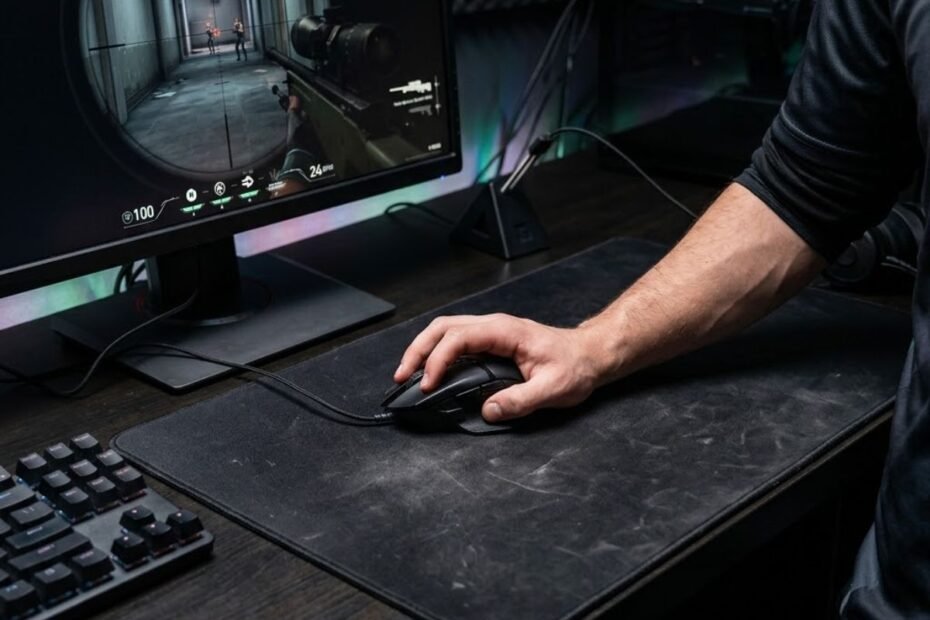
A heavy gaming mouse can look outdated in a market filled with ultralight FPS mice, but weight is not always a weakness. For some players, a heavier mouse can create better control, steadier movement, and a more grounded aiming feel.
The main heavy mouse advantages come from stability, resistance, and control. These benefits matter most when a player struggles with overshooting, shaky micro-adjustments, or inconsistent crosshair placement during FPS gameplay.
This guide explains the real advantages of using a heavy mouse for FPS games without turning the topic into a product list or a simple lightweight versus heavy debate. The goal is to help you understand when extra weight can actually help your aim.
What Are the Biggest Advantages of Using a Heavy Gaming Mouse?
Heavy gaming mouse advantages are the benefits that help some FPS players move with more control, aim with more stability, and avoid unnecessary hand corrections. These advantages do not make heavy mice better for everyone, but they can make them a better fit for players who value precision over pure speed.
A heavier mouse usually creates more physical resistance against quick, accidental movement. That resistance can make the mouse feel less twitchy, especially for players who use higher sensitivity or tend to overcorrect when aiming. Instead of reacting to every small hand movement, the mouse encourages more deliberate control.
Why Additional Mouse Weight Can Create More Controlled Movement
Additional mouse weight is a physical factor that can make movement feel more controlled because it takes slightly more effort to start, stop, and redirect the mouse. This helps some players avoid fast, loose, or overly sensitive movements during important aiming moments.
In FPS games, control often matters more than raw speed when you are holding an angle, clearing a corner, or making a small correction onto a target. A heavy mouse can slow down unnecessary hand motion just enough to make each movement feel more intentional. That extra resistance can help players stay calm when the fight gets tense.
This does not mean heavier is automatically better. It means a heavy mouse can act like a stabilizer for players who already move too quickly or lose control when aiming. If your mouse often feels too jumpy, weight can become a useful advantage instead of a drawback.
This is why mouse weight should be judged by how it affects your real aim, not by trend alone. A controlled movement pattern is valuable only when it matches your sensitivity, grip style, and FPS playstyle.
How Heavier Mice Can Reduce Sudden Hand Corrections
Heavier mice can reduce sudden hand corrections by making small, accidental movements less noticeable during aiming. This helps players who often pull the crosshair past the target or make too many last-second adjustments.
Many aiming mistakes happen because the hand reacts faster than the player needs. A tiny panic movement can move the crosshair away from the target, especially on higher sensitivity. A heavy mouse can reduce that problem because the extra weight makes the mouse less likely to respond sharply to every minor hand twitch.
That can be helpful in tactical FPS games where one controlled shot matters more than rapid mouse spam. When your crosshair is already close to the target, the goal is not to move faster. The goal is to avoid ruining your own placement with an unnecessary correction.
For players who struggle with overcorrection, the advantage of a heavy mouse is not speed. It is restraint, and restraint can be extremely valuable when accuracy depends on small movements.
Why Some FPS Players Prefer a More Substantial Mouse Feel
A more substantial mouse feel helps some FPS players feel more connected to their movement because the mouse has a stronger physical presence in the hand. This can improve confidence, especially for players who dislike the loose or floaty feeling of very light mice.
Mouse feel is not just about numbers on a spec sheet. A mouse that feels too light can make some players feel disconnected from their crosshair, while a heavier mouse can feel more planted on the pad. That planted feeling can make aiming feel more predictable.
Players who are still learning the difference between mouse weight categories can start with a basic explanation of what a lightweight gaming mouse actually is before comparing it with heavier options. Understanding both sides makes it easier to judge weight by feel instead of marketing.
A substantial mouse feel is useful only when it supports your control. If the mouse feels stable without making your arm tired too quickly, that weight can become part of your aiming comfort.
The benefits below explain the core advantages commonly associated with heavy gaming mice:
- Better stability: A heavier mouse can feel more planted during controlled aiming and slower tracking.
- Reduced overcorrection: Extra weight can make sudden hand corrections less aggressive.
- More deliberate movement: Heavier mice can encourage smoother, more intentional mouse control.
- Stronger hand presence: Some players feel more connected to a mouse that has more physical weight.
- Improved confidence: A stable mouse feel can make precision shots feel less rushed and more controlled.
These advantages matter most when the player benefits from added resistance. A heavy mouse is not automatically superior, but it can make aiming feel more controlled for the right player.
How Does a Heavy Mouse Improve Stability During FPS Gameplay?
A heavy mouse improves stability during FPS gameplay by reducing unwanted movement and making the crosshair feel less reactive to small hand errors. This can help players maintain steadier aim when holding angles, tracking slowly, or making controlled corrections.
Stability is one of the clearest reasons some players continue to prefer heavier mice. In many FPS situations, the best movement is not the fastest movement. It is the movement that keeps your crosshair under control long enough to land the shot.
How Extra Weight Reduces Accidental Mouse Movement
Extra weight reduces accidental mouse movement by making the mouse harder to disturb with small, unplanned hand motions. This can be helpful when your hand becomes tense during fights or when you tend to make nervous movements under pressure.
A very light mouse may react quickly to tiny inputs, which is useful for speed but not always ideal for stability. A heavier mouse requires more intention before it moves, so minor hand noise may have less impact on your crosshair. For some players, that makes aiming feel calmer.
This benefit becomes more noticeable in situations where your crosshair is already near the target. When you only need a small adjustment, accidental movement can hurt more than slow movement. A heavier mouse can help keep those small corrections under control.
Extra weight is most useful when it lowers unnecessary movement without making the mouse feel sluggish. The right balance is the point where stability improves but comfort remains acceptable.
Why Stable Crosshair Placement Becomes Easier
Stable crosshair placement becomes easier with a heavy mouse because the mouse can feel less likely to drift away from the angle you are holding. This helps players keep their aim ready before the enemy appears.
The example below shows how a heavier mouse can help maintain stable crosshair positioning during FPS gameplay:
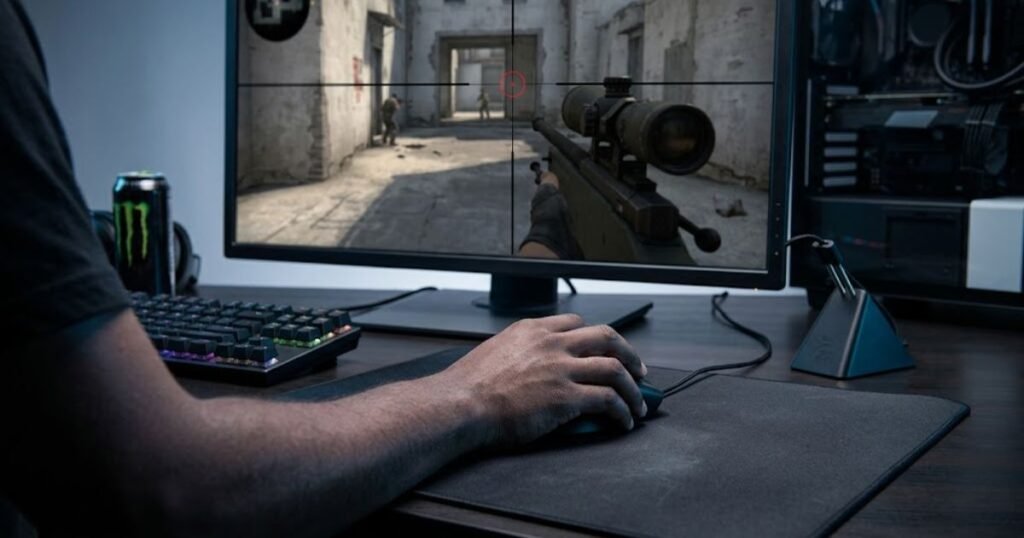
In tactical FPS games, good crosshair placement often wins fights before flicking even begins. If your crosshair is already placed correctly, you need fewer large corrections. A heavier mouse can support this style because it rewards patience, controlled positioning, and careful movement.
This advantage is especially useful for players who play slower roles or hold tight lines. A stable mouse feel can make it easier to keep the crosshair at head level without constantly fighting small hand movement. That does not replace practice, but it can support a cleaner aiming habit.
Stable crosshair placement is one of the most practical heavy mouse advantages because it connects directly to real FPS decision-making. The mouse helps most when your playstyle already values control and positioning.
How Heavier Mice Can Improve Tracking Consistency
Heavier mice can improve tracking consistency by making slow and medium-speed tracking feel smoother for some players. The added resistance can help prevent shaky tracking and reduce sudden speed changes while following a target.
Tracking is not always about moving as quickly as possible. In many fights, the goal is to follow a target smoothly without bouncing around the hitbox. A heavy mouse can make that movement feel more stable because it naturally resists tiny direction changes.
This is also where many players start comparing lightweight vs heavy gaming mouse behavior, because each weight class changes the balance between speed and control. A lighter mouse may feel easier to accelerate, while a heavier mouse may feel easier to keep steady.
Tracking consistency depends on your sensitivity, mouse pad, and arm control, but weight can still influence the feel. For players who track too aggressively or shake during long sprays, a heavier mouse can provide a useful layer of stability.
The table below explains how heavy mice can support stability compared with lightweight mice:
| Stability Factor | Heavy Mouse Benefit | Possible Lightweight Mouse Behavior |
|---|---|---|
| Crosshair stability | Feels more planted during angle holding | Can feel more reactive to small hand movement |
| Accidental movement | May reduce unwanted micro-movement | May respond faster to tiny inputs |
| Slow tracking | Can feel smoother and more controlled | Can feel faster but less grounded for some players |
| Stopping control | Can help reduce overshooting | Can require more active stopping discipline |
Overall, a heavy mouse improves stability by making movement more controlled, less twitchy, and easier to manage under pressure. That stability is one of the strongest reasons some FPS players still prefer heavier mice.
Why Do Some Players Achieve More Consistent Aim With Heavy Mice?
Heavy mice help some players achieve more consistent aim by making mouse movement feel more repeatable from one engagement to the next. Consistency is not about aiming better once. It is about producing similar results across hundreds of fights.
Many FPS players focus on peak performance while ignoring repeatability. Aiming well for a few rounds is less valuable than maintaining stable performance throughout an entire match. This is where a heavy mouse can benefit certain players.
How Movement Inertia Can Improve Aiming Consistency
Movement inertia is the tendency of a heavier object to resist sudden changes in speed or direction. In a gaming mouse, this can help some players maintain smoother movement patterns during aiming.
Every aiming style develops habits over time. Some players naturally move too aggressively when reacting to targets, while others make unnecessary speed changes during tracking and micro-adjustments. A heavier mouse can reduce these sudden variations by introducing more physical resistance.
Because the mouse is less eager to change direction instantly, movement often feels more predictable. Instead of constantly correcting movement speed, the player can focus more attention on crosshair placement and target tracking.
Consistency often comes from reducing variables. For some FPS players, mouse weight becomes one of the factors that helps make movement more repeatable under pressure.
Why Repetitive Mouse Movements May Feel More Predictable
Repetitive mouse movements may feel more predictable with a heavy mouse because the movement pattern often becomes easier to reproduce. Predictability is important because muscle memory relies on repeating the same action many times.
When players practice flicks, tracking routines, or aim trainer exercises, they are training movement patterns rather than individual shots. If movement feels consistent from attempt to attempt, the brain can build stronger motor memory.
Some players report that heavier mice provide clearer feedback during movement. The mouse feels more noticeable in the hand, making it easier to recognize how far and how fast the mouse has traveled. That additional feedback can contribute to movement consistency over time.
Predictable movement does not guarantee better aim, but it can help create an environment where muscle memory develops more reliably.
How Heavier Mice Can Reduce Nervous Micro-Adjustments
Heavier mice can reduce nervous micro-adjustments by making small reactive movements less aggressive. This can help players who frequently overreact when making final aim corrections.
Many aiming mistakes occur when the crosshair is already close to the target. Instead of making a controlled adjustment, the player makes several rapid corrections that move the crosshair away from the intended position. This creates inconsistency even when overall mechanics are good.
A heavy mouse can naturally discourage excessive correction because every movement requires slightly more commitment. Rather than reacting to every tiny visual change, the player may become more selective with adjustments.
For players who struggle with shaky finishing movements, reducing unnecessary corrections can be one of the most valuable consistency benefits of a heavier mouse.
The table below explains situations where heavy mice can improve aim consistency:
| Situation | Potential Consistency Benefit |
|---|---|
| Holding defensive angles | More repeatable crosshair positioning |
| Slow target tracking | Reduced movement variation |
| Micro-adjustments | Fewer unnecessary corrections |
| High-pressure situations | More controlled mouse input |
| Long gaming sessions | More stable movement habits for some players |
The situations above show that heavy mice often provide consistency benefits through predictability rather than speed. Players who value repeatable movement patterns may find these advantages more important than raw mouse agility.
Ultimately, aim consistency comes from practice and technique, but mouse weight can influence how reliably those skills are executed during real gameplay.
How Can Heavy Mice Improve Precision and Stopping Control?
Heavy mice can improve precision and stopping control by helping players make deliberate movements and stop the mouse closer to the intended target location. This advantage becomes most noticeable during small adjustments rather than large flicks.
Precision aiming depends on two separate skills. The first is reaching the target. The second is stopping exactly where you intend. Many players focus on movement speed while underestimating the importance of stopping control.
Why Stopping Accuracy Matters in Tactical FPS Games
Stopping accuracy is the ability to end mouse movement at the correct location without overshooting or undershooting the target. In tactical FPS games, this skill can have a direct impact on shot accuracy.
Games such as Valorant and Counter-Strike often reward precision more than speed. A player who consistently stops on the target usually performs better than a player who reaches the target faster but requires multiple corrections afterward.
Because heavier mice resist movement changes more strongly, some players find it easier to feel exactly when movement should stop. That additional physical feedback can support more accurate endpoint control.
Stopping accuracy is one of the most overlooked heavy mouse advantages because it affects aiming quality even when movement speed remains unchanged.
How Heavier Mice Encourage Deliberate Movement Control
Heavier mice encourage deliberate movement control by requiring slightly more effort before movement begins. This can reduce impulsive aiming habits and encourage more intentional actions.
When a mouse moves extremely easily, some players develop a tendency to rely on rapid corrections instead of controlled execution. A heavier mouse can encourage a different approach by rewarding smoother, more planned movement.
This does not make the player more skilled automatically. Instead, it changes how movement feels and may encourage habits that support precision-focused gameplay.
Deliberate movement becomes especially valuable when clearing angles, pre-aiming common positions, or making small crosshair corrections before taking a shot.
Why Precision-Focused Players Often Value Stopping Power
Stopping power is the ability to bring mouse movement under control quickly and accurately. Precision-focused players often value this quality because accurate stopping can be just as important as accurate movement.
Many FPS engagements are decided by a few pixels of crosshair placement. A player who can consistently stop on target often requires fewer follow-up adjustments before shooting. This can improve efficiency during fights.
Heavy mice naturally provide more resistance when changing direction and ending movement. For some players, that resistance creates a stronger sense of control during the final stage of aiming.
While lightweight mice may excel at acceleration and rapid flicking, stopping power remains one area where heavier mice can offer meaningful advantages depending on the player’s preferences.
The table below explains aiming tasks that may benefit from heavier mice:
| Aiming Task | Potential Benefit Level |
|---|---|
| Holding tight angles | High |
| Pixel-level adjustments | High |
| Long-range engagements | High |
| Controlled tracking | Medium |
| Large flick shots | Low |
For players who value accurate endpoint control, heavy mouse advantages often become most noticeable during the final moments of the aiming process rather than during the initial movement itself.
What Types of FPS Players Benefit Most From Heavy Gaming Mice?
Heavy gaming mice benefit FPS players who need more control, steadier movement, and fewer accidental corrections. These players usually care more about precision and consistency than maximum flick speed.
The players who benefit most from heavier mice are not always beginners or slower players. In many cases, they are players who already understand their aiming habits and want a mouse that supports a more controlled style.
Why High-Sensitivity Players May Benefit From Heavier Mice
High-sensitivity players may benefit from heavier mice because extra weight can make fast cursor movement feel less loose. This helps reduce the risk of moving past the target with small hand motions.
High sensitivity already makes every inch of mouse movement more powerful. When the mouse is also extremely light, some players may feel that the crosshair moves too easily. A heavier mouse can add resistance and make the same sensitivity feel more controlled.
This does not mean every high-sensitivity player should use a heavy mouse. Some high-sens players prefer light mice because they want maximum speed. The advantage appears when the player needs more control without lowering sensitivity too much.
For high-sensitivity users, the biggest value of a heavy mouse is balance. It can keep movement responsive while making the mouse feel less unstable.
How Heavy Mice Can Help Players With Shaky Aim
Heavy mice can help players with shaky aim by reducing how much small hand tremors affect crosshair movement. The extra weight can make the mouse feel calmer during fine aiming.
The image below illustrates a player who may benefit from the added control of a heavier gaming mouse:
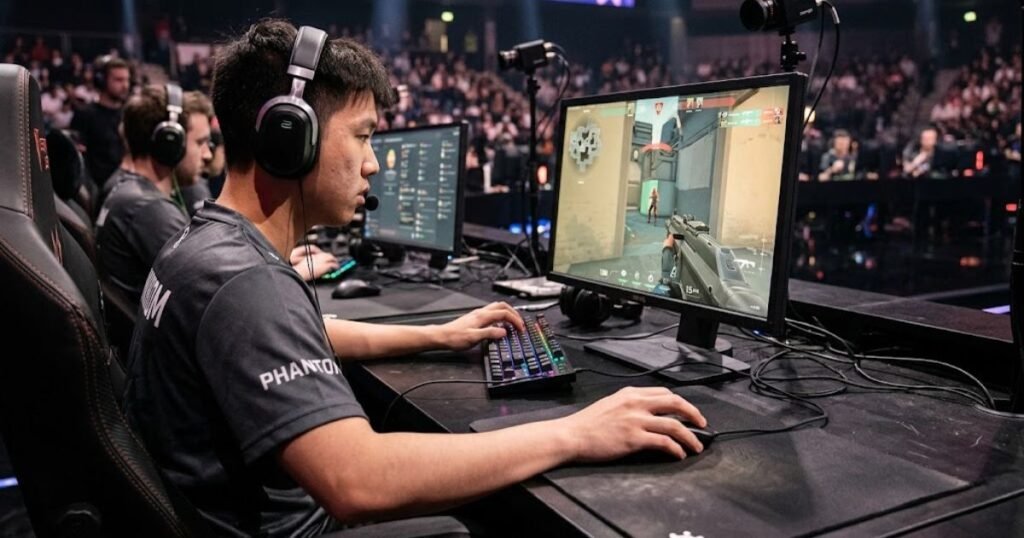
Shaky aim often becomes worse during tense fights. A player may grip the mouse harder, tense the wrist, or make small corrections too quickly. A heavier mouse can soften some of that movement because it does not react as sharply to every small input.
This benefit is not a replacement for better mechanics or relaxed aiming habits. However, it can make the mouse feel more forgiving while the player works on technique. For some players, that calmer feel makes aiming less stressful.
A heavy mouse is most helpful for shaky aim when the issue comes from overreaction, not from poor posture, bad sensitivity, or an uncomfortable grip.
Why Tactical FPS Players Often Value Additional Control
Tactical FPS players often value additional control because games like Valorant and Counter-Strike reward careful placement, angle discipline, and accurate first shots. In these games, stable control can matter more than fast movement.
A tactical FPS player does not always need the fastest mouse possible. Many fights start with crosshair placement, positioning, and small corrections before shooting. A heavier mouse can support that slower, more deliberate style.
This is also why the rise of lightweight mice does not remove the value of heavier mice for everyone. If you want to understand the trend from the opposite angle, the guide on why lightweight mice became popular explains why many FPS players moved toward lighter designs.
For tactical players, the advantage of a heavy mouse is not that it makes every action easier. It is that it can make controlled actions feel more dependable.
The player profiles below explain who commonly benefits from heavy gaming mice:
- High-sensitivity players: Extra weight can make fast settings feel less loose and easier to manage.
- Shaky aim players: A heavier mouse can reduce the impact of small, nervous hand movements.
- Tactical FPS players: More weight can support controlled crosshair placement and precise angle holding.
- Precision-focused players: A planted mouse feel can help with small adjustments and endpoint control.
- Overshooting players: Heavier mice can make it easier to slow down before passing the target.
These profiles show that heavy mice are not only for one type of player. They are most useful when a player’s main problem is excess movement rather than lack of speed.
Heavy mouse advantages become clearer when you match the mouse to the player’s aiming weakness. If the player needs more control, the extra weight can be helpful. If the player needs faster movement, it may become a limitation.
How Do Heavy Mice Affect Different FPS Aiming Styles?
Heavy mice affect FPS aiming styles differently because each style uses mouse movement in a different way. Precision aiming, tracking, and flicking do not benefit from weight in the same pattern.
This matters because a mouse can feel excellent in one aiming task and limiting in another. A player who mostly holds angles may love a heavy mouse, while a player who relies on wide flicks may find it slower.
Benefits for Precision-Focused Aiming Styles
Heavy mice benefit precision-focused aiming styles by making small movements feel more controlled and less rushed. This can help players who depend on careful placement rather than fast reactions.
Precision-focused aiming appears often in tactical shooters. The player may hold a narrow angle, adjust slightly to the enemy’s head, and take a controlled shot. In this situation, the mouse does not need to fly across the pad. It needs to stop exactly where the player wants.
A heavier mouse can support that style by making the movement feel more deliberate. The extra weight may help the player avoid moving too far when only a tiny correction is needed.
For precision-focused aimers, heavy mice are valuable because they support calm execution. The benefit is less about speed and more about avoiding unnecessary movement.
Benefits for Controlled Tracking-Focused Players
Heavy mice can benefit controlled tracking-focused players by making target following feel smoother and less shaky. This is most useful when tracking requires steady movement rather than fast acceleration.
Tracking-focused players need to follow a moving target while keeping the crosshair close to the hitbox. If the mouse feels too twitchy, the player may move in small bursts instead of one smooth line. A heavier mouse can make that motion feel more stable.
This benefit depends heavily on the game. In faster games, a heavy mouse may feel harder to accelerate quickly. In slower or medium-paced tracking situations, the added resistance can help the player maintain smoother movement.
Controlled tracking is where heavy mice can feel comfortable without being too slow. The advantage appears when smoothness matters more than instant direction changes.
Limitations for Aggressive Flick-Heavy Aiming Styles
Heavy mice are usually less ideal for aggressive flick-heavy aiming styles because extra weight can make rapid acceleration and direction changes more demanding. This can affect players who rely on speed-first mechanics.
Flick-heavy players often need to move quickly across a large distance, stop, and sometimes redirect immediately. A heavier mouse can still perform this task, but it requires more effort from the wrist, arm, or fingers. Over long sessions, that effort may become noticeable.
This does not mean heavy mice cannot flick. It means the player must decide whether the added control is worth the reduced ease of movement. Some players may prefer the stability, while others may feel held back.
For aggressive flick-heavy players, heavy mouse advantages are less obvious. The extra weight may help stopping control, but it can also reduce the effortless speed that many flick aimers prefer.
The table below explains how heavy mouse advantages change across different aiming styles:
| Aiming Style | Heavy Mouse Advantage | Best Fit Level |
|---|---|---|
| Precision aiming | Better small-movement control and stopping confidence | High |
| Controlled tracking | Smoother movement with less shakiness for some players | Medium to high |
| Hybrid aiming | Balanced control if the player does not need extreme speed | Medium |
| Aggressive flicking | Better stopping feel but slower acceleration for some users | Low to medium |
The main takeaway is that mouse weight should match how you aim. Heavy mice are strongest when the player values smooth control, accurate stopping, and predictable movement more than raw speed.
Different aiming styles reveal different heavy mouse advantages. A heavier mouse can feel excellent for controlled aiming but less ideal for players who rely on constant fast flicks.
Which Mouse Grip Styles Usually Work Best With Heavy Mice?
Heavy mice usually work best with grip styles that give the player more contact and control over the mouse body. Palm grip and relaxed claw grip often adapt better to heavier mice than fingertip grip.
Grip style matters because the hand controls weight differently depending on contact points. A mouse that feels stable in palm grip can feel slow or difficult to lift in fingertip grip.
Why Palm Grip Users Often Adapt Well to Heavier Mice
Palm grip users often adapt well to heavier mice because the hand has more surface contact with the mouse. This makes it easier to control the mouse using the whole hand instead of relying only on the fingers.
The comparison below shows a grip style that typically adapts well to heavier gaming mice:
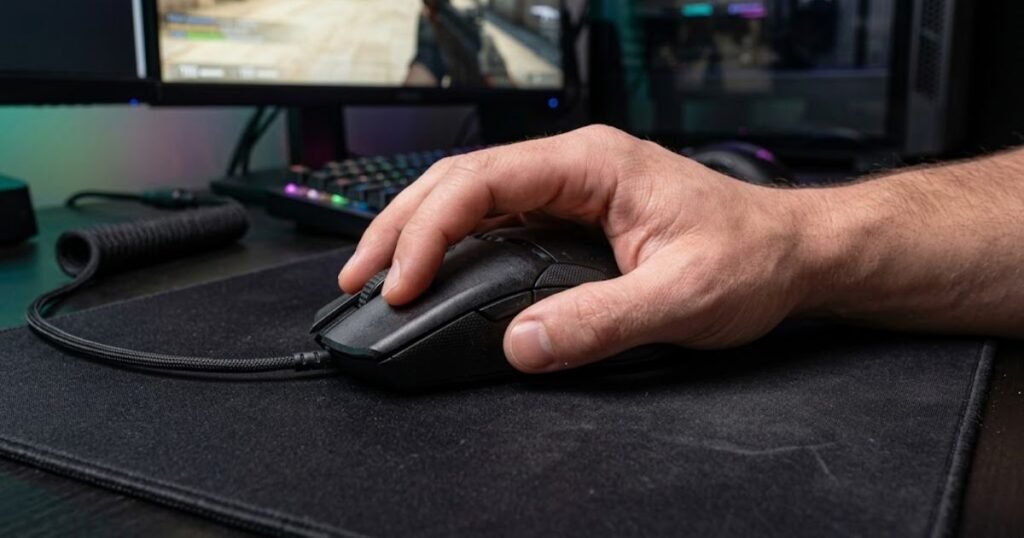
With palm grip, the hand rests more fully on the shell. That extra contact can make a heavier mouse feel secure rather than tiring. The player can guide the mouse with the palm, wrist, and arm together.
This grip style often pairs well with controlled movement. Since palm grip is not usually the most finger-driven style, the added weight may feel natural for players who prefer stability.
For palm grip users, a heavy mouse can feel supportive when the shape fits the hand properly. Weight becomes a problem only when the mouse is too large, too heavy, or uncomfortable for long sessions.
How Relaxed Claw Grip Users Can Benefit From Extra Weight
Relaxed claw grip users can benefit from extra weight because this grip combines control from the palm area with flexibility from the fingers. This makes it more adaptable than a very aggressive claw or fingertip grip.
A relaxed claw grip usually keeps some palm contact while allowing the fingers to make smaller corrections. This can work well with a heavier mouse because the player still has enough hand support to manage the weight.
The benefit depends on how much the player uses finger movement. If the player relies mostly on wrist and arm movement, a heavy mouse may feel stable. If the player relies heavily on fingertip adjustments, the extra weight may feel restrictive.
Relaxed claw grip is one of the more flexible grip styles for heavier mice. It can support both control and moderate agility when the mouse shape fits well.
Why Fingertip Grip Users Often Prefer Lighter Mice
Fingertip grip users often prefer lighter mice because this grip depends heavily on finger control, quick lifting, and small directional changes. Extra weight can make those movements harder to perform comfortably.
With fingertip grip, the palm usually does not rest on the mouse. The fingers handle most of the control, which makes weight more noticeable. A heavy mouse may feel harder to lift, reposition, or adjust with only the fingertips.
This does not make fingertip grip impossible with a heavy mouse. However, the advantages of a heavier mouse are less aligned with what fingertip users usually want. They often prioritize agility, freedom, and quick micro-movement.
For fingertip users, a heavy mouse may only be useful if they specifically want more resistance and are comfortable managing the extra effort through the fingers.
The table below explains how heavy mice usually fit different grip styles:
| Grip Style | Compatibility With Heavy Mice | Main Reason |
|---|---|---|
| Palm grip | High | More hand contact helps control the extra weight |
| Relaxed claw grip | Medium to high | Balanced palm and finger control can manage heavier movement |
| Aggressive claw grip | Medium | Extra weight may feel stable but can limit quick corrections |
| Fingertip grip | Low to medium | Finger-driven control usually favors lighter mice |
The best grip style for a heavy mouse is usually the one that gives you enough contact to control the extra weight without strain. More contact often makes the mouse feel more stable and less tiring.
Grip style does not decide everything, but it strongly affects how heavy mouse advantages feel in real use. A heavier mouse works best when your grip can control the weight comfortably.
What Psychological Advantages Can Heavy Mice Provide?
Heavy mice can provide psychological advantages by making some players feel more confident, composed, and in control during gameplay. While mouse weight does not directly improve skill, it can influence how comfortable and secure a player feels while aiming.
Confidence is an overlooked factor in FPS performance. Players often focus on sensors, DPI, and polling rate while ignoring how a mouse affects their mental comfort. A mouse that feels trustworthy can encourage calmer decision-making during fights.
Why Heavier Mice Can Feel Easier to Control
Heavier mice can feel easier to control because the additional weight creates a stronger physical connection between the hand and the mouse. For some players, this makes movements feel more intentional and predictable.
A lightweight mouse can sometimes feel almost effortless to move. While many players enjoy that feeling, others may interpret it as a lack of control. A heavier mouse often feels more anchored to the mouse pad, which can create a stronger sense of stability.
This perception varies from player to player. However, many users who prefer heavier mice describe them as feeling more substantial and dependable during aiming.
The advantage here is not mechanical performance. It is the player’s perception of control, which can influence confidence during gameplay.
How Confidence Can Influence Aiming Performance
Confidence can influence aiming performance because players who trust their equipment often hesitate less and execute actions more decisively. A heavy mouse may support that confidence when it aligns with the player’s preferences.
Many aiming mistakes happen after uncertainty. A player doubts their crosshair placement, second-guesses movement, or makes unnecessary adjustments before shooting. Feeling comfortable with the mouse can reduce that hesitation.
When players believe their setup supports their playstyle, they often focus more on gameplay and less on equipment. This mental shift can improve consistency during long matches.
Confidence alone does not improve mechanics, but it can help players execute existing skills more effectively under pressure.
Why Some Players Associate Weight With Precision
Some players associate weight with precision because heavier objects often feel more deliberate and stable during movement. This perception influences how they evaluate their aiming experience.
Even outside gaming, many people associate additional weight with control. Cameras, tools, and sports equipment often create similar impressions. A heavier gaming mouse can trigger the same psychological response.
This does not mean the mouse is objectively more accurate. Instead, the player may feel that precise movement is easier because the mouse feels more predictable in the hand.
Perceived precision can become an important factor when choosing a mouse because comfort and confidence often affect long-term satisfaction.
The factors below explain common psychological benefits reported by heavy mouse users:
- Greater confidence: Some players feel more secure during aiming and tracking.
- Reduced hesitation: Trusting the mouse can encourage faster decision-making.
- Stronger sense of control: Additional weight can make movement feel more deliberate.
- Improved comfort: A familiar mouse feel can reduce mental distraction.
- Perceived precision: Some players feel that heavier movement supports accuracy.
These psychological advantages vary from player to player. However, they help explain why some FPS players continue to prefer heavier mice even when lighter alternatives dominate the market.
In What Situations Does a Heavy Mouse Perform Better Than a Lightweight Mouse?
A heavy mouse performs better than a lightweight mouse when the situation rewards control, stability, and deliberate movement more than rapid acceleration. The effectiveness depends on the task rather than the mouse itself.
Different FPS scenarios place different demands on mouse movement. Some situations reward speed, while others reward precision. Understanding where heavy mice excel helps players make better equipment choices.
Situations That Reward Controlled Crosshair Placement
Heavy mice often perform well in situations that reward controlled crosshair placement because they support deliberate movement and stable positioning.
Holding angles is one example. The player already knows where an opponent may appear and only needs to maintain proper crosshair placement. Large, explosive movement is usually unnecessary.
In these situations, a heavy mouse can feel comfortable because it supports patience and controlled positioning. The player spends less time moving the mouse and more time maintaining accurate placement.
When success depends on discipline rather than speed, the advantages of additional mouse weight can become more noticeable.
Situations Where Stopping Accuracy Matters Most
Heavy mice can perform well when stopping accuracy matters because they often encourage more controlled movement endings. This can benefit players who rely on precise endpoint control.
The scenario below demonstrates a situation where a heavier mouse may offer a practical advantage:
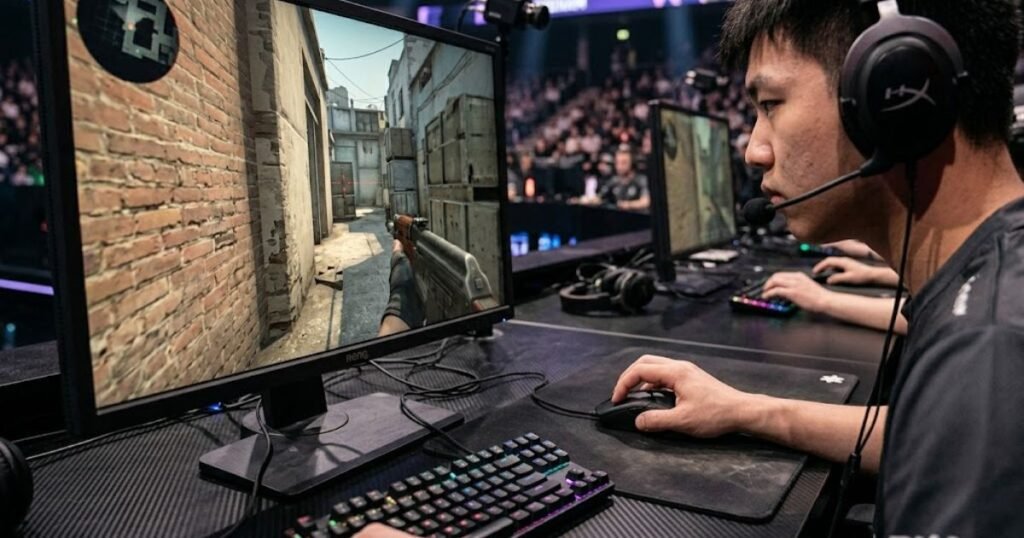
Many engagements are decided by the final part of mouse movement rather than the initial movement. The player reaches the target area and must stop accurately before taking the shot.
When overshooting is a recurring problem, a heavier mouse may feel easier to manage. The additional resistance can make movement feel less abrupt and easier to finish cleanly.
Stopping accuracy becomes particularly important during long-range fights and tight-angle engagements where small aiming errors have large consequences.
Situations Where Reduced Overshooting Becomes Beneficial
Reduced overshooting becomes beneficial when players frequently move past their intended target. Heavy mice can help some users avoid this issue by making movement feel more controlled.
Overshooting often leads to extra corrections, which increases the time needed to land a shot. A player who repeatedly moves beyond the target may benefit more from control than from additional speed.
In these situations, a heavier mouse can act as a natural counterbalance to aggressive hand movement. Instead of focusing on moving faster, the player can focus on moving accurately.
The benefit is most noticeable for players whose aiming mistakes come from excessive movement rather than insufficient movement.
The table below explains scenarios where heavy mice may hold a practical advantage:
| Gameplay Situation | Advantage Level | Reason |
|---|---|---|
| Holding angles | High | Rewards stable positioning and patience |
| Long-range engagements | High | Requires precise movement endings |
| Controlled tracking | Medium | Can support smoother movement for some players |
| Large flick battles | Low | Speed often becomes more important than stability |
The examples above show that heavy mice are not universally better. They simply perform best in scenarios that reward control, stability, and accurate movement execution.
What Trade-Offs Should You Understand Before Choosing a Heavy Mouse?
Heavy mouse advantages always come with trade-offs. While additional weight can improve control for some players, it can also increase physical effort and reduce movement freedom in certain situations.
Understanding both benefits and limitations is important because no mouse weight category is perfect. Every design choice creates strengths and weaknesses.
Why Heavier Mice Require More Physical Effort
Heavier mice require more physical effort because moving additional mass naturally demands more force. This affects acceleration, repositioning, and repeated movement over time.
During short sessions, the difference may be difficult to notice. During long gaming sessions, however, some players become more aware of the additional effort required to move a heavier mouse repeatedly.
The effect depends on grip style, sensitivity, and playstyle. Arm aimers may experience weight differently than wrist aimers or fingertip users.
Physical effort is one of the most common reasons players eventually move toward lighter mice.
How Extra Weight Can Affect Rapid Flick Shots
Extra weight can affect rapid flick shots because accelerating a heavier mouse generally requires more effort than accelerating a lighter mouse.
Players who rely on explosive movement often value quick acceleration and fast direction changes. A heavier mouse may still perform these actions, but the movement can feel less effortless.
This trade-off becomes more noticeable in fast-paced shooters where targets appear from multiple directions and immediate reactions are required.
Whether this drawback matters depends entirely on the player’s preferred aiming style and game choice.
Why Fatigue May Become Noticeable During Long Gaming Sessions
Fatigue may become noticeable during long gaming sessions because the muscles involved in mouse movement perform more work over time when controlling additional weight.
Not every player experiences fatigue in the same way. Some players barely notice it, while others feel discomfort after extended periods of continuous play.
The impact becomes greater when the mouse is extremely heavy or when the player uses low sensitivity that requires large arm movements.
Comfort should always be considered alongside performance because a mouse that feels great for one hour may feel very different after several hours of gameplay.
The table below explains the most common heavy mouse advantages and trade-offs:
| Advantages | Potential Drawbacks |
|---|---|
| More controlled movement feel | Higher physical effort |
| Greater perceived stability | Reduced movement agility |
| Better stopping confidence for some players | Slower acceleration during rapid flicks |
| Reduced overshooting tendencies | Potential fatigue during long sessions |
The goal is not to decide whether heavy mice are good or bad. The goal is to understand which trade-offs align with your preferences and gameplay habits.
Should You Choose a Heavy Gaming Mouse for FPS Games?
A heavy gaming mouse can be a good choice for FPS games if your main priority is control, stability, and deliberate movement rather than maximum speed. The best mouse weight is the one that supports your aiming habits instead of fighting against them.
After understanding the advantages, limitations, player profiles, aiming styles, and grip compatibility discussed throughout this guide, the final decision comes down to how you personally interact with a mouse during gameplay.
Signs That a Heavy Mouse May Fit Your Playstyle
A heavy mouse may fit your playstyle if you frequently value control over speed and feel more comfortable with a stable aiming experience. Many players naturally perform better when movement feels deliberate rather than effortless.
Players who often overshoot targets, struggle with shaky corrections, or prefer tactical FPS gameplay may find that additional weight helps create a more predictable aiming experience. The extra resistance can support their existing strengths rather than forcing them to adapt to a faster-moving mouse.
Comfort is also important. If lightweight mice often feel too sensitive, too reactive, or difficult to control, a heavier mouse may provide a more satisfying experience during real matches.
The strongest sign is simple: your aim feels more controlled and repeatable with additional weight than without it.
Signs That a Lightweight Mouse May Fit You Better
A lightweight mouse may fit you better if your playstyle depends heavily on speed, rapid flicks, frequent repositioning, or fingertip-driven movement. In these situations, minimizing weight often becomes a greater priority.
Players who already have excellent movement control may not gain much from additional resistance. Instead, they may benefit more from faster acceleration and reduced physical effort during long sessions.
Games that require constant target switching, aggressive flicking, and rapid directional changes may also favor lighter mice for many players. The reduced weight can make large movements feel easier and less demanding.
If additional weight feels restrictive rather than supportive, a lighter mouse is usually the better choice.
The following evaluation process can help determine whether a heavy mouse is right for you:
- Evaluate your aiming mistakes: Identify whether you struggle more with overshooting or undershooting targets.
- Review your sensitivity: Determine whether your current settings already make movement feel difficult to control.
- Analyze your playstyle: Decide whether you prioritize precision and control or speed and agility.
- Consider your grip style: Assess how comfortably your grip can manage additional mouse weight.
- Test different weights: Compare your performance with multiple weight ranges before making a decision.
- Measure long-session comfort: Evaluate how your hand, wrist, and arm feel after several hours of gameplay.
The process above helps separate personal preference from marketing trends. The goal is not to use the lightest mouse possible or the heaviest mouse possible. The goal is to find the weight that allows your aim to perform naturally.
For players who want a broader understanding of how weight fits into overall mouse selection, the complete gaming mouse for FPS games guide explores additional factors such as shape, sensor performance, grip compatibility, and aiming preferences.
Ultimately, heavy mouse advantages are most valuable when they solve a real aiming problem. If additional weight improves your control, confidence, and consistency, a heavy mouse may be the right tool for your FPS setup.
Frequently Asked Questions About Heavy Mouse Advantages
Heavy mouse advantages can vary depending on the player’s sensitivity, grip style, aiming habits, and preferred FPS games. The questions below address the most common concerns players have when evaluating heavier gaming mice.
Are Heavy Mice Better for FPS Games?
Heavy mice are not universally better for FPS games. They are better for players who prioritize control, stability, and deliberate movement over maximum speed.
Do Heavy Mice Improve Aim Accuracy?
Heavy mice can improve aim accuracy for some players by making movement feel more controlled and reducing excessive corrections. However, accuracy still depends primarily on skill and practice.
Can Heavy Mice Reduce Overshooting?
Yes. Heavy mice can reduce overshooting for some players because the additional weight makes movement feel less abrupt and easier to stop accurately.
Do Heavy Mice Help With Tracking?
Heavy mice can help with controlled tracking by creating smoother movement patterns for some players. The benefit is usually greater during slower tracking than during fast target switching.
Who Should Use a Heavy Gaming Mouse?
Players who value precision, controlled movement, stable crosshair placement, and predictable aiming often benefit most from heavier gaming mice.
Is a 90g Mouse Considered Heavy Today?
In today’s gaming mouse market, a 90g mouse is generally considered moderately heavy because many modern FPS mice weigh between 50g and 70g.
Should Beginners Use a Heavy Mouse?
Beginners can use a heavy mouse if it feels comfortable and easy to control. Mouse weight should match personal preference rather than experience level.
Are Heavy Mice Good for High Sensitivity?
Heavy mice can work well with high sensitivity because the additional resistance may help reduce unwanted movement and improve control.
Why Do Some Professional Players Still Use Heavy Mice?
Some professional players continue using heavier mice because they prefer the control, stability, and familiarity those mice provide during competition.
Do Heavy Mice Affect Stopping Control?
Yes. Stopping control is one of the most commonly reported advantages of heavier mice because additional weight can make movement endings feel more deliberate.
Are Heavy Mice Better for Tactical FPS Games?
Heavy mice can be well suited for tactical FPS games because these games often reward crosshair placement, angle discipline, and precise stopping control.
Can Switching to a Heavier Mouse Improve Consistency?
Switching to a heavier mouse can improve consistency for some players if their current aiming issues are caused by excessive movement or overcorrection.
Conclusion
Heavy mouse advantages are primarily centered around control, stability, consistency, stopping accuracy, and confidence. While lightweight mice continue to dominate modern FPS gaming discussions, heavier mice still offer meaningful benefits for players whose aiming habits align with those strengths.
The right mouse weight depends less on trends and more on how you aim. Some players perform best with effortless movement, while others achieve better results when additional weight creates a stronger sense of control.
If a heavier mouse helps you move more deliberately, stop more accurately, and maintain greater confidence during gameplay, its advantages may outweigh the drawbacks. Understanding your own aiming style remains the most reliable way to determine whether a heavy gaming mouse is the right choice for your FPS setup.
Thanks for reading.