
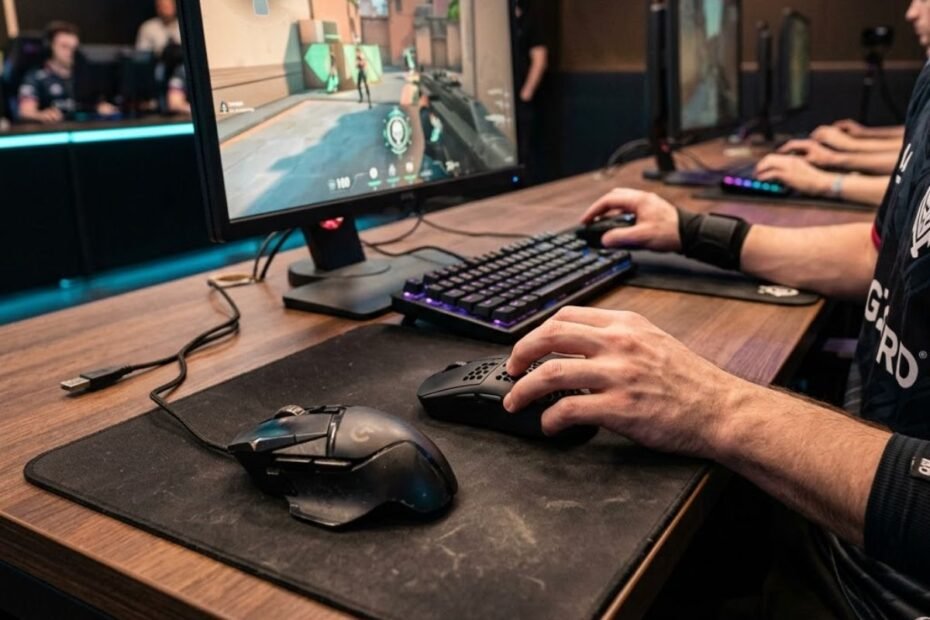
Lightweight mice became popular because modern FPS players started caring more about movement speed, fatigue reduction, and consistent aim feel than extra buttons, adjustable weights, or a heavy premium body. As competitive shooters became faster and more aim-focused, mouse weight turned from a small specification into a real performance factor.
For years, many gaming mice were built to feel solid, feature-rich, and visually aggressive. That made sense when gaming mouse marketing focused heavily on RGB lighting, side buttons, metal parts, and adjustable weight systems. But as players spent more time practicing aim, they began noticing how much effort it took to move and reset heavier mice across long sessions.
The rise of lightweight mice was not just a random trend. It came from a mix of FPS gameplay changes, low-sensitivity aiming, better mouse technology, esports influence, and a growing demand for gear that felt easier to control for hours at a time.
Why Did Lightweight Gaming Mice Become Popular in the First Place?
Lightweight gaming mice became popular because FPS players wanted faster movement, less fatigue, and easier control during long gaming sessions. The lighter design helped many players move their mouse with less effort while keeping their aim style mostly the same.
The popularity of lightweight mice grew when players started treating mouse weight as part of aim comfort. A mouse that feels good for five minutes may not feel the same after multiple ranked matches, warmup routines, and aim training sessions. Over time, lower weight became attractive because it made repeated movement feel easier.
Why Mouse Weight Became More Noticeable in Competitive FPS Games
Mouse weight became more noticeable in competitive FPS games because players repeat flicks, tracking movements, resets, and micro-corrections every round. When those movements happen hundreds of times in one session, even small weight differences can change how the mouse feels.
In casual use, a heavier mouse may not feel like a problem. In FPS games, the mouse is constantly starting, stopping, and changing direction. That makes weight easier to notice, especially when a player uses a large mouse pad and moves with the arm instead of only the wrist.
This is why lightweight mice became popular first among players who were already sensitive to aim feel. The more a player practiced, the easier it became to notice whether the mouse felt effortless, tiring, or slow to reset.
Mouse weight became a serious topic because competitive FPS players use their mouse as a precision tool, not just a desktop accessory.
How Player Priorities Shifted From Features to Performance Feel
Player priorities shifted from features to performance feel because many FPS players realized that extra buttons, RGB lighting, and adjustable weight systems did not always help them aim better. A simpler, lighter mouse could feel more useful than a heavier mouse with more features.
Older gaming mouse marketing often made a mouse look better by adding more visible features. That approach worked for players who wanted customization and a premium appearance. But FPS players began asking a different question: does this mouse help me move, stop, and aim comfortably?
That change made lightweight mice feel more practical. Instead of trying to impress with more parts, many newer FPS mice focused on lower weight, cleaner shapes, reliable sensors, and less movement resistance.
Lightweight mice became popular because the market slowly moved from feature-heavy design toward performance-focused simplicity.
Why Lightweight Mice Felt Like a Practical Upgrade for Many Players
Lightweight mice felt like a practical upgrade because they solved a problem players could feel immediately: movement effort. Many players could switch to a lighter mouse and notice that wide swipes, quick resets, and repeated corrections felt easier.
This made the trend easy to understand. Players did not need to study complicated specifications to feel the difference. A lighter mouse often made the same sensitivity feel more responsive and less physically demanding.
The appeal was especially strong because the upgrade did not require a full setup change. A player could keep the same DPI, sensitivity, grip style, and mouse pad while simply reducing the amount of weight they had to move.
The factors below explain why lightweight mice became popular among FPS players:
- Lower movement effort: Lighter mice are easier to move repeatedly during long FPS sessions.
- Better low-sensitivity support: Large arm movements feel less tiring when the mouse has less weight.
- Faster direction changes: Lower weight can make flicks, resets, and quick corrections feel easier.
- Cleaner performance focus: Many players preferred practical aim feel over extra buttons, RGB, or adjustable weights.
- Stronger esports influence: Pro players, reviewers, and FPS communities helped make lightweight mice feel credible.
These factors show why lightweight mice became popular as a real response to FPS player needs, not just a marketing phrase.
The first reason lightweight mice became popular was simple: many FPS players felt they could move more freely and practice longer with less physical effort.
What Was the Gaming Mouse Market Like Before Lightweight Mice Became Popular?
Before lightweight mice became popular, many gaming mice were heavier because brands focused on feature-rich designs, solid construction, RGB lighting, adjustable weights, and a premium hand feel. Weight was often treated as part of durability instead of something that could affect aim comfort.
The image below shows the design style commonly found in older gaming mice:
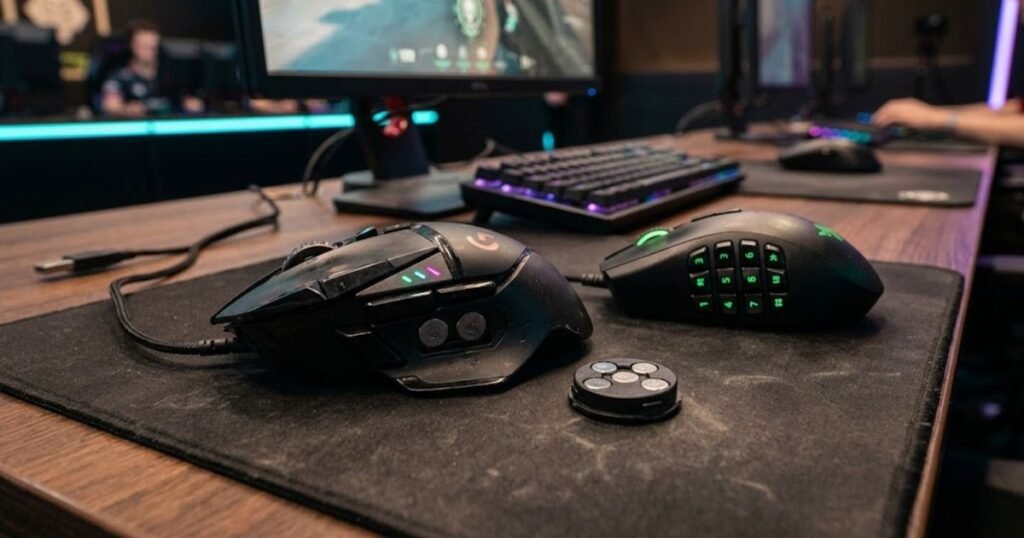
This older market shaped how gamers understood quality. A mouse that felt dense and heavy could seem more expensive, more powerful, and more serious. For many buyers, a lighter mouse might have felt cheap before lightweight FPS design became widely accepted.
Why Older Gaming Mice Often Had Heavier Builds
Older gaming mice often had heavier builds because they included thicker shells, larger internal structures, extra buttons, lighting zones, and sometimes weight systems. These features added physical mass before brands started prioritizing weight reduction.
At the time, this design approach made sense. Gaming mice were trying to stand apart from basic office mice, so brands added visible features to make them look and feel more advanced. A heavier body helped create that sense of substance.
The problem was that many of these features did not directly help FPS aiming. As players became more performance-focused, heavy builds started to look less necessary for competitive shooters.
Older gaming mice were heavier because the market once connected more hardware features with better gaming value.
How Adjustable Weights Influenced Early Gaming Mouse Design
Adjustable weights influenced early gaming mouse design by making mouse weight feel like a customization feature instead of a performance limitation. Many players liked the idea of tuning their mouse by adding or removing small weights.
This gave gamers a sense of control over the product. A mouse with adjustable weights felt flexible because the player could make it heavier or lighter depending on preference. For its time, that was an appealing feature.
But competitive FPS trends later moved in a different direction. Instead of asking how much weight they could add, many players started asking how much weight they could remove while keeping the mouse reliable.
Adjustable weights helped define an older era of gaming mouse design before lightweight mice changed what players expected from FPS gear.
Why Heavy Mice Once Felt More Premium to Many Gamers
Heavy mice once felt more premium to many gamers because extra weight created a sense of durability, density, and control. A mouse that felt light could be mistaken for feeling cheap before lightweight engineering became more common.
This perception was not completely unreasonable. A solid shell, firm clicks, and stable construction can make a mouse feel better in the hand. The issue is that premium feel and FPS performance do not always point in the same direction.
As lightweight mice improved, players became more willing to separate build quality from weight. A mouse could be light and still feel strong, accurate, and reliable.
Heavy mice once dominated because many gamers judged quality by physical feel, but FPS players eventually started judging quality by movement efficiency.
The table below compares older gaming mouse priorities with modern lightweight mouse priorities:
| Design Priority | Older Gaming Mouse Trend | Modern Lightweight Mouse Trend |
|---|---|---|
| Weight | Often heavier to feel solid or premium | Reduced to improve movement comfort |
| Features | Extra buttons, lighting, and adjustable weights | Simpler layouts focused on FPS movement |
| Design message | More parts suggested more value | Less weight suggests better performance feel |
| Player priority | Customization and premium appearance | Comfort, speed, and consistent aim control |
Before lightweight mice became popular, heavier gaming mice made sense for the market. Once FPS players started caring more about movement efficiency, lighter designs became easier to understand and easier to recommend.
How Competitive FPS Games Changed Mouse Design Priorities
Competitive FPS games changed mouse design priorities by making movement efficiency, aim consistency, and long-session comfort more important than feature-heavy mouse designs. As players spent more time practicing aim, they began paying closer attention to how mouse weight affected real gameplay.
The image below illustrates how competitive FPS gameplay increased focus on mouse movement:
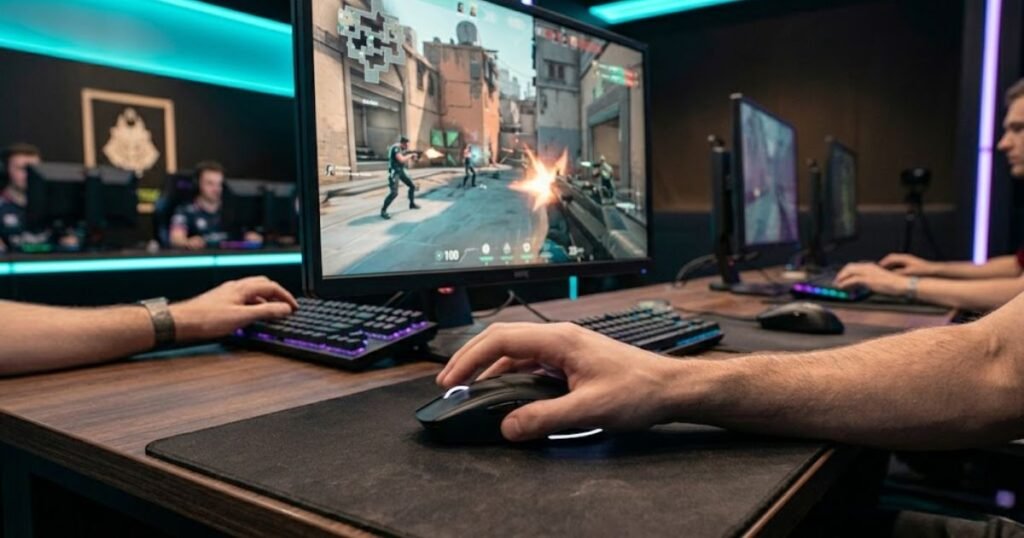
In earlier gaming eras, a mouse could stand out because of its appearance, button count, or customization features. Modern FPS players often evaluate mice differently. Instead of asking how many features a mouse offers, they are more likely to ask how the mouse feels after hours of aiming, tracking, and repeated movement.
Why Flick Shots Made Mouse Weight a Bigger Discussion
Mouse weight became a bigger discussion because flick shots require players to start and stop movement quickly. Any factor that affects acceleration, deceleration, or movement effort naturally becomes more noticeable during repeated flicking.
A flick shot is not only about moving fast. It is also about stopping accurately near the target. As competitive FPS players spent more time practicing flick mechanics, many became increasingly aware of how different mouse weights changed the feeling of those movements.
This awareness helped push mouse weight into mainstream discussion. What was once considered a minor specification became something players actively compared before buying a mouse.
Flick-heavy gameplay helped players realize that mouse weight could influence the overall feel of aiming, even when sensitivity settings stayed the same.
How Tracking Aim Made Long-Term Comfort More Important
Tracking aim made long-term comfort more important because players often need to follow moving targets continuously while maintaining control over the crosshair. This creates a different physical demand from single flick movements.
Games with strong tracking requirements can involve thousands of small hand adjustments across a single play session. Over time, players began noticing that reducing unnecessary effort could make long practice sessions feel more comfortable.
This does not mean lightweight mice automatically improve tracking skill. Instead, many players found that reducing mouse weight helped make repeated movement feel less demanding over time.
Tracking-focused gameplay increased the importance of comfort, which became one of the major reasons lightweight mice gained popularity.
Why Tactical FPS Players Started Caring About Consistent Mouse Feel
Tactical FPS players started caring about consistent mouse feel because many fights are decided by precision, positioning, and small aim corrections rather than constant movement speed.
In games where holding angles, clearing corners, and making controlled crosshair adjustments matter, consistency becomes extremely valuable. Players want their mouse to feel predictable throughout an entire session rather than only during short bursts of action.
As discussions around consistency grew, lightweight mice benefited because many players felt they could maintain the same movement quality for longer periods without fighting unnecessary resistance.
The demand for consistent aim feel helped lightweight mice move from a niche preference into a mainstream FPS recommendation.
The table below shows how FPS aiming demands helped lightweight mice become popular:
| FPS Requirement | Why Players Started Caring | Connection to Lightweight Mice |
|---|---|---|
| Flick shots | Frequent start-and-stop movement | Lower weight reduced movement effort |
| Tracking aim | Continuous crosshair adjustments | Comfort became more important over time |
| Long practice sessions | High repetition of mouse movement | Players became more aware of fatigue |
| Tactical aiming | Consistent movement mattered more | Many players preferred simpler designs |
As FPS gameplay evolved, mouse weight became easier to notice and easier to compare, helping lightweight designs gain attention across the gaming community.
Why Low-Sensitivity Players Helped Drive Lightweight Mouse Adoption
Low-sensitivity players helped drive lightweight mouse adoption because they move their mouse farther and more often than high-sensitivity players. As low-sensitivity aiming became more common in competitive FPS games, the benefits of lower mouse weight became easier to feel.
The image below demonstrates a common low-sensitivity aiming setup:
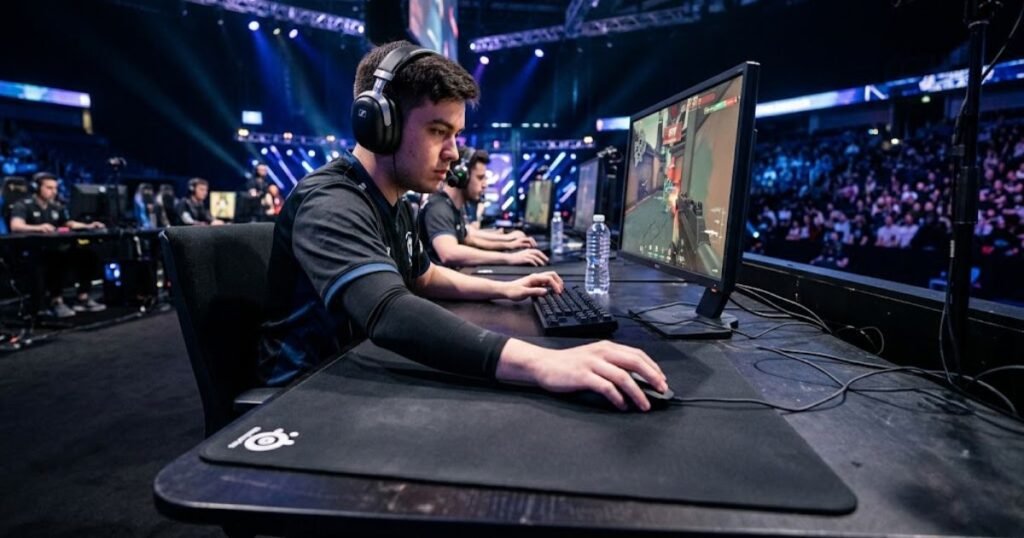
A player using low sensitivity typically relies on larger arm movements to aim, track targets, and clear angles. Because those movements cover greater distances, even modest weight differences can become noticeable during long gaming sessions.
How Large Arm Movements Made Lighter Mice More Appealing
Large arm movements made lighter mice more appealing because lower weight reduces the effort required for repeated swipes across the mouse pad. The larger the movement range, the more often the mouse needs to be accelerated and repositioned.
Many competitive FPS players use oversized mouse pads specifically to support low-sensitivity aiming. As these setups became more common, players naturally began looking for equipment that made large movements feel easier to perform repeatedly.
This does not mean low-sensitivity players must use lightweight mice. However, many found that reducing weight made wide arm-based aiming feel more comfortable over time.
The growth of low-sensitivity aiming helped create an environment where lightweight mice offered an immediately noticeable benefit.
Why Lower eDPI Made Fatigue a Bigger Problem
Lower eDPI made fatigue a bigger concern because players needed more physical movement to achieve the same on-screen result. As sensitivity decreased, movement volume increased.
This relationship made mouse weight more relevant. A difference that felt insignificant during short play sessions could become more noticeable during extended practice, ranked grinding, or aim training.
Players were not necessarily searching for the lightest possible mouse. Instead, many were looking for ways to reduce unnecessary physical effort without changing their aiming habits.
As low-sensitivity aiming became widely accepted, lightweight mice gained popularity because they addressed a practical concern rather than a theoretical one.
How Big Mouse Pads Supported the Lightweight Mouse Trend
Large mouse pads supported the lightweight mouse trend because they gave players enough space to fully take advantage of low-sensitivity aiming styles. More available space encouraged larger and more frequent mouse movement.
As large mouse pads became increasingly common among FPS players, movement efficiency became more important. Players who regularly moved their mouse across a significant portion of the pad often became more aware of how the mouse felt over time.
This combination of large mouse pads, low sensitivity, and competitive aiming habits created ideal conditions for lightweight mice to gain traction.
The popularity of large mouse pads indirectly helped lightweight mice become a mainstream FPS choice.
The following process explains how low-sensitivity aiming helped lightweight mice become popular:
- Players lowered sensitivity: Many competitive FPS players adopted lower sensitivity settings for greater control.
- Movement distance increased: Lower sensitivity required larger mouse movements across the pad.
- Fatigue became easier to notice: Repeated arm movement highlighted the physical effort involved.
- Players looked for efficiency: Many began searching for ways to reduce unnecessary movement resistance.
- Lightweight mice gained attention: Lower weight offered a simple solution that fit existing aiming habits.
This process explains why low-sensitivity players became one of the strongest groups supporting lightweight mouse adoption.
The rise of low-sensitivity aiming did not create lightweight mice, but it significantly accelerated their popularity within competitive FPS communities.
How Lightweight Mice Reduced Fatigue During Long Gaming Sessions
Lightweight mice reduced fatigue during long gaming sessions by lowering the physical effort required to move, reposition, and control the mouse repeatedly. As FPS players spent more time practicing aim and grinding ranked matches, reducing unnecessary effort became an increasingly valuable benefit.
Earlier sections explained how competitive FPS games and low-sensitivity aiming increased the importance of mouse weight. The next step in the story is understanding why so many players stayed with lightweight mice after trying them. One of the biggest reasons was comfort over time rather than immediate performance gains.
Why Repeated Swipes Can Make Mouse Weight Feel Heavier Over Time
Repeated swipes can make mouse weight feel heavier over time because every movement requires force. A single swipe may not reveal much difference, but hundreds or thousands of swipes during a gaming session can gradually increase physical effort.
FPS players constantly move their mouse to clear angles, track targets, reposition their crosshair, and reset to the center of the mouse pad. These actions happen so frequently that even small reductions in weight can change how demanding the setup feels after several hours.
This is one reason many players reported noticing lightweight mice more during extended use than during the first few minutes of testing.
The longer a session lasts, the easier it becomes to understand why lower mouse weight appealed to many FPS players.
How Lighter Mice Helped Players Practice Longer Without Fighting Their Setup
Lighter mice helped players practice longer because they reduced the amount of effort needed for continuous movement. Instead of working against unnecessary weight, players could focus more attention on aim training and gameplay execution.
Competitive improvement often requires repetition. Players spend hours in aim trainers, deathmatch modes, warmup routines, and ranked matches. During these sessions, comfort becomes more important because physical discomfort can eventually affect concentration and consistency.
Many players felt that lightweight mice made practice feel less demanding, which encouraged longer and more productive training sessions.
The popularity of lightweight mice grew partly because they supported the growing culture of structured FPS practice.
Why Comfort Became a Performance Feature Instead of a Luxury
Comfort became a performance feature because competitive players realized that physical strain can influence consistency. A setup that feels comfortable for longer periods may help players maintain focus and movement quality throughout an entire session.
As esports and competitive gaming matured, players began evaluating equipment differently. Rather than treating comfort as a bonus feature, many started viewing it as part of overall performance. A mouse that feels easier to use for hours can be more valuable than one that only feels impressive at first glance.
This shift changed how gaming mice were marketed and reviewed. Weight reduction increasingly became associated with usability, endurance, and long-term player experience.
Comfort helped transform lightweight mice from a niche preference into a mainstream FPS recommendation.
The table below explains how lighter mouse weight can reduce fatigue during FPS sessions:
| Activity | Why Fatigue Can Build Up | How Lower Weight Helps |
|---|---|---|
| Large arm swipes | Requires repeated acceleration and repositioning | Reduces effort per movement |
| Tracking targets | Requires continuous mouse control | Helps movement feel less demanding over time |
| Aim training sessions | Involves thousands of repeated motions | Can improve long-session comfort |
| Ranked grinding | Extends gameplay duration significantly | May reduce cumulative physical effort |
Reducing fatigue did not automatically improve aim skill, but it helped many players maintain comfort and consistency throughout longer sessions.
How Modern Technology Made Lightweight Gaming Mice Possible
Modern technology made lightweight gaming mice possible by improving sensors, batteries, switches, wireless performance, and structural materials. These improvements allowed manufacturers to remove unnecessary weight without sacrificing reliability.
The image below highlights some of the technologies that enabled modern lightweight mice:
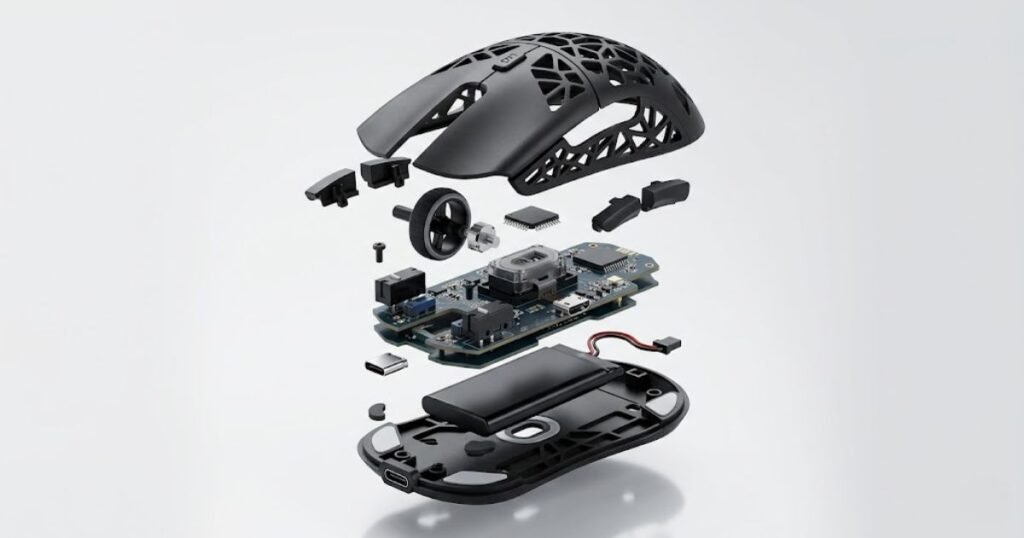
The lightweight mouse trend could not have grown as quickly if technology had remained the same. Earlier gaming mice often needed larger components and heavier construction to achieve acceptable performance. As hardware improved, designers gained more freedom to reduce weight while maintaining quality.
Why Better Sensors Made Lightweight Designs More Reliable
Better sensors made lightweight designs more reliable because manufacturers no longer needed bulky solutions to achieve accurate tracking. Modern gaming sensors became smaller, more efficient, and more dependable than many earlier generations.
As sensor technology improved, players became less concerned about whether a lighter mouse could still deliver competitive performance. The discussion gradually shifted away from tracking accuracy and toward shape, weight, and comfort.
This helped remove one of the biggest obstacles to lightweight mouse adoption. Players no longer had to choose between lower weight and reliable tracking.
Improved sensors gave manufacturers confidence to pursue lighter designs without compromising competitive performance.
How Wireless Improvements Removed the Cable Drag Problem
Wireless improvements helped lightweight mice become more attractive because they reduced one of the most common movement complaints: cable drag. Earlier wireless gaming products often faced criticism for latency, battery life, or reliability concerns.
As wireless technology improved, many competitive players became comfortable using wireless mice for serious FPS gaming. This allowed manufacturers to combine lower weight with greater movement freedom.
The result was a gaming mouse experience that felt increasingly effortless. Players could enjoy unrestricted movement without worrying about cable resistance affecting their aim.
Wireless innovation played an important role in making lightweight gaming mice more practical for competitive players.
Why New Shell Materials Made Lightweight Mice Feel Stronger
New shell materials made lightweight mice feel stronger because manufacturers could remove weight without making the mouse feel fragile. This helped change public perception about what a lightweight gaming mouse could be.
One challenge of reducing weight is maintaining structural integrity. Players still expect a gaming mouse to feel durable during daily use. Improved materials allowed designers to achieve both goals at the same time.
As build quality improved, lightweight mice stopped feeling like experimental products. They began feeling like fully developed gaming tools capable of competing with traditional designs.
Stronger lightweight construction helped convince more players that lower weight did not require major compromises.
The table below shows which technologies helped lightweight mice become mainstream:
| Technology | Improvement | Impact on Lightweight Mice |
|---|---|---|
| Gaming sensors | More accurate and efficient tracking | Reduced concerns about performance |
| Wireless technology | Lower latency and better battery life | Allowed lighter cable-free designs |
| Shell materials | Improved strength-to-weight ratio | Made lightweight mice feel more durable |
| Internal components | Smaller and more efficient hardware | Enabled further weight reduction |
Without advances in sensors, wireless performance, and materials, the lightweight gaming mouse trend would likely have developed much more slowly.
Why Professional Players and Reviewers Accelerated the Lightweight Mouse Trend
Professional players and reviewers accelerated the lightweight mouse trend by giving everyday gamers visible proof that lighter mice could perform at the highest competitive levels. Once lightweight designs appeared consistently in professional setups and trusted reviews, player confidence in the category grew rapidly.
The image below reflects how professional players influenced gaming mouse trends:
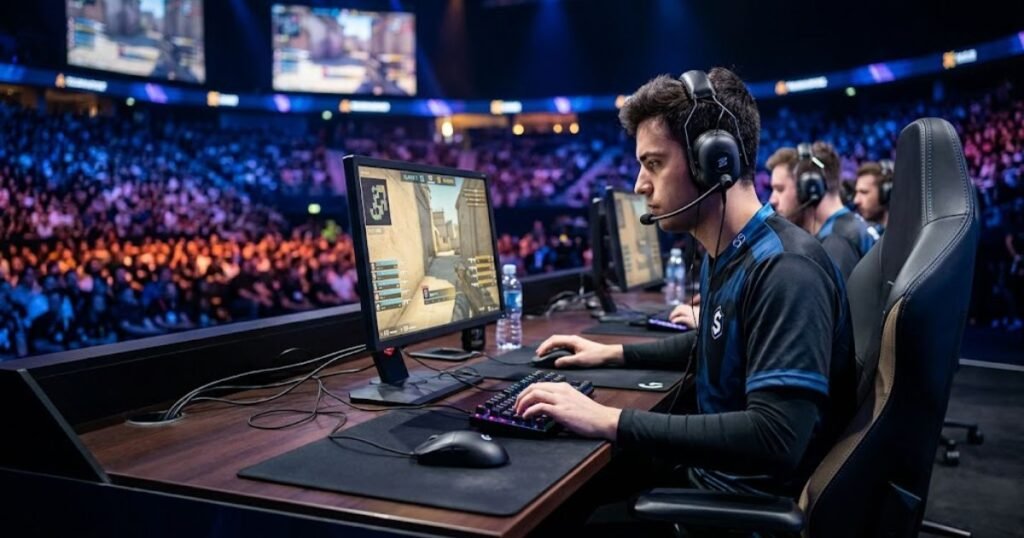
The lightweight mouse movement was already gaining momentum because of FPS gameplay changes, low-sensitivity aiming, reduced fatigue, and better technology. However, those factors alone were not enough to make lightweight mice mainstream. The trend expanded much faster when influential figures started using and discussing lightweight designs publicly.
How Professional Player Preferences Influenced Gaming Mouse Trends
Professional player preferences influenced gaming mouse trends because many gamers naturally pay attention to the equipment used by top competitors. When players see successful professionals using certain gear, they often become curious about the reasons behind those choices.
As more professional FPS players adopted lightweight mice, discussions about mouse weight became more common. Instead of being viewed as a niche preference, lower weight started being treated as a legitimate performance consideration.
This visibility helped lightweight mice gain credibility. Players who may have ignored weight previously began paying attention once it became associated with competitive success.
Professional players helped transform lightweight mice from an enthusiast topic into a mainstream gaming discussion.
Why Gaming Mouse Reviews Started Focusing More on Weight
Gaming mouse reviews started focusing more on weight because reviewers noticed that players increasingly cared about movement feel rather than just specifications. Weight became something readers and viewers could easily understand and compare across products.
Earlier reviews often focused heavily on sensors, DPI numbers, button counts, and RGB features. As lightweight mice gained popularity, reviewers began spending more time discussing how a mouse felt during actual gameplay. Weight became part of the overall user experience rather than just a number on a specification sheet.
This change made lightweight mice easier to evaluate. Instead of relying only on marketing claims, players could watch demonstrations, comparisons, and long-term usage impressions from reviewers they trusted.
Review content helped educate gamers about why lightweight mice felt different and why many FPS players preferred them.
How Community Discussions Turned Lightweight Mice Into a Mainstream Topic
Community discussions turned lightweight mice into a mainstream topic because players constantly shared experiences, recommendations, and setup advice across gaming communities. Conversations about weight became common in FPS-focused spaces.
As more players experimented with different mouse weights, they shared opinions about comfort, movement feel, and aiming preferences. This created a feedback loop where lightweight mice received increasing attention from both experienced and newer players.
Over time, the discussion shifted from asking whether lightweight mice mattered to asking which lightweight mouse was worth trying. That change shows how accepted the category became within the FPS community.
Community influence helped lightweight mice move beyond professional gaming and into the broader consumer market.
The signals below explain how social proof pushed lightweight mice into the mainstream:
- Professional adoption: Competitive players demonstrated that lightweight mice could perform at the highest level.
- Reviewer coverage: Reviews explained how weight affected real gameplay rather than only listing specifications.
- Community discussion: FPS players regularly shared experiences and recommendations related to mouse weight.
- Increased visibility: Lightweight mice appeared more often in setup videos, tournaments, and gaming content.
- Market demand: Growing interest encouraged manufacturers to release more lightweight options.
These signals created a powerful form of social proof. As more people discussed and recommended lightweight mice, the category became increasingly difficult for new FPS players to ignore.
Professional influence, reviews, and community discussion helped accelerate a trend that was already supported by gameplay and technology changes.
Did Lightweight Mice Replace Heavy Gaming Mice Completely?
Lightweight mice did not completely replace heavy gaming mice because mouse weight remains a matter of personal preference. Although lightweight designs became more popular, many players still prefer the feel, stability, or familiarity of a heavier mouse.
The popularity of lightweight mice sometimes creates the impression that heavier mice are outdated. In reality, the gaming mouse market still includes a wide range of weights because different players value different experiences.
Why Some Players Still Prefer Heavier Mouse Designs
Some players still prefer heavier mouse designs because they enjoy the more planted feeling that additional weight can provide. For these players, a heavier mouse may feel more controlled, predictable, or comfortable.
Preference plays a major role in mouse selection. A weight that feels effortless to one player may feel too light to another. Personal comfort often matters more than following a trend.
This is why gaming mouse recommendations rarely depend on weight alone. The best option depends on the individual player and their habits.
The continued existence of heavier mice shows that lightweight popularity did not eliminate all other preferences.
When Heavy Mice Can Still Make Sense for FPS Players
Heavy mice can still make sense for FPS players when their aiming style, sensitivity, or comfort preference aligns better with additional weight. Some players simply perform better with a mouse that feels more substantial in the hand.
Not every FPS player uses the same movement style. Differences in grip, sensitivity, desk setup, and physical comfort can all influence how weight feels during gameplay.
This is one reason why manufacturers continue producing mice across multiple weight ranges. Demand still exists for products that prioritize a different movement feel.
Heavy mice remain relevant because gaming performance is influenced by personal fit, not just market trends.
Why Mouse Weight Should Still Depend on Personal Preference
Mouse weight should still depend on personal preference because no single weight works perfectly for every player. Lightweight mice became popular by solving common problems, but popularity does not automatically mean universal superiority.
Players often perform best when their equipment feels natural and comfortable. Weight is only one part of that equation. Shape, grip compatibility, sensor quality, and overall comfort can all influence the final experience.
Understanding why lightweight mice became popular is useful, but it should not force every player toward the same choice. The goal is finding equipment that supports individual performance.
Mouse weight remains a personal decision even in a market heavily influenced by lightweight designs.
The table below explains why lightweight mice became popular without making heavy mice obsolete:
| Topic | Lightweight Mouse Trend | Why Heavy Mice Still Exist |
|---|---|---|
| Market popularity | Dominates many FPS recommendations | Different players still prefer different weights |
| Movement feel | Emphasizes lower effort and mobility | Some players prefer a more planted feeling |
| Competitive use | Widely used in modern FPS gaming | Not every professional uses the same weight range |
| Player preference | Popular among many low-sensitivity users | Comfort and familiarity still matter |
For players interested in understanding both sides of the weight discussion, GearTP’s guide on lightweight vs heavy gaming mouse explores the strengths and trade-offs of each approach in greater detail.
The success of lightweight mice is best understood as a shift in player priorities rather than the disappearance of every other gaming mouse category.
Why Lightweight Mice Continue to Dominate the FPS Market Today
Lightweight mice continue to dominate the FPS market because they align with many modern gaming habits, including low-sensitivity aiming, large mouse pads, extended practice sessions, and performance-focused equipment choices. The factors that originally made lightweight mice popular still exist today.
Unlike many gaming trends that fade over time, lightweight mice solved practical problems that players experience regularly. As long as competitive FPS games reward precision, consistency, and efficient movement, lightweight designs will likely remain relevant.
Why Weight Became a Core Gaming Mouse Specification
Weight became a core gaming mouse specification because players began comparing it alongside sensor performance, shape, wireless technology, and build quality. Once gamers understood how weight affected movement feel, it became an important part of the buying process.
Today, most serious gaming mouse reviews include weight as a major evaluation category. Manufacturers also highlight weight prominently because consumers actively compare products using that specification.
Weight became a core specification because it directly affects how players interact with a mouse during real gameplay.
How Brands Built Entire Product Lines Around Lightweight Design
Brands built entire product lines around lightweight design because market demand shifted toward performance-focused mice. As lightweight models became more successful, manufacturers invested more resources into developing lighter and more specialized products.
Many gaming brands now offer multiple lightweight options instead of treating low weight as a niche feature. This shift demonstrates how strongly consumer expectations have changed over the past several years.
Lightweight design evolved from a single product feature into a major category within the gaming mouse market.
Why Lightweight Mice Are Now Seen as the Default FPS Recommendation
Lightweight mice are now seen as the default FPS recommendation because they work well for a large portion of the competitive player base. Their combination of lower movement effort, comfort, and compatibility with modern aiming habits makes them easy to recommend.
This does not mean every player should automatically buy a lightweight mouse. However, the category has become the starting point for many FPS equipment discussions because it addresses several common player concerns at once.
For players exploring the broader FPS ecosystem, GearTP’s guide to gaming mouse for FPS games covers the key factors that influence mouse performance beyond weight alone.
Lightweight mice remain dominant because they continue to match the needs and expectations of many modern FPS players.
The following timeline explains why lightweight mice became popular and stayed popular:
- Heavy gaming mice dominated: Early gaming mice focused on features, weight systems, and premium physical feel.
- Competitive FPS grew: Players became more focused on aiming performance and movement efficiency.
- Low sensitivity became common: Larger arm movements made mouse weight more noticeable.
- Technology improved: Sensors, wireless systems, and materials enabled lighter designs.
- Pros and reviewers amplified the trend: Lightweight mice gained credibility across the gaming community.
- Mainstream adoption followed: Lightweight mice became the default recommendation for many FPS players.
This timeline shows that lightweight mice became popular because multiple industry, technology, and player behavior changes reinforced one another over time.
The trend continues today because the same conditions that created lightweight mice remain common in competitive FPS gaming.
Should You Care About Why Lightweight Mice Became Popular?
You should care about why lightweight mice became popular because understanding the trend helps you evaluate gaming gear more intelligently. Instead of following marketing claims or community hype, you can understand the actual reasons behind the popularity of lightweight designs.
Knowing why a trend exists is often more useful than simply knowing that the trend exists. Lightweight mice became successful because they addressed real gameplay concerns, but whether those benefits matter to you depends on your own setup and preferences.
When the Lightweight Trend Should Influence Your Next Mouse Choice
The lightweight trend should influence your next mouse choice if you regularly play FPS games, use low sensitivity, experience fatigue during long sessions, or want a mouse that feels easier to move repeatedly.
Players who match these conditions are more likely to notice the benefits that originally helped lightweight mice become popular.
For many competitive FPS players, lightweight mice represent a practical solution rather than a marketing-driven upgrade.
When You Should Ignore the Lightweight Trend
You should ignore the lightweight trend if your current mouse already feels comfortable, consistent, and effective for your playstyle. Popularity alone is not a good reason to replace equipment that already works well.
Many players perform extremely well using setups that differ from current trends. Personal comfort and long-term consistency often matter more than following the latest recommendation.
A gaming mouse should support your playstyle, not force you to follow someone else’s preferences.
How to Think About Mouse Weight Without Following Hype
You should think about mouse weight as one factor within a larger gaming mouse ecosystem. Shape, grip compatibility, sensor quality, comfort, and personal preference remain equally important.
Understanding why lightweight mice became popular allows you to separate genuine benefits from exaggerated claims. Weight matters, but it is not the only factor that influences FPS performance.
The best mouse is not necessarily the lightest mouse. It is the mouse that fits your needs most effectively.
Players who are ready to compare current options can explore GearTP’s recommendations for the best gaming mouse for FPS games to see how weight fits into the bigger purchasing decision.
Understanding the reasons behind lightweight mouse popularity can help you make smarter gear decisions without relying entirely on trends.
Frequently Asked Questions About Why Lightweight Mice Became Popular
The questions below answer common concerns that FPS players have after learning why lightweight mice became popular. These FAQs expand on the topic without repeating the main sections of the article.
Did lightweight mice become popular only because professional players used them?
No. Professional players helped accelerate the trend, but lightweight mice became popular primarily because many players found them more comfortable and easier to move during long FPS sessions.
Are lightweight mice better than heavy mice for every player?
No. Lightweight mice are popular, but personal preference, grip style, sensitivity, and comfort still influence which weight feels best.
Why do most modern FPS mouse recommendations favor lightweight designs?
Most recommendations favor lightweight designs because they align well with low-sensitivity aiming, large mouse pads, and extended gaming sessions.
Did esports contribute to the popularity of lightweight mice?
Yes. Esports increased visibility and helped many players discover the practical benefits of lightweight gaming mice.
Do lightweight mice automatically improve aim?
No. Lightweight mice can improve comfort and movement efficiency, but aim improvement still depends on skill, practice, and technique.
Why were gaming mice heavier in the past?
Older gaming mice often focused on features, adjustable weights, thicker construction, and premium physical feel rather than minimizing weight.
Are lightweight mice only useful for low-sensitivity players?
No. Low-sensitivity players helped drive the trend, but many high-sensitivity players also enjoy lightweight designs.
How much lighter are modern lightweight gaming mice compared to older designs?
Many modern lightweight mice weigh significantly less than older gaming mice, although exact differences vary by product and design philosophy.
Why do gaming mouse reviews discuss weight so frequently now?
Weight receives more attention because players recognize that it affects comfort, movement feel, and long-term usability.
Can a lightweight mouse still feel durable?
Yes. Modern materials and manufacturing techniques allow lightweight mice to remain strong while reducing unnecessary weight.
Will lightweight mice continue to dominate the FPS market?
They likely will as long as competitive FPS players continue prioritizing comfort, efficiency, and low-effort movement.
What is the biggest reason lightweight mice became popular?
The biggest reason is that many FPS players found lighter mice easier to move repeatedly during long gaming sessions while maintaining comfortable aim control.
Conclusion
Lightweight mice became popular because competitive FPS gaming changed what players expected from their equipment. As low-sensitivity aiming, long practice sessions, and performance-focused gear became more common, many players started valuing lower weight over extra features and heavier construction.
The trend was strengthened by advances in technology, widespread esports visibility, reviewer coverage, and growing community discussion. Together, these factors transformed lightweight mice from a niche category into one of the most influential gaming mouse trends of the modern FPS era.
While lightweight mice are not automatically the best choice for everyone, understanding why they became popular provides valuable context for evaluating gaming mice more effectively. The popularity of lightweight designs ultimately reflects changing player priorities rather than a simple marketing movement.
Thanks for reading GearTP. We hope this guide helped you understand why lightweight mice became popular among FPS players.