
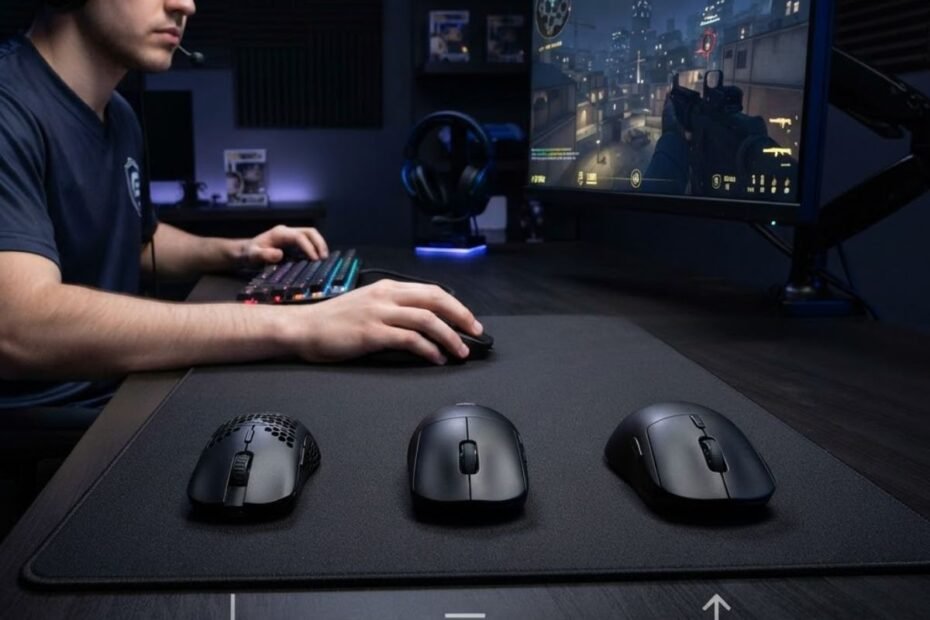
Choosing mouse weight based on playstyle is one of the most overlooked factors in FPS performance. While many players focus on buying the lightest gaming mouse available, weight alone does not determine aiming precision or consistency. The ideal mouse weight depends on how you naturally move the mouse, engage targets, and control your crosshair throughout a match.
Every FPS player develops unique movement habits over time. Some rely on explosive flick shots to eliminate opponents in a split second, while others prefer smooth tracking and controlled adjustments. Because each playstyle places different physical demands on the hand and arm, the same mouse weight can feel perfectly balanced for one player but uncomfortable for another. Understanding this relationship helps you choose a mouse that complements your natural mechanics instead of forcing you to adapt to unsuitable hardware.
Why does playstyle matter more than mouse weight alone?
Playstyle is the primary factor that determines whether a particular mouse weight feels comfortable and effective. Mouse weight only changes how the mouse moves, while your playstyle determines how those movements are performed during actual gameplay. Choosing the right weight therefore begins with understanding your own aiming habits rather than searching for an ideal number of grams.
The relationship between playstyle and mouse movement becomes easier to understand in the following comparison:
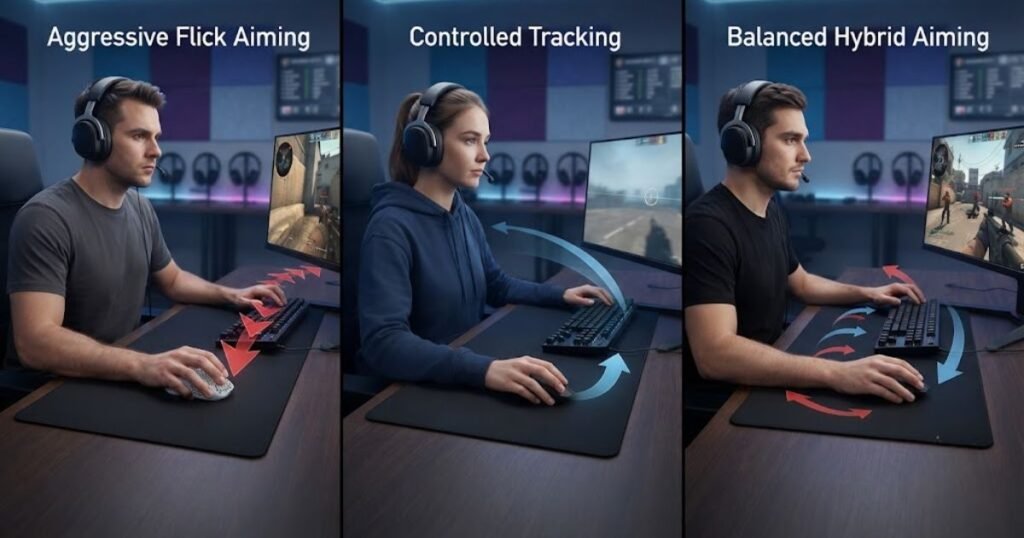
Many discussions about gaming mice revolve around weight measurements such as 45 g, 55 g, or 70 g. Although these numbers provide useful comparisons, they cannot predict which mouse will perform best for every player. Two gamers using identical hardware may experience completely different results because they move, accelerate, and stop the mouse in fundamentally different ways.
For example, an aggressive player frequently performs explosive flicks, rapid target switching, and quick micro-adjustments across large areas of the mouse pad. A slower tactical player often prioritizes controlled crosshair placement, smooth corrections, and deliberate movement before firing. Neither approach is inherently better. They simply demand different movement characteristics, making playstyle a more meaningful starting point than weight specifications alone.
Instead of asking whether a mouse is lightweight or heavy, experienced players often ask a more practical question: does this weight support the way I naturally aim? That perspective leads to more consistent performance because the mouse becomes an extension of existing muscle memory rather than something that constantly requires conscious adjustment.
Different aiming styles place different demands on mouse movement
Every aiming style emphasizes different types of mouse movement, which changes how comfortable a particular mouse weight feels during gameplay. Fast flicking, continuous tracking, and hybrid aiming each require different levels of acceleration, stopping control, and movement consistency.
Players who depend on flick shots often generate quick bursts of acceleration to reach a target almost instantly. Their mouse must respond rapidly while remaining easy to stop precisely at the intended position. Excessive resistance during these rapid movements can make repeated flicks feel slower and require greater physical effort over time.
Tracking-oriented players experience a different challenge. Instead of making frequent explosive movements, they continuously follow moving targets while maintaining stable crosshair placement. Smooth movement and predictable control become more important than maximum acceleration because accuracy depends on maintaining consistent motion rather than reaching the target as quickly as possible.
Many FPS players eventually develop a hybrid aiming style that combines both techniques. Games such as Valorant, Counter-Strike 2, Apex Legends, and Call of Duty all contain situations where players alternate between flicking toward unexpected threats and tracking opponents during longer engagements. Because of this variety, many gamers ultimately prefer a balanced mouse weight instead of pursuing the lightest possible option.
The table below summarizes how different aiming styles interact with mouse movement characteristics:
| Aiming Style | Primary Mouse Movement | Movement Priority | Typical Weight Preference |
|---|---|---|---|
| Flick-focused | Rapid directional changes | Fast acceleration and quick stopping | Generally lighter |
| Tracking-focused | Continuous target following | Smooth and predictable movement | Medium to moderately heavy |
| Hybrid | Combination of flicking and tracking | Balanced speed and stability | Moderate weight |
The relationship between aiming style and movement characteristics demonstrates why mouse weight should always be evaluated within the context of gameplay instead of being judged by its specifications alone.
Mouse weight changes how movement feels during gameplay
Mouse weight influences the physical sensation of movement rather than directly increasing or decreasing aiming skill. It affects how much effort is required to start moving, stop precisely, and make repeated adjustments during every match.
A lighter mouse generally requires less force to accelerate, making fast directional changes feel more effortless. Small corrections can also become easier because less momentum must be controlled before changing direction. These characteristics often create a responsive feeling that many competitive players appreciate, especially during fast-paced engagements.
Increasing mouse weight changes these movement characteristics instead of simply making the mouse slower. Greater mass can produce a steadier feeling throughout long, controlled movements while naturally reducing small unintended corrections caused by overly sensitive hand motions. For some players, this added stability creates more confidence when maintaining precise crosshair placement.
It is also important to recognize that perception varies from one player to another. Two mice with identical weights may feel noticeably different because of differences in balance, shape, skates, weight distribution, or grip design. For this reason, evaluating mouse weight should always include the overall handling experience rather than focusing exclusively on the number printed in the specifications.
Ultimately, mouse weight serves as one component of the overall aiming experience. When it matches your natural movement habits, every action feels more predictable, allowing muscle memory to develop with fewer unnecessary adjustments and creating a stronger foundation for consistent FPS performance.
What mouse weight suits fast and aggressive FPS players?
Fast and aggressive FPS players generally benefit from lighter mouse weights because they support quicker acceleration, faster directional changes, and effortless micro-adjustments. However, the lightest mouse available is not automatically the best choice. The ideal weight should allow rapid movements while still providing enough control to stop accurately after every flick.
The following example demonstrates how lightweight mice support rapid directional movement:
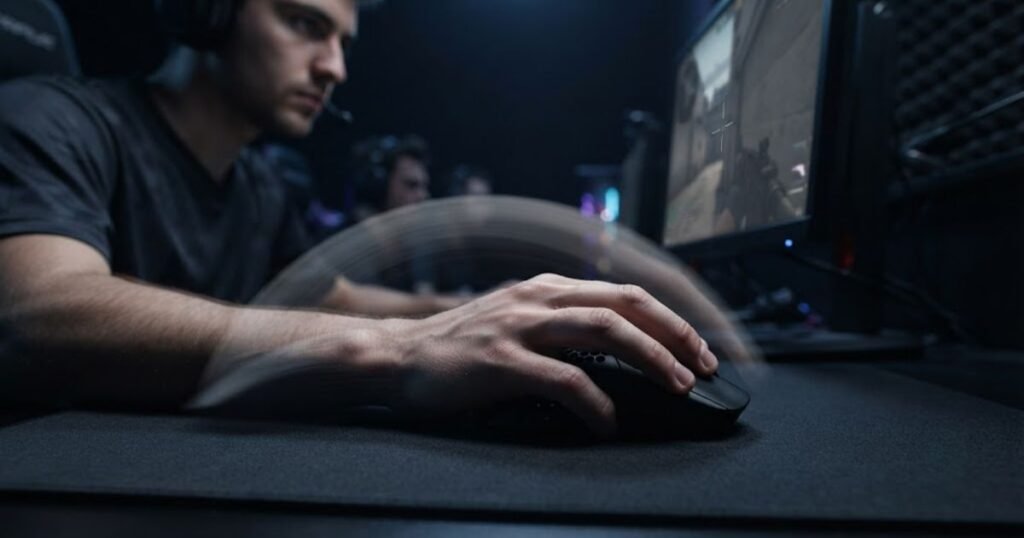
Aggressive players constantly create pressure by taking duels, clearing angles quickly, and reacting to unexpected opponents. Their crosshair rarely remains stationary for long periods. Instead, it repeatedly accelerates toward new targets before stopping almost instantly. Because these movements occur hundreds of times during a match, mouse weight directly influences how efficiently they can be performed.
Lighter gaming mice reduce the amount of force required to initiate movement. Less physical effort allows players to react naturally during high-pressure situations without feeling that the mouse is resisting each change in direction. While reaction speed still depends primarily on player skill, reduced inertia often makes rapid aiming movements feel more responsive.
That said, lightweight mice should never be viewed as a shortcut to better aim. Mechanical precision still comes from practice, muscle memory, and consistent technique. Mouse weight simply determines how naturally those skills translate into physical movement throughout a match.
Lightweight mice improve rapid directional changes
Lower mouse weight makes repeated directional changes easier because less force is required to accelerate and stop the mouse during fast aiming sequences. This characteristic is especially valuable for players who frequently perform flick shots, snap onto unexpected targets, or reposition their crosshair multiple times within only a few seconds.
In tactical shooters, every engagement may require a different aiming distance and direction. Clearing corners, checking multiple sightlines, and responding to sudden peeks all involve rapid bursts of movement rather than long periods of continuous tracking. A lighter mouse reduces the effort needed for these repeated accelerations, helping movement feel more fluid during intense rounds.
Fast directional changes also benefit from shorter recovery time after each flick. When the mouse reaches the intended target with minimal resistance, players can immediately transition into the next movement without feeling delayed by unnecessary momentum. This contributes to a smoother rhythm during consecutive engagements, particularly in competitive environments where reaction windows are extremely small.
Although movement speed often receives the most attention, consistency remains equally important. A lightweight mouse should still feel predictable enough to allow repeated flicks toward similar targets without encouraging uncontrolled corrections. The most effective weight is therefore one that balances responsiveness with reliable stopping precision.
The table below compares how different lightweight ranges support aggressive FPS playstyles:
| Mouse Weight | Movement Characteristics | Best Suited For | Potential Limitation |
|---|---|---|---|
| Under 50 g | Extremely effortless movement | Highly experienced flick players | May feel overly sensitive for some users |
| 50–60 g | Fast acceleration with balanced control | Most competitive FPS players | Requires adaptation if switching from heavier mice |
| 60–70 g | Balanced speed and stability | Hybrid aiming styles | Slightly slower during repeated flick sequences |
The comparison shows that lightweight mice are not defined by a single ideal number. Instead, different weight ranges provide different balances between responsiveness and control depending on how aggressively a player approaches combat.
Players who frequently rely on explosive crosshair movements often notice that mouse weight influences flick-shot consistency, particularly when repeated target switching becomes a central part of their aiming style.
Ultimately, lightweight mice provide the greatest advantage when their responsiveness matches the player’s natural movement habits instead of encouraging movements that feel rushed or difficult to control.
Extremely light mice are not always the fastest solution
Reducing mouse weight beyond a certain point does not guarantee faster or more accurate aiming. While extremely light mice minimize movement resistance, they can also make precise stopping more difficult for players who naturally apply larger or more forceful hand movements.
Every flick consists of two equally important phases: accelerating toward the target and stopping exactly where the crosshair should land. If a mouse becomes so light that stopping feels inconsistent, players may begin making unnecessary corrective movements after every flick. These small adjustments can offset much of the speed gained from reducing weight.
The relationship between speed and control also changes with individual technique. Some players naturally generate smooth, controlled movements regardless of mouse weight, while others rely on stronger arm or wrist motions that benefit from slightly greater resistance. Because of these differences, the same ultralight mouse can feel exceptionally responsive for one player yet difficult to stabilize for another.
Competitive performance depends on repeatability rather than isolated moments of speed. A slightly heavier mouse that consistently stops on target often produces better long-term results than an ultralight model that feels unpredictable during repeated engagements.
Instead of pursuing the lowest possible weight, aggressive FPS players should look for a mouse that allows fast acceleration without sacrificing confidence at the end of every movement. When responsiveness and stopping control remain balanced, muscle memory develops more naturally and aiming consistency improves over time.
What mouse weight suits controlled and tracking-focused players?
Players who rely on controlled crosshair placement and continuous tracking often perform best with a balanced mouse weight that emphasizes stability without sacrificing responsiveness. Unlike aggressive flick-oriented players, tracking-focused players spend more time maintaining smooth, uninterrupted movement rather than making repeated explosive direction changes. As a result, consistency throughout the entire movement becomes more important than minimizing resistance.
The following example illustrates how stable tracking benefits from controlled mouse movement:
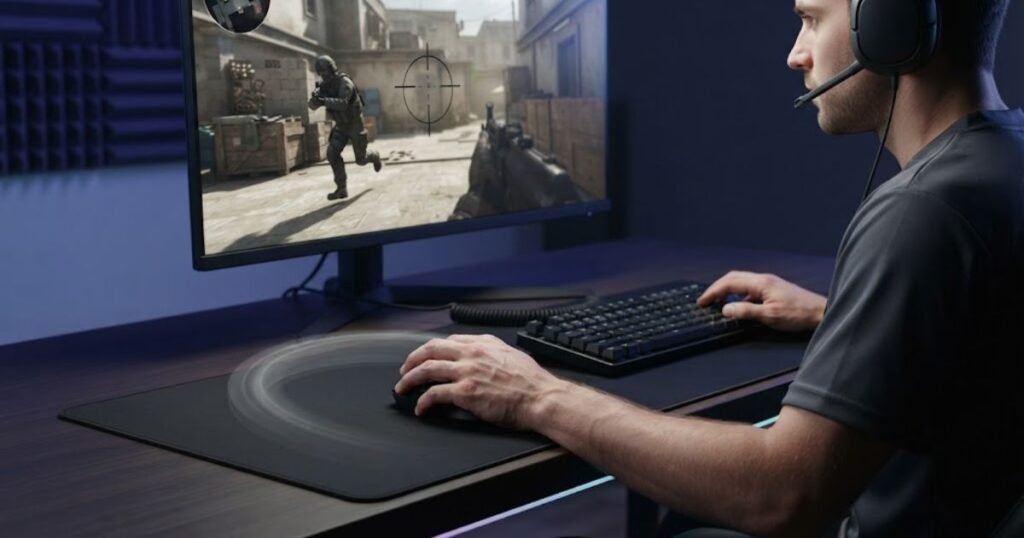
Many tactical and hybrid FPS players naturally develop a deliberate aiming style. Instead of reacting with large, sudden flicks, they anticipate enemy movement, hold angles carefully, and make measured corrections while following targets. Their mouse must therefore feel predictable across both short and extended movements instead of simply feeling as light as possible.
A balanced mouse weight often provides this predictable handling because it allows players to maintain steady control while still responding quickly when adjustments become necessary. Rather than chasing the lowest weight available, controlled players typically benefit from a mouse that supports repeatable movement throughout an entire match.
Stable movement supports continuous target tracking
Continuous tracking depends on maintaining smooth mouse movement from start to finish, making movement stability a higher priority than maximum acceleration. Every correction should feel controlled and predictable so the crosshair remains aligned with moving targets throughout the engagement.
Tracking differs fundamentally from flick aiming because the objective is not reaching a target as quickly as possible. Instead, players continuously adjust their aim while reacting to changes in an opponent’s speed, direction, and positioning. Abrupt movement or excessive corrections can interrupt this process and reduce overall consistency.
A mouse that provides steady movement characteristics often helps players perform these gradual adjustments more comfortably. Smooth transitions between small corrections make it easier to follow unpredictable opponents without constantly overreacting to every movement.
This becomes particularly valuable during longer engagements where the target remains visible for several seconds. Maintaining consistent crosshair placement throughout these encounters usually contributes more to overall accuracy than achieving the fastest possible initial movement.
The table below compares how different mouse weight ranges support tracking-focused gameplay:
| Mouse Weight | Movement Feel | Tracking Stability | Recommended For |
|---|---|---|---|
| Under 50 g | Very responsive | Moderate | Experienced hybrid players |
| 50–65 g | Balanced | High | Most competitive tracking players |
| 65–75 g | Steadier movement | Very high | Players who prioritize control |
The comparison shows that effective tracking is influenced less by pursuing the lightest possible mouse and more by choosing a weight that allows smooth, repeatable movement throughout the entire engagement.
Many players discover that mouse weight influences tracking consistency because smoother movement often becomes easier to maintain when the mouse matches their natural aiming rhythm.
Ultimately, successful tracking relies on movement quality rather than movement speed alone. Choosing a weight that feels stable during continuous corrections often leads to greater long-term consistency.
Medium-weight mice often provide a balanced experience
Medium-weight gaming mice often offer the best compromise between responsiveness and control, making them suitable for players who regularly switch between different aiming techniques. They provide enough agility for quick reactions while maintaining the stability needed for controlled movement.
Many FPS games require players to transition between holding angles, tracking moving enemies, and responding instantly to unexpected threats. A medium-weight mouse accommodates these varied situations by avoiding the extremes associated with both ultralight and heavier designs.
This balanced approach is especially valuable for players who participate in multiple FPS titles or frequently change roles within the same game. Rather than optimizing for a single movement pattern, they benefit from equipment that performs consistently across a wide variety of engagements.
Another advantage of moderate mouse weight is adaptability. Players moving from older gaming mice often adjust more comfortably because the handling characteristics remain familiar while still providing noticeable improvements in responsiveness and precision.
Instead of focusing exclusively on the number shown in a product specification, controlled players should evaluate whether the mouse delivers predictable handling across every movement they perform. When stability and responsiveness remain balanced, consistent aim becomes easier to develop regardless of the specific game being played.
How do grip style and hand movement influence the ideal mouse weight?
Grip style influences how a mouse feels because it changes the way force is applied during every movement. While playstyle determines how you aim, grip style determines how your hand interacts with the mouse. Choosing the right weight therefore requires considering both factors together rather than evaluating either one in isolation.
The illustration below compares how different grip styles interact with mouse weight:
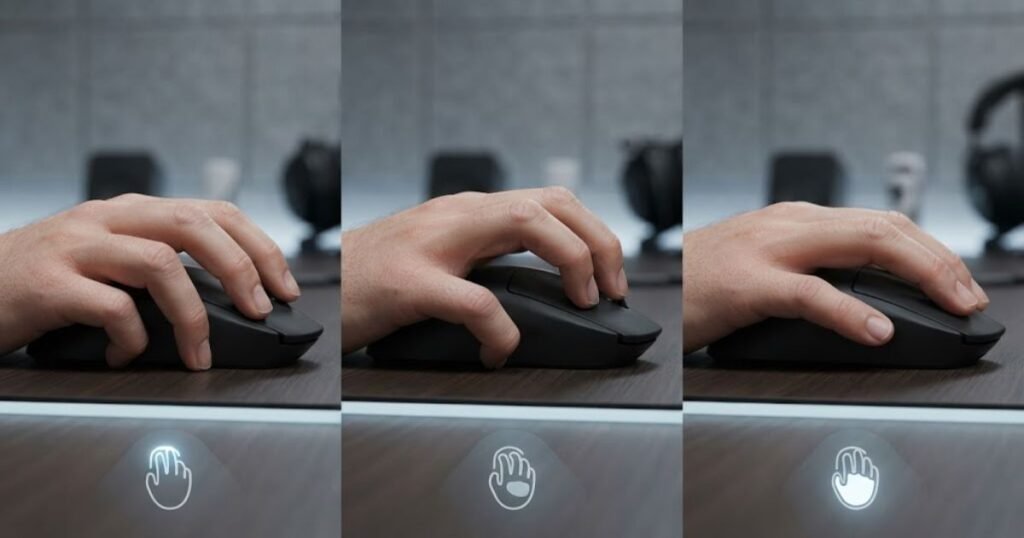
Different grip styles distribute movement across the fingers, wrist, and arm in different proportions. As a result, the same mouse weight can feel highly responsive with one grip while feeling less comfortable with another. The objective is not to match a specific grip with a fixed weight but to understand how grip mechanics influence movement efficiency.
Players who combine an appropriate grip style with a suitable mouse weight often experience more predictable handling because every movement requires less unnecessary compensation from the hand and wrist.
Fingertip grip benefits from lighter weight ranges
Fingertip grip typically benefits from lighter mouse weights because most movement is generated through the fingers rather than the palm. Lower weight reduces the effort required for rapid repositioning while making frequent micro-adjustments feel more natural.
Since only a small portion of the hand remains in contact with the mouse, fingertip users rely heavily on finger control to guide movement. Additional weight may require greater effort during repeated corrections, particularly in fast-paced competitive matches where precision adjustments occur constantly.
Lighter designs generally complement this grip by allowing quick directional changes without placing unnecessary strain on the fingers. The result is a movement style that feels agile while still remaining predictable throughout extended gaming sessions.
Claw grip offers the widest weight flexibility
Claw grip adapts well to a broad range of mouse weights because movement is shared between the fingers and the palm. This combination provides both control and responsiveness, allowing players to prioritize the handling characteristics that best match their preferred aiming style.
Some claw grip users prefer lighter mice for faster reactions, while others appreciate the added stability offered by moderate weights. Because the grip naturally balances finger movement with palm support, players often have greater flexibility when choosing equipment.
This versatility explains why claw grip remains common across many competitive FPS communities. Instead of favoring one specific weight category, it allows players to optimize their mouse based on personal preference and gameplay requirements.
Palm grip often favors greater stability
Palm grip often feels more comfortable with balanced or moderately heavier mouse weights because the entire hand remains in contact with the mouse throughout most movements. Full-hand support naturally emphasizes stability over maximum responsiveness.
Players using a palm grip frequently make larger movements with the wrist or arm while maintaining consistent contact across the entire mouse shell. A balanced weight can complement this movement pattern by providing predictable control without making the mouse feel excessively resistant.
The table below compares how common grip styles interact with different mouse weight ranges:
| Grip Style | Movement Source | Common Weight Preference | Primary Benefit |
|---|---|---|---|
| Fingertip | Fingers | Lighter | Fast micro-adjustments |
| Claw | Fingers and palm | Light to medium | Balanced versatility |
| Palm | Palm, wrist, and arm | Medium to moderately heavy | Stable movement |
The comparison illustrates that grip style does not determine a single correct mouse weight. Instead, it influences which handling characteristics are most likely to feel natural during everyday gameplay.
Many players comparing these movement characteristics eventually realize that the broader decision involves balancing responsiveness and stability rather than choosing one extreme. This relationship becomes clearer when comparing a lightweight and heavy gaming mouse across different grip styles and aiming preferences.
Ultimately, selecting the right mouse weight becomes much easier when grip mechanics and playstyle are evaluated together instead of independently.
Should mouse sensitivity affect your ideal mouse weight?
Yes. Mouse sensitivity influences how far and how frequently you move the mouse, making it an important factor when choosing an appropriate mouse weight. Although sensitivity should never replace playstyle or grip style as the primary consideration, it changes the physical demands placed on every movement. A mouse that feels comfortable at one sensitivity setting may become noticeably less suitable after switching to a significantly higher or lower sensitivity.
Sensitivity determines the distance required to rotate your view or move the crosshair across the screen. Players using low sensitivity perform larger physical movements, while high-sensitivity players rely on shorter hand motions. Because mouse weight directly affects the effort needed to perform those movements, both settings should be evaluated together when selecting a gaming mouse.
Rather than searching for a universal combination, players should aim for a balance where mouse weight supports the amount of movement their chosen sensitivity naturally requires.
Low-sensitivity players usually move the mouse farther
Low-sensitivity players often benefit from lighter or moderately light mice because they repeatedly move the mouse across larger distances during every match. Reduced movement resistance helps maintain smooth arm motion while making repeated repositioning less physically demanding over long gaming sessions.
Large mouse movements are common in competitive tactical shooters where low sensitivity provides greater precision. Clearing multiple angles, repositioning after each engagement, and tracking enemies across wide areas of the mouse pad all require frequent arm movement rather than relying primarily on wrist adjustments.
A lighter mouse can reduce the effort required for these repeated movements without changing aiming technique itself. Instead of forcing the player to overcome additional inertia hundreds of times throughout a match, the mouse moves more naturally with the arm, allowing muscle memory to remain consistent.
This does not mean every low-sensitivity player should choose the lightest available mouse. Stability and comfort remain equally important, particularly for players who prefer deliberate crosshair control during slower engagements.
High-sensitivity players rely more on precision than distance
High-sensitivity players typically perform shorter physical movements, making precise control more important than minimizing movement effort. Because only small wrist or finger adjustments are required, many players feel comfortable using a broader range of mouse weights than low-sensitivity users.
Short movements naturally reduce the amount of physical work required throughout a match. As a result, extremely low mouse weight often provides smaller practical benefits than it does for players using low sensitivity. Instead, maintaining accurate stopping control and predictable handling usually becomes the higher priority.
Some players appreciate slightly greater movement stability because it helps prevent unintended overcorrections during small aiming adjustments. Others continue to prefer lighter mice because they enjoy the responsive feeling. Both approaches can be effective when the chosen weight supports the player’s existing technique.
The table below compares how mouse sensitivity influences suitable mouse weight ranges:
| Sensitivity Style | Typical Mouse Movement | Weight Tendency | Primary Reason |
|---|---|---|---|
| Low Sensitivity | Large arm movements | Light to medium | Reduce effort during repeated long-distance movement |
| Medium Sensitivity | Balanced arm and wrist movement | Medium | Balance responsiveness with stability |
| High Sensitivity | Small wrist and finger movement | Medium to personal preference | Prioritize precise stopping control |
The comparison shows that sensitivity affects how a mouse feels during gameplay rather than defining a universally correct weight. Matching mouse weight to the amount of physical movement required often leads to a more comfortable and consistent aiming experience.
Ultimately, sensitivity should refine your final decision instead of determining it entirely. Playstyle and grip establish the foundation, while sensitivity helps fine-tune the weight that feels most natural during everyday gameplay.
What mistakes cause players to choose the wrong mouse weight?
Most players choose the wrong mouse weight because they follow trends instead of evaluating their own aiming habits. Popular recommendations can be useful as a starting point, but copying another player’s equipment rarely produces identical results. The most effective choice comes from understanding how your own playstyle, grip, sensitivity, and comfort work together.
Competitive gaming communities often focus heavily on specifications, making it easy to believe that lighter automatically means better. In reality, many purchasing mistakes happen because players prioritize product specifications before considering how they actually play FPS games.
The list below highlights the most common mistakes players make when choosing mouse weight:
- Buying the lightest mouse simply because it is popular. Popular trends do not guarantee that an ultralight mouse matches your aiming style or movement habits.
- Copying professional players without considering personal technique. Professional equipment reflects individual preferences developed through years of practice rather than universal recommendations.
- Ignoring long-term comfort. A mouse that feels impressive for a few minutes may become uncomfortable during several hours of competitive play if its weight does not suit your natural movement.
- Choosing based only on specifications. Weight should always be evaluated alongside shape, balance, skates, and grip because these characteristics collectively determine how a mouse feels in actual gameplay.
- Changing mouse weight too frequently. Constantly switching between dramatically different weights prevents muscle memory from adapting, making aiming consistency more difficult to develop over time.
Many players also overlook the fact that every mouse represents a series of design trade-offs rather than a perfect solution. Understanding the drawbacks of ultralight gaming mice helps explain why the lowest possible weight is not always the most practical choice for every FPS player.
Avoiding these common mistakes makes the selection process much simpler. Instead of chasing specifications or following trends, focus on choosing a mouse weight that consistently supports the way you naturally play. Once that foundation is established, improvements in aim are far more likely to come from practice than from repeatedly changing equipment.
How can you choose the right mouse weight for your playstyle?
The best way to choose mouse weight is to evaluate your playstyle, grip style, sensitivity, and comfort together rather than relying on a single specification. Throughout this guide, each factor has been examined individually because every one contributes differently to mouse handling. The final step is combining them into a practical decision process that leads to a weight you can use consistently over time.
The following workflow summarizes the decision-making process visually:
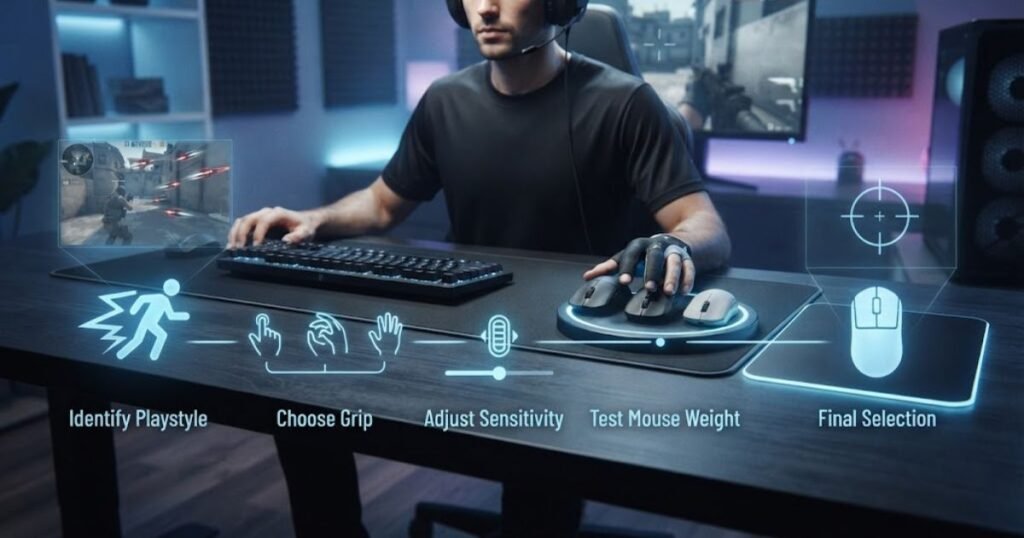
There is no universally correct mouse weight because no two FPS players move exactly the same way. Instead of searching for an ideal number of grams, narrowing your choices based on how you actually play makes the decision significantly easier. A structured approach also reduces the temptation to switch equipment repeatedly whenever a new gaming mouse becomes popular.
The following decision process can help you choose the right mouse weight for your playstyle:
- Identify your primary FPS game. Different games emphasize different aiming mechanics. Tactical shooters generally involve more precise positioning, while movement-heavy shooters often require frequent directional changes.
- Determine your dominant aiming style. Decide whether your gameplay relies primarily on flick shots, continuous tracking, or a balanced combination of both.
- Evaluate your grip style. Fingertip, claw, and palm grips distribute movement differently, influencing how light or heavy a mouse feels during gameplay.
- Consider your mouse sensitivity. Low-sensitivity players usually perform larger physical movements, while higher sensitivity shifts more work toward the wrist and fingers.
- Select a practical starting weight instead of chasing the lightest option. Begin with a range that matches your movement characteristics and spend sufficient time adapting before making further adjustments.
- Prioritize consistency over constant experimentation. Stable muscle memory develops through repetition, making long-term familiarity more valuable than frequently changing equipment.
Following these steps creates a decision process based on gameplay rather than marketing claims. Each factor builds upon the previous one, reducing unnecessary guesswork while helping players narrow their options with greater confidence.
The table below provides quick recommendations based on common FPS player profiles:
| Player Profile | Typical Characteristics | Suggested Weight Direction |
|---|---|---|
| Aggressive Flick Player | Rapid target switching and explosive movement | Light |
| Tracking-Oriented Player | Smooth continuous target following | Medium |
| Hybrid FPS Player | Balanced flicking and tracking | Medium |
| Palm Grip User | Stable full-hand support | Medium to moderately heavy |
| Fingertip Grip User | Finger-driven movement | Light |
The table summarizes how multiple factors work together instead of treating mouse weight as an isolated specification. Using this framework helps narrow your options without assuming that every player should choose the same weight category.
After identifying the characteristics that best describe your gameplay, comparing them against a curated list of recommended gaming mice for FPS games becomes a much more meaningful step because you’ll already understand what handling characteristics you are looking for.
Ultimately, the most effective mouse weight is the one that allows your natural mechanics to remain consistent across practice sessions, ranked matches, and long-term improvement.
Final recommendations for choosing mouse weight based on playstyle
Choosing the right mouse weight is about matching the mouse to the way you naturally play rather than following industry trends or copying professional players. Throughout this guide, every major factor influencing mouse weight has been examined individually, including playstyle, grip style, sensitivity, movement characteristics, and common purchasing mistakes. Together, they provide a practical framework for making a more informed decision.
Players who prioritize rapid flick shots often appreciate lighter mice because they reduce movement resistance during repeated directional changes. Those who depend on controlled tracking or deliberate crosshair placement may find greater confidence with balanced weights that emphasize stability. Meanwhile, hybrid players usually achieve the best long-term results by selecting a moderate weight capable of supporting multiple aiming techniques without favoring one extreme.
It is equally important to remember that specifications never replace experience. Shape, balance, comfort, and long-term familiarity all influence aiming performance alongside mouse weight. Spending time adapting to well-chosen equipment generally produces more consistent improvements than repeatedly replacing hardware in search of marginal differences.
Rather than asking whether a mouse is simply light or heavy, ask whether its handling characteristics match the way you naturally move, aim, and react during competitive play. That perspective shifts the decision away from product specifications and toward real gameplay performance.
Building that mindset is also the foundation of choosing the right gaming mouse for FPS games, where mouse weight becomes one part of a larger system that includes shape, sensor performance, grip compatibility, and overall handling.
When your equipment supports your natural mechanics instead of forcing unnecessary adjustments, developing consistent aim becomes significantly easier. The ideal mouse weight is therefore not the lightest or the heaviest option available, but the one that allows you to perform confidently every time you place your hand on the mouse.
Frequently Asked Questions About Choosing Mouse Weight Based on Playstyle
The following frequently asked questions address the topics that FPS players most often search after learning how playstyle affects mouse weight. These answers clarify important definitions, explain technical considerations, and provide practical recommendations without repeating the concepts covered earlier in this guide.
What is mouse weight in gaming?
Mouse weight is the total mass of a gaming mouse, usually measured in grams. It influences how much physical effort is required to start, stop, and control mouse movement during gameplay. While weight affects handling, it is only one factor among shape, balance, grip, and sensor performance.
What is considered a lightweight gaming mouse?
Most modern gaming mice weighing around 60 grams or less are considered lightweight. Manufacturers may use slightly different classifications, but lightweight mice are generally designed to reduce movement resistance while maintaining competitive performance.
What is considered a medium-weight gaming mouse?
A gaming mouse weighing approximately 60 to 75 grams is commonly regarded as medium weight. This range often balances responsiveness with stability, making it suitable for players who use multiple aiming techniques.
Why does mouse weight matter in FPS games?
Mouse weight affects how naturally a player can control movement during aiming. It influences acceleration, stopping control, and overall handling, making it an important factor when matching a mouse to individual playstyles.
Does mouse sensitivity change the ideal mouse weight?
Yes, mouse sensitivity can influence which weight feels most comfortable. Lower sensitivity usually involves larger arm movements, while higher sensitivity relies more on wrist and finger control, causing different weight ranges to feel more natural.
Can changing mouse weight improve aiming consistency?
It can, provided the new weight better matches your natural movement habits. Consistent equipment allows muscle memory to develop more effectively than frequently switching between dramatically different mouse weights.
Does weight distribution matter more than total mouse weight?
In many cases, yes. A well-balanced mouse often feels easier to control than a poorly balanced mouse with the same total weight because the center of gravity affects how movement is perceived.
How long should you use a new mouse weight before judging it?
Most players should use a new mouse consistently for at least one to three weeks. This adjustment period gives muscle memory enough time to adapt before deciding whether the weight truly suits their playstyle.
Which mouse weight is best for Valorant players?
Many Valorant players prefer lightweight to medium-weight mice. Since the game emphasizes precise crosshair placement and fast reactions, the ideal choice depends on whether a player relies more on aggressive flicking or controlled positioning.
Which mouse weight is commonly recommended for Counter-Strike 2?
Counter-Strike 2 players often choose mice ranging from lightweight to medium weight. The final decision depends more on individual aiming habits, grip style, and sensitivity than on a single recommended weight.
Should beginners buy the lightest gaming mouse available?
No. Beginners usually benefit more from choosing a comfortable, well-balanced gaming mouse than pursuing the lightest specification. Building consistent mechanics is generally more valuable than minimizing every gram.
Is comfort more important than choosing the lightest mouse?
Yes. Long-term comfort supports consistent practice, reduces unnecessary fatigue, and helps players maintain reliable aiming mechanics over time. A comfortable mouse that fits your playstyle will usually deliver better results than one selected solely because it is lighter.
Conclusion
The ideal mouse weight is the one that complements your natural playstyle, not the one with the smallest number on the specification sheet. Throughout this guide, we’ve explored how aiming style, grip, sensitivity, and movement patterns all contribute to choosing an appropriate mouse weight. Each factor influences handling differently, which is why no single recommendation works for every FPS player.
Instead of following trends or copying professional players, evaluate how you naturally move and control your mouse during real gameplay. A weight that feels predictable, comfortable, and repeatable across long practice sessions will support steady improvement far more effectively than constantly switching to newer or lighter models.
Ultimately, consistent performance comes from finding equipment that works with your mechanics rather than forcing you to adapt to the hardware. When mouse weight matches your playstyle, building confidence and improving aim becomes a matter of practice instead of searching for the next specification upgrade.
Thank you for reading this guide. We hope it helps you choose a gaming mouse weight that truly matches your playstyle and supports more consistent FPS performance.