
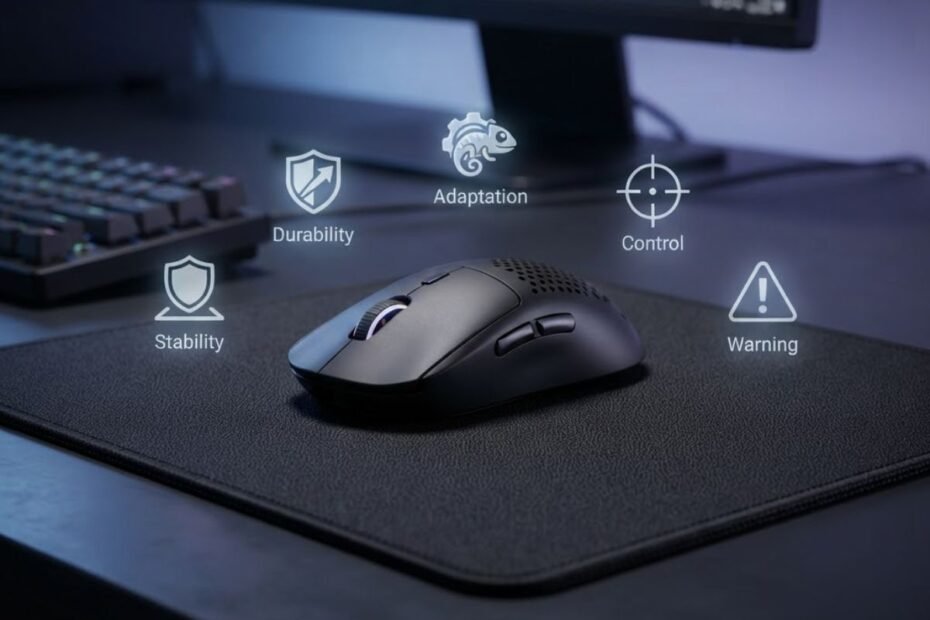
Ultralight gaming mice have become the preferred choice for many competitive FPS players because they reduce effort during fast and repetitive movements. However, lowering mouse weight is never a completely free upgrade. Every gram removed changes how the mouse behaves, creating trade-offs that can improve the experience for some players while making it less suitable for others.
Most discussions focus on the benefits of ultralight gaming mice, but understanding their drawbacks is equally important before making a purchase. Reduced movement stability, lower stopping confidence, adaptation challenges, and structural compromises are all potential consequences of aggressive weight reduction. Whether these trade-offs become noticeable depends on factors such as aiming style, grip technique, sensitivity, and individual preference rather than mouse weight alone.
Instead of asking whether an ultralight gaming mouse is objectively better, experienced players usually evaluate whether its advantages outweigh its compromises for the way they actually play. Looking at these trade-offs alongside a broader comparison between a lightweight vs heavy gaming mouse provides a more balanced perspective than focusing on weight specifications alone.
What Are the Biggest Ultralight Mouse Drawbacks?
The biggest ultralight mouse drawbacks include reduced movement stability, lower stopping control, longer adaptation periods, potential durability compromises, and limited suitability for certain playstyles. These are trade-offs rather than design flaws, meaning their impact varies from one FPS player to another.
Removing weight changes how a gaming mouse accelerates, stops, and responds to subtle hand movements. While these changes often increase responsiveness, they also reduce some of the natural resistance that helps certain players maintain consistent control. Rather than affecting every player equally, each drawback becomes more noticeable under specific conditions, which is why opinions on ultralight gaming mice often differ even among experienced competitors.
The following table provides an overview of the most common ultralight mouse drawbacks, why they occur, and which types of FPS players are generally more likely to notice them before each topic is explored in detail throughout this guide.
Overview of the biggest ultralight mouse drawbacks for FPS players:
| Drawback | Primary Cause | Players Most Affected |
|---|---|---|
| Reduced movement stability | Lower inertia makes unintended movement easier. | Low-sensitivity arm aim players. |
| Lower stopping control | Less physical resistance requires more precise braking. | Players who rely on precise crosshair placement. |
| Longer adaptation period | Muscle memory must adjust to a lighter mouse. | Players switching from medium or heavy mice. |
| Potential durability compromises | Some designs remove structural material to reduce weight. | Users considering budget ultralight models. |
| Limited playstyle compatibility | Different aiming techniques benefit from different weight ranges. | Players who prioritize control over maximum speed. |
The comparison above highlights an important point: ultralight mouse drawbacks are not universal disadvantages. Some originate from the physical characteristics of a lighter mouse, while others depend largely on the player’s own habits and preferences. Understanding this distinction helps avoid judging every ultralight gaming mouse by the same standard.
Each drawback deserves to be evaluated independently rather than treated as evidence that ultralight gaming mice are either better or worse than heavier alternatives. The following sections examine these trade-offs one at a time, beginning with movement stability and why it is often the first difference players notice after switching to a significantly lighter mouse.
Why Can Ultralight Mice Feel Less Stable?
Ultralight gaming mice can feel less stable because their lower mass offers less natural resistance during movement. While this improves responsiveness, it can also make small hand movements easier to exaggerate, causing some FPS players to experience less consistent cursor control until they fully adapt.
The following illustration demonstrates how movement stability may feel different when transitioning to an ultralight gaming mouse:
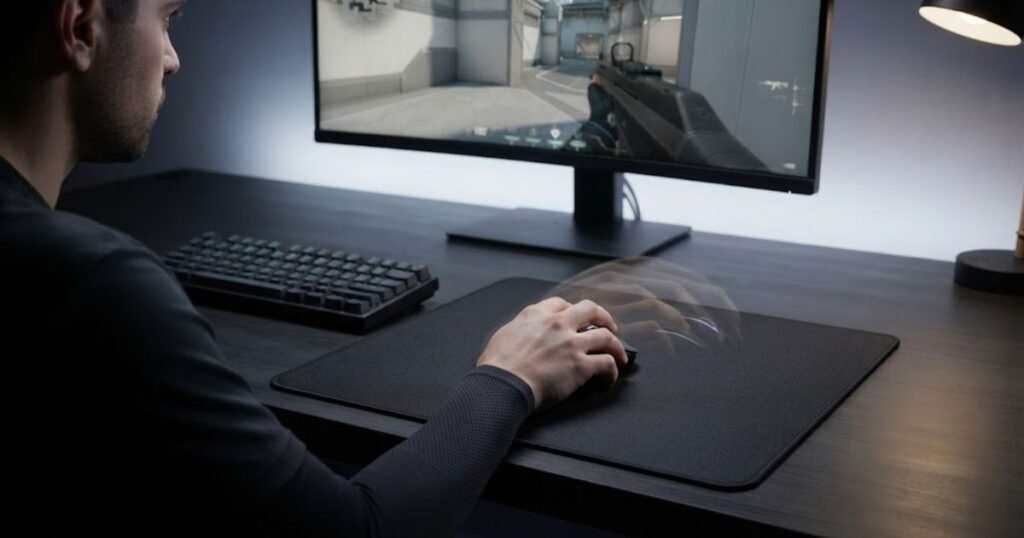
Movement stability is not determined by mouse weight alone, but weight directly influences how much force is required to start, adjust, and redirect the mouse. A heavier mouse naturally resists unintended motion through its greater inertia, whereas an ultralight mouse responds almost immediately to even subtle changes in hand pressure. This increased responsiveness is often perceived as speed, but it may also reduce the feeling of steadiness for players who are accustomed to more physical resistance.
How Lower Inertia Changes Mouse Movement
Lower inertia allows an ultralight gaming mouse to accelerate and change direction more easily, but it also reduces the amount of resistance that naturally smooths small hand movements. As a result, tiny adjustments become more sensitive, which some players interpret as reduced stability.
Because less force is needed to move an ultralight mouse, every correction made by the hand has a more immediate effect on cursor movement. This behavior is neither inherently good nor bad. For players with refined mouse control, faster response may improve overall agility. For others, especially during the early adjustment period, the same responsiveness can make movement feel less controlled than expected.
Why Some Players Experience Overcorrection
Overcorrection occurs when players unintentionally move the mouse farther than intended while making small directional adjustments. An ultralight mouse does not cause overcorrection by itself, but its lower resistance can make existing control habits more noticeable.
Players who have developed muscle memory around a heavier mouse often apply more force than necessary after switching to an ultralight model. Until that movement pattern adapts, corrections may become slightly larger or more frequent, creating the impression that the mouse is unstable. In many cases, the issue reflects a mismatch between established motor habits and a different physical feel rather than a flaw in the mouse itself.
The following table summarizes the main factors that influence movement stability when using an ultralight gaming mouse and explains why different FPS players may experience different levels of control.
| Factor | Effect on Stability | Why It Matters |
|---|---|---|
| Lower mouse weight | Reduces natural movement resistance. | Small hand movements become more responsive. |
| Existing muscle memory | May temporarily reduce consistency. | Previous movement habits require adjustment. |
| Grip pressure | Affects unintended movement. | Higher grip tension can amplify small corrections. |
| Mouse control technique | Influences movement precision. | Consistent hand control minimizes unnecessary corrections. |
| Adaptation time | Improves long-term stability. | Motor control becomes more refined with continued use. |
The comparison shows that perceived stability depends on multiple factors rather than mouse weight alone. While lower inertia changes how quickly the mouse responds, individual control habits, grip technique, and adaptation all play equally important roles in determining whether an ultralight mouse feels stable during competitive play.
Movement stability should also be distinguished from stopping control. A mouse can feel highly responsive during continuous movement while still requiring greater precision to stop exactly where intended. That separate trade-off is explored in the next section.
Why Can Stopping Control Become More Difficult?
Stopping control can become more difficult with an ultralight gaming mouse because lower mass provides less natural braking during movement. While the mouse starts moving with minimal effort, it also requires more precise hand control to stop exactly where intended, particularly during fine aiming adjustments.
The illustration below highlights the moment players transition from movement to stopping during an aiming sequence:
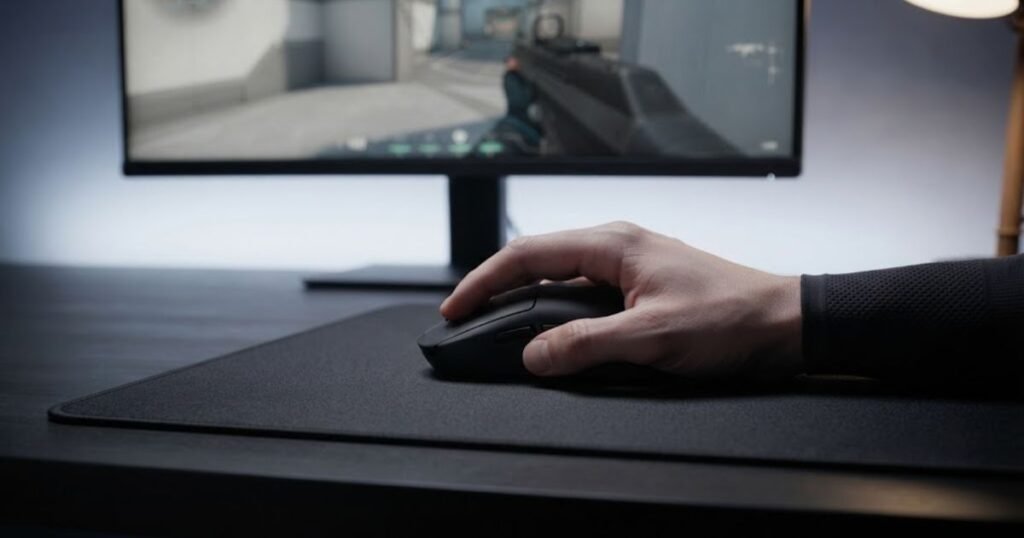
Stopping control refers to the ability to end a mouse movement precisely at the desired point rather than how quickly or smoothly the mouse moves across the mouse pad. An ultralight mouse does not inherently reduce accuracy, but its reduced inertia means there is less physical resistance to help slow the mouse naturally before it comes to a complete stop. For some FPS players, this creates a noticeable difference in how controlled the mouse feels at the end of each movement.
Why Precise Braking Requires More Hand Control
Because an ultralight mouse offers less natural resistance, players must rely more on deliberate muscle control to slow and stop movement accurately instead of depending on the mouse’s weight to absorb momentum.
With heavier mice, a small amount of physical inertia can make deceleration feel more gradual. Ultralight models reduce that effect, allowing the mouse to react immediately to hand input throughout the entire movement. As a result, stopping consistently depends more on refined motor control than on the mouse itself. Players who already have disciplined hand control often adapt quickly, while others may initially feel that the mouse stops too abruptly or requires greater precision than expected.
How Mouse Sensitivity Influences Stopping Control
Mouse sensitivity can influence how noticeable stopping control becomes because higher sensitivity amplifies small physical movements, while lower sensitivity generally provides more room to make controlled adjustments before stopping.
Weight and sensitivity work together rather than independently. Players using very high sensitivity may notice stopping control differences sooner because smaller hand movements produce larger cursor movements on screen. Conversely, lower sensitivity users often have more physical distance available to manage deceleration, although they may still need time to adjust if they previously used a significantly heavier mouse.
The following comparison summarizes the primary factors that influence stopping control when using an ultralight gaming mouse.
| Factor | Effect on Stopping Control | Reason |
|---|---|---|
| Lower mouse weight | Requires more deliberate braking. | Less inertia provides less natural deceleration. |
| Hand control | Directly affects stopping consistency. | Fine muscle control determines how precisely movement ends. |
| Mouse sensitivity | Changes how noticeable stopping errors become. | Higher sensitivity magnifies small physical movements. |
| Previous mouse weight | Influences adaptation difficulty. | Existing muscle memory affects braking habits. |
| Practice time | Improves long-term consistency. | Motor patterns gradually adapt to lower resistance. |
Comparison of the primary factors that influence stopping control when using an ultralight gaming mouse during FPS gameplay.
The comparison illustrates that stopping control depends on a combination of mouse characteristics and player technique. Although reduced weight changes how quickly the mouse responds, consistent stopping ultimately develops through adaptation, refined motor control, and appropriate sensitivity settings rather than weight alone.
Stopping control should not be confused with structural durability or build quality. Once movement-related trade-offs are understood, the next consideration is whether reducing weight also introduces compromises in the physical construction of an ultralight gaming mouse.
Are Ultralight Gaming Mice Less Durable?
Ultralight gaming mice are not automatically less durable, but reducing weight often requires different engineering approaches that may affect structural rigidity, material thickness, or long-term wear resistance. The overall durability depends far more on design quality and manufacturing standards than on weight alone.
The following image compares the structural design commonly found inside modern ultralight gaming mice:
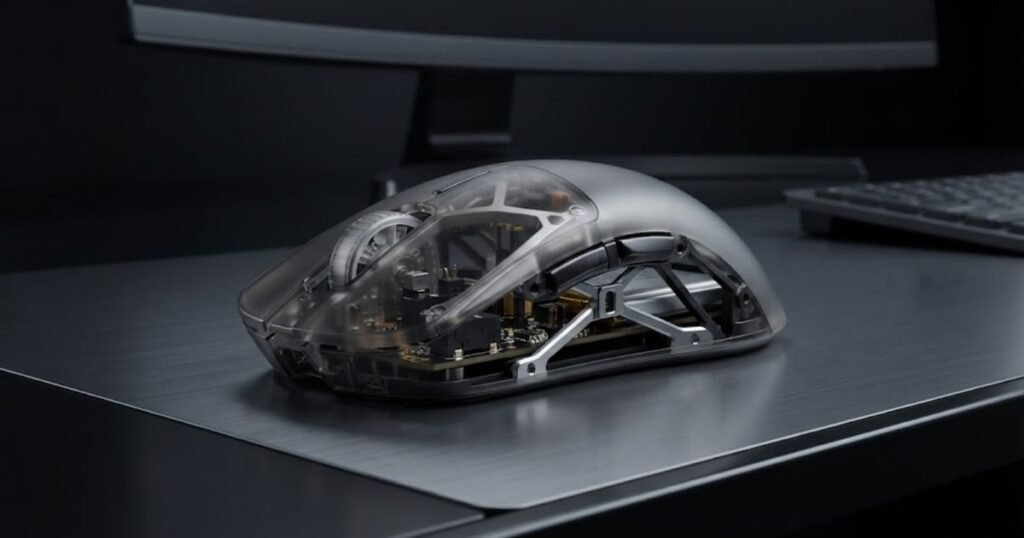
Modern ultralight gaming mice achieve lower weights by removing unnecessary material, redesigning internal structures, and using lightweight components instead of simply making the shell thinner. Premium manufacturers typically balance these changes through reinforced internal frames and stronger composite materials, whereas lower-cost models may sacrifice structural support to reach an aggressive weight target.
Why Lightweight Designs Use Different Structural Solutions
Reducing mouse weight requires engineers to optimize the internal structure so that less material is used without significantly reducing strength. Different manufacturers solve this challenge in different ways, which explains why durability varies considerably between ultralight models.
Weight reduction is rarely achieved through a single design change. Instead, manufacturers combine lighter shell materials, optimized internal support, smaller structural components, and more efficient layouts to remove unnecessary mass. When these elements are carefully engineered, an ultralight mouse can remain structurally solid despite weighing much less than traditional gaming mice. Problems usually appear when weight reduction becomes the primary objective without sufficient attention to reinforcement.
Premium Versus Budget Ultralight Durability
Premium ultralight gaming mice generally maintain better long-term durability because they invest more heavily in material selection, structural engineering, and manufacturing consistency. Budget models may achieve similar weight specifications while relying on simpler construction methods that increase the likelihood of flex or long-term wear.
Weight alone should never be used as a measure of durability. Two ultralight gaming mice with nearly identical specifications may deliver very different long-term reliability depending on how their internal structures are designed and assembled. For this reason, evaluating build quality requires looking beyond the advertised weight and considering the overall engineering behind the product.
The following comparison summarizes the structural factors that most commonly influence durability in ultralight gaming mice.
| Structural Factor | Influence on Durability | Why It Matters |
|---|---|---|
| Internal frame design | Determines structural rigidity. | A reinforced frame distributes pressure more effectively. |
| Material quality | Affects resistance to long-term wear. | Higher-quality polymers better withstand repeated use. |
| Manufacturing precision | Influences overall structural consistency. | Accurate assembly reduces unwanted flex and movement. |
| Weight reduction strategy | Determines how mass is removed. | Efficient engineering preserves strength while lowering weight. |
| Product quality tier | Often reflects engineering investment. | Premium models typically prioritize durability alongside low weight. |
Comparison of the primary structural factors that influence long-term durability in ultralight gaming mice.
The comparison demonstrates that durability cannot be judged by weight alone. Structural engineering, material selection, and manufacturing quality all have a greater influence on long-term reliability than the number displayed on a product specification sheet. As a result, two ultralight gaming mice with similar weights may provide very different ownership experiences over time.
Although durability concerns relate to the physical construction of the mouse, they are separate from the user’s ability to adapt to a lighter device. Even a well-built ultralight mouse may still require time for muscle memory to adjust, which is the next trade-off explored in this guide.
Why Does Switching to an Ultralight Mouse Take Time?
Switching to an ultralight gaming mouse takes time because the body must adapt to a different level of physical resistance during movement. Existing muscle memory, which was developed around a heavier mouse, does not immediately adjust to a device that responds more quickly to the same hand movements.
The following illustration shows how players gradually adapt to a lighter gaming mouse through repeated practice:
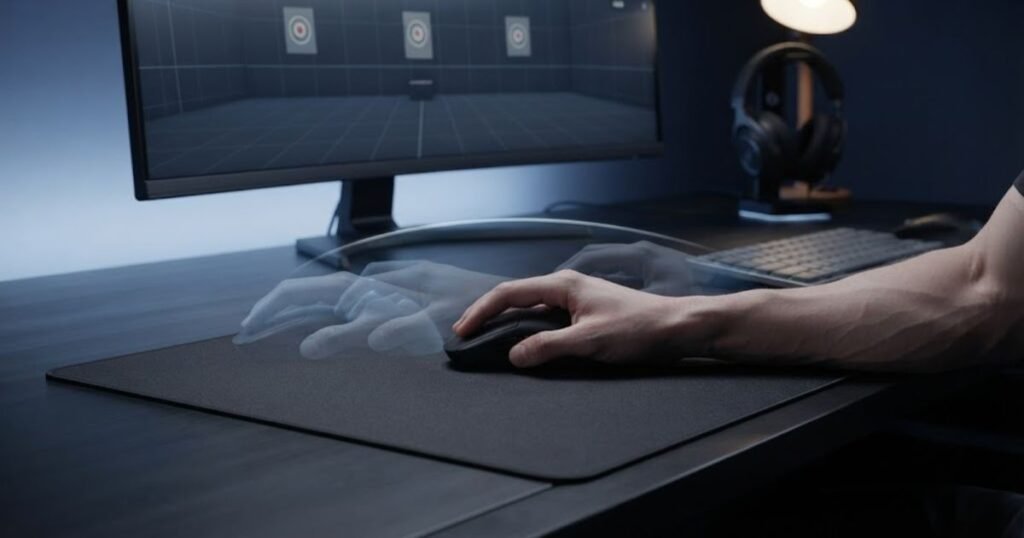
Most experienced FPS players build consistent aiming habits through thousands of repeated movements over time. These habits become automatic, allowing the hand to apply familiar amounts of force without conscious thought. When mouse weight changes significantly, those established movement patterns no longer produce exactly the same result, creating a temporary adjustment period rather than an immediate performance improvement.
How Muscle Memory Responds to a Lighter Mouse
Muscle memory adapts gradually by learning how much force is required to produce consistent mouse movement with a lighter device. Until that process is complete, movements that once felt natural may initially seem unfamiliar or inconsistent.
Muscle memory is based on repetition rather than conscious calculation. After using a particular mouse weight for an extended period, the body develops predictable movement patterns that become increasingly automatic. Switching to an ultralight mouse changes the physical response to those movements, requiring the nervous system to recalibrate how much force is needed for comfortable and repeatable control. The adjustment process varies from player to player depending on previous experience and the difference in weight between the old and new mouse.
Common Adjustment Mistakes During the First Weeks
Many players slow their adaptation by expecting immediate consistency instead of allowing new movement patterns to develop naturally through regular practice.
During the first days of using an ultralight gaming mouse, it is common to compare every movement with previous habits instead of building new ones. Constantly changing sensitivity, switching back and forth between multiple mice, or evaluating performance after only a few gaming sessions often interrupts the adaptation process. Maintaining consistent settings and allowing sufficient practice time usually provides a more accurate representation of how comfortable the new mouse will feel over the long term.
The following table summarizes the most common factors that influence how quickly players adapt after switching to an ultralight gaming mouse.
| Factor | Influence on Adaptation | Explanation |
|---|---|---|
| Previous mouse weight | Higher influence | Larger weight differences generally require more adjustment. |
| Practice consistency | High influence | Regular use helps establish new movement patterns. |
| Changing sensitivity frequently | Negative influence | Frequent setting changes interrupt muscle memory development. |
| Switching between multiple mice | Negative influence | Different weight characteristics slow adaptation. |
| Time spent using one mouse | Positive influence | Consistent exposure improves long-term familiarity. |
Factors that commonly influence the adjustment period after switching to an ultralight gaming mouse.
The comparison shows that adaptation is primarily influenced by consistency rather than by the mouse itself. Players who give themselves enough uninterrupted practice time often develop new movement habits naturally, whereas frequent equipment or setting changes can prolong the adjustment period.
Needing time to adapt does not necessarily mean an ultralight gaming mouse is unsuitable. The next consideration is whether a lighter mouse matches every type of FPS player, since individual playstyles and preferences also influence whether its trade-offs become meaningful.
Which FPS Players May Not Benefit From an Ultralight Mouse?
Ultralight gaming mice are not the ideal choice for every FPS player. Individual aiming habits, preferred movement style, and grip pressure all influence how noticeable the trade-offs become. Players who rely on greater physical resistance or highly consistent movement patterns may require a longer adjustment period or simply prefer a different weight.
Mouse weight should be viewed as one component of an overall aiming system rather than a universal upgrade. Although many competitive players perform exceptionally well with ultralight mice, others achieve greater consistency using equipment that better matches their existing habits. Understanding these differences helps set realistic expectations before making a switch.
Low-Sensitivity Players
Some low-sensitivity players may find the transition to an ultralight gaming mouse more noticeable because their aiming style depends on large arm movements that have been refined around a familiar level of physical resistance.
Large sweeping motions involve repeated acceleration and deceleration across greater distances. When mouse weight changes substantially, those established movement patterns often require additional practice before they feel completely natural again. This does not mean ultralight mice are unsuitable for low-sensitivity players, but the adjustment period may be more apparent for individuals who have used heavier mice for many years.
Control-Focused Players
Players who prioritize predictable, deliberate mouse control over maximum movement speed may notice the trade-offs of an ultralight mouse more quickly than those who value rapid responsiveness.
Every player develops a personal balance between speed and control. Some naturally prefer equipment that provides a more restrained physical feel throughout extended aiming sessions. For these players, an ultralight mouse may initially feel more reactive than expected, even after becoming familiar with its characteristics. Personal preference often plays a larger role than objective performance.
High-Pressure Grip Users
Players who naturally grip the mouse with significant hand pressure may experience a greater adjustment when switching to an ultralight model because their existing grip habits were developed around a different physical feel.
Grip pressure influences how force is transferred from the hand to the mouse. Individuals who consistently apply firm pressure may initially find that an ultralight mouse responds differently than expected, requiring gradual refinement of long-established habits. Over time, many players adapt successfully, but the adjustment experience varies according to individual technique rather than mouse weight alone.
The following table summarizes the player profiles that may notice the trade-offs of an ultralight gaming mouse more than others.
| Player Profile | Why the Adjustment May Be More Noticeable | Primary Consideration |
|---|---|---|
| Low-sensitivity players | Established large-arm movement patterns. | May require additional adaptation time. |
| Control-focused players | Prefer a more restrained movement feel. | Personal preference for physical feedback. |
| High-pressure grip users | Grip habits transfer force differently. | Grip technique may need gradual adjustment. |
| Long-term users of heavier mice | Existing muscle memory is well established. | Weight transition may feel more significant. |
| Players expecting instant improvement | Adjustment period may be underestimated. | Realistic expectations support smoother adaptation. |
FPS player profiles that may notice the trade-offs of an ultralight gaming mouse more readily during the transition period.
The comparison highlights that suitability depends more on individual habits than on skill level alone. None of these player profiles are unable to use an ultralight gaming mouse successfully, but each may experience the transition differently based on long-established aiming techniques and personal preferences.
Recognizing which players may notice these trade-offs is only part of the decision. The next step is understanding the situations in which a heavier gaming mouse may provide a more suitable overall experience.
When Is a Heavier Gaming Mouse the Better Choice?
A heavier gaming mouse may be the better choice when its physical characteristics align more closely with a player’s established aiming habits and personal preferences. Rather than being universally superior, additional weight can simply provide a more familiar movement experience in certain situations.
Mouse weight should always be considered in the context of how an individual player interacts with their equipment. Some players adapt quickly to ultralight mice, while others continue to prefer a heavier mouse because it matches the movement characteristics they have developed through years of practice. The most suitable option is often the one that supports long-term consistency rather than the lightest specification available.
Situations Where Additional Weight May Feel More Comfortable
A heavier gaming mouse may feel more comfortable for players who have built long-term muscle memory around additional physical resistance or who simply prefer that style of movement.
Years of practice with a particular mouse weight create familiar movement expectations. Even after trying an ultralight model, some players continue to prefer the physical feel of a heavier mouse because it aligns with the habits they have already developed. This preference reflects individual experience rather than an objective difference in performance.
Choosing Consistency Over Maximum Weight Reduction
Choosing a heavier gaming mouse may be reasonable when maintaining familiar movement habits is more important than reducing overall mouse weight.
Weight reduction is only one design characteristic among many. Players who already perform consistently with a heavier mouse do not necessarily gain additional benefits simply by moving to the lightest available option. Maintaining equipment that supports reliable performance can often be a more practical decision than pursuing lower weight without a clear reason to change.
The following table summarizes situations in which a heavier gaming mouse may better match individual player preferences.
| Situation | Why a Heavier Mouse May Be Preferred | Primary Consideration |
|---|---|---|
| Long-term experience with heavier mice | Existing movement habits feel more familiar. | Minimizes unnecessary equipment changes. |
| Preference for greater physical resistance | Movement characteristics better match personal expectations. | Individual comfort and confidence. |
| Satisfaction with current performance | No clear need to change mouse weight. | Consistency may outweigh experimentation. |
| Gradual equipment upgrades | Weight is only one factor among many. | Evaluate the complete gaming setup. |
| Preference-based equipment selection | No single weight suits every player. | Personal fit remains the deciding factor. |
Situations in which a heavier gaming mouse may better align with an FPS player’s established habits and personal preferences.
The comparison shows that choosing a heavier gaming mouse is often based on familiarity and individual preference rather than absolute performance. Weight should be evaluated alongside personal comfort, long-term consistency, and overall playing style instead of being viewed as a universal indicator of gaming performance.
Ultimately, neither ultralight nor heavier gaming mice are inherently better for every player. The final section brings together the trade-offs discussed throughout this guide to help determine whether ultralight mouse drawbacks are significant enough to influence your decision.
Are Ultralight Mouse Drawbacks Worth Worrying About?
For most FPS players, ultralight mouse drawbacks are not necessarily reasons to avoid this type of mouse. Many of the challenges discussed throughout this guide are temporary, preference-based, or influenced by individual playstyle rather than being universal limitations.
Every gaming mouse involves design trade-offs. Reducing weight changes how a mouse feels during movement, but the significance of those changes depends on the player’s previous experience, aiming habits, and personal expectations. Understanding these trade-offs helps create realistic expectations instead of assuming that a lighter mouse will automatically improve or reduce gaming performance.
Which Drawbacks Often Become Less Noticeable Over Time?
Drawbacks related to familiarity and movement habits often become less noticeable as players gain experience with an ultralight gaming mouse and establish new long-term movement patterns.
As regular practice continues, many players naturally become accustomed to the different physical feel of a lighter mouse. Initial uncertainty during the transition period often decreases as new movement habits replace older ones. The pace of this adjustment varies between individuals, but experience generally reduces the impact of temporary adaptation-related challenges.
Which Drawbacks Depend Mostly on Personal Preference?
Preferences regarding mouse feel, movement resistance, and overall comfort remain highly individual even after players have fully adapted to an ultralight gaming mouse.
Some players simply prefer the physical characteristics of a heavier mouse, while others continue to enjoy the responsiveness of an ultralight design after years of use. Neither preference is inherently correct. Long-term satisfaction is usually determined by how well a mouse matches an individual’s playing style rather than by achieving the lowest possible weight specification.
The following table summarizes which ultralight mouse drawbacks commonly improve with experience and which are more closely related to personal preference.
| Drawback | May Improve Over Time | Primarily Preference-Based |
|---|---|---|
| Adjustment to a different mouse weight | Yes | No |
| Movement familiarity | Yes | Partially |
| Preferred physical mouse feel | No | Yes |
| Comfort with different movement resistance | Partially | Yes |
| Overall mouse weight preference | No | Yes |
Summary of which ultralight mouse drawbacks commonly decrease with experience and which remain largely influenced by personal preference.
The comparison illustrates that not every drawback has the same long-term importance. Some concerns naturally become less significant as players gain familiarity with an ultralight mouse, while others remain matters of personal preference regardless of experience.
Ultimately, ultralight mouse drawbacks should be viewed as trade-offs rather than universal disadvantages. Choosing the right gaming mouse depends on finding a weight that complements your individual aiming habits, comfort preferences, and long-term consistency instead of pursuing the lightest specification available.
Frequently Asked Questions About Ultralight Mouse Drawbacks
Ultralight mouse drawbacks often raise additional questions beyond movement stability, durability, and adaptation. The following FAQ addresses the most common concerns FPS players have before deciding whether an ultralight gaming mouse matches their needs.
These questions expand on practical buying considerations without repeating the topics covered in the main sections of this guide. Together, they provide a broader understanding of how ultralight mice fit different gaming preferences and situations.
Are ultralight mice good for FPS games?
Yes. Ultralight gaming mice can be an excellent choice for FPS games, but they are not automatically the best option for every player.
Many competitive FPS players appreciate the responsive feel of a lighter mouse, while others continue performing at a high level with medium-weight or heavier models. The right choice depends on individual preferences rather than a universal rule.
Overall, an ultralight gaming mouse should be selected because it suits your playstyle, not simply because it weighs less.
Do ultralight mice improve aiming accuracy?
No. An ultralight mouse does not automatically improve aiming accuracy.
Consistent aim develops through practice, muscle memory, sensitivity settings, and overall familiarity with your equipment. Mouse weight is only one part of that process.
Ultimately, player skill remains far more important than choosing the lightest available mouse.
What mouse weight is considered ultralight?
Although there is no official industry standard, gaming mice weighing around 60 grams or less are commonly considered ultralight.
Manufacturers may define ultralight differently, but modern FPS-focused mice generally target this weight range while attempting to maintain structural quality and performance.
Rather than focusing on a specific number, evaluate whether the overall design fits your gaming preferences.
Are ultralight mice worth buying?
They can be, provided their characteristics match your personal preferences and gaming habits.
For some players, reducing mouse weight creates a more comfortable experience. Others may prefer a different balance that better matches years of established muscle memory.
Value comes from choosing equipment that complements your individual playstyle instead of following current trends.
Should beginners choose an ultralight gaming mouse?
Beginners can certainly use an ultralight gaming mouse, although it is not a requirement for learning FPS games.
Because newer players have fewer established aiming habits, adapting to different mouse weights may be easier than for experienced players transitioning from heavier equipment.
The most important factor is selecting a mouse that remains comfortable during long-term practice.
Should I replace my heavier mouse with an ultralight model?
Not necessarily. Replacing a heavier mouse only makes sense if you have a clear reason to change.
If your current mouse already feels comfortable and supports consistent performance, lower weight alone may not justify switching to a different device.
Consider changing equipment only when you expect meaningful benefits for your own playing style.
How long does it usually take to adapt to an ultralight mouse?
Adaptation varies from player to player and depends largely on previous experience.
Some players become comfortable within several gaming sessions, while others need multiple weeks of consistent use before new movement habits develop naturally.
Allowing sufficient practice time generally provides a more accurate evaluation than judging a mouse after only a few matches.
Should I change my mouse sensitivity after switching?
In most cases, keeping your existing sensitivity during the initial adjustment period is a practical approach.
Changing both mouse weight and sensitivity simultaneously introduces multiple variables, making it harder to identify which factor affects your performance.
Once adaptation is complete, sensitivity adjustments can be made if necessary.
Is mouse shape more important than mouse weight?
For many players, mouse shape has a greater influence on long-term comfort than weight alone.
A well-designed shape supports natural grip positioning and reduces unnecessary strain during extended gaming sessions, regardless of whether the mouse is ultralight or heavier.
Evaluating shape and weight together usually produces a better long-term choice than prioritizing either characteristic independently.
Does the mouse pad affect how an ultralight mouse feels?
Yes. Mouse pad surface characteristics can noticeably influence the overall feel of an ultralight gaming mouse.
Different surfaces provide different levels of friction, which changes how the mouse responds during everyday gameplay.
Selecting an appropriate mouse pad helps create a more balanced overall gaming setup.
Are ultralight mice only suitable for FPS games?
No. Ultralight gaming mice can also be used for MOBA, battle royale, general gaming, and everyday computer use.
Although many ultralight models are designed with competitive FPS players in mind, their lightweight design is not limited to a single gaming genre.
The best choice still depends on personal preference rather than the type of game being played.
What should I consider before buying an ultralight gaming mouse?
Consider your existing mouse weight, preferred grip style, long-term comfort, and willingness to adapt before making a purchase.
Looking beyond the advertised weight helps you evaluate whether the overall design truly fits your needs. Shape, build quality, and familiarity often contribute just as much to long-term satisfaction.
Taking these factors into account will help you make a more informed decision when choosing your next gaming mouse.
In summary, these frequently asked questions reinforce one important idea: ultralight mouse drawbacks are best understood within the context of individual preferences rather than universal rules. Choosing the right gaming mouse is ultimately about finding equipment that supports your own comfort, consistency, and long-term performance.
Conclusion
Ultralight mouse drawbacks are real, but they are not universal disadvantages. Most of the trade-offs discussed throughout this guide are influenced by personal preference, established aiming habits, and the time required to adapt to a different mouse weight.
Instead of viewing ultralight mice as either better or worse than heavier alternatives, consider how their characteristics align with your own gaming style. Factors such as movement feel, comfort, durability, and long-term consistency should all play a role in your decision rather than focusing solely on the number shown in the specifications.
By understanding both the benefits and limitations of ultralight gaming mice, you can make a more informed choice and invest in equipment that genuinely supports your FPS performance over the long term.
Thank you for taking the time to read this guide. We hope it has helped you better understand ultralight mouse drawbacks and provided the information you need to choose a gaming mouse with greater confidence. At GearTP, our goal is to deliver practical, research-driven gaming gear resources that help players make informed decisions based on real performance rather than marketing claims.