
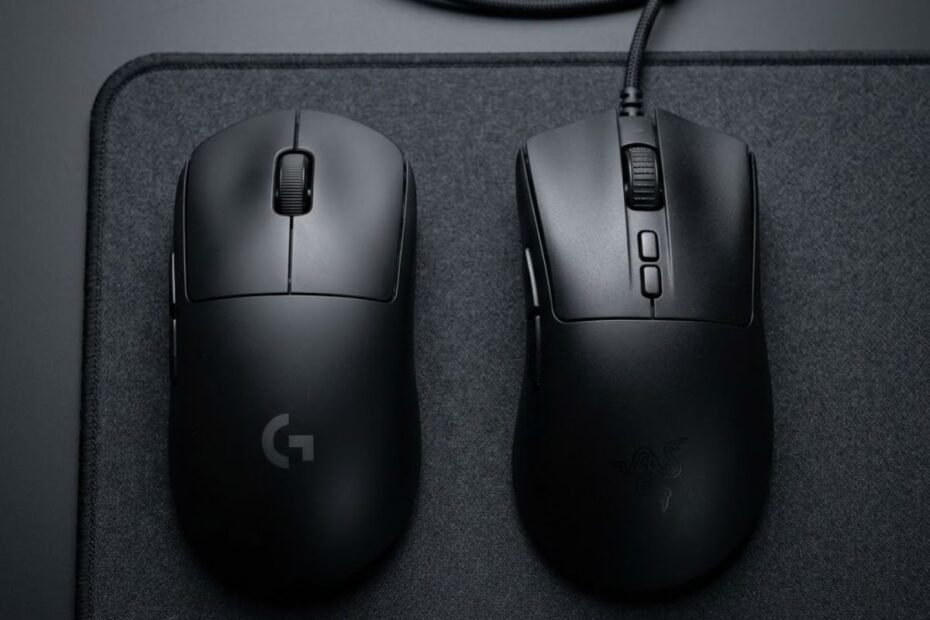
The best mouse shape for aiming is the shape that helps your hand stay stable, repeatable, and comfortable during flicks, tracking, and micro adjustments. A good shape helps your physical movements translate into more consistent crosshair placement throughout a match.
Many FPS players spend months experimenting with DPI, sensitivity, polling rate, and mousepads while overlooking the shape they hold every single round. The reality is that mouse shape affects how naturally your hand grips, moves, stops, and resets after each swipe.
At GearTP, we often see players gain more consistency by switching to a better-fitting shape than by making small sensitivity adjustments. The goal is not to copy a professional player’s mouse. The goal is to find a shape that works with your own hand mechanics.
In this guide, we will break down how mouse shape affects aim, which shape characteristics matter most, and how different designs influence FPS performance across various playstyles.
Does Mouse Shape Actually Improve Your Aim in FPS Games?
Mouse shape is one of the most important aiming factors because it helps your hand produce more consistent movements during gameplay. A shape that matches your grip style and hand mechanics can improve control, stability, and repeatability across different aiming situations.
Every aiming motion starts with physical contact between your hand and the mouse. If the shell supports your grip naturally, your hand can focus on aiming. If the shape constantly forces adjustments, your consistency may suffer even if your settings are perfectly optimized.
For example, the image below shows how different mouse shapes create different hand positions during aiming:
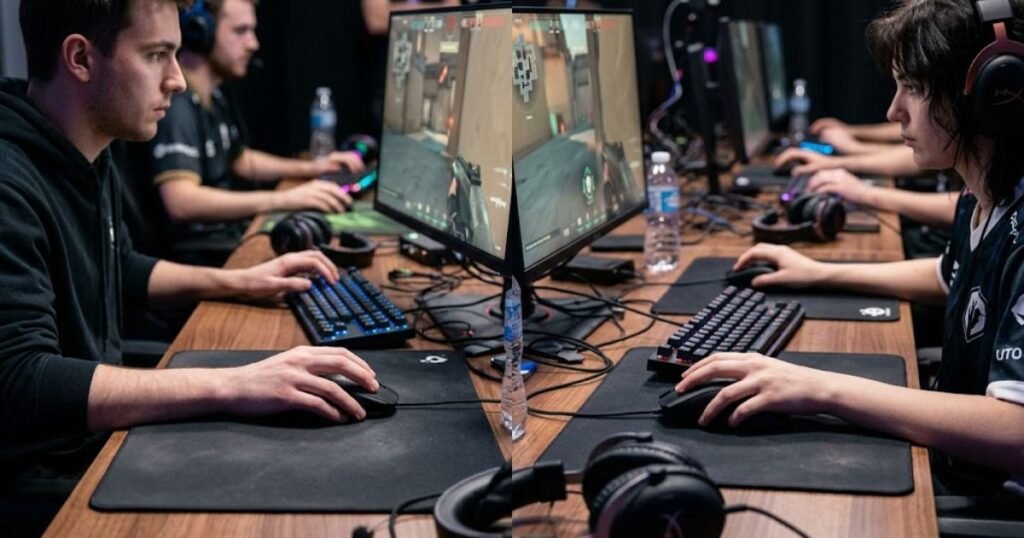
That is why two players using identical hardware and sensitivity settings can experience very different levels of aiming performance. Mouse shape changes how effectively your hand interacts with the mouse during real gameplay.
Why Mouse Shape Matters More Than Most Players Realize
Mouse shape matters because it determines where your fingers, thumb, and palm naturally rest during gameplay. It helps create the physical foundation that every aiming movement depends on.
Modern gaming mice already offer excellent sensors, low latency, and accurate tracking. As hardware differences continue to shrink, shape has become one of the largest factors separating a mouse that feels natural from one that feels awkward.
A shape that fits properly allows your hand to relax and maintain control without unnecessary tension. Many competitive players describe their favorite shape as something they stop noticing entirely because it simply feels natural throughout a match.
Ultimately, shape influences how consistently your hand can repeat the same movement under pressure.
How Shape Influences Flicking, Tracking, and Micro Adjustments
Mouse shape influences aiming because it changes how much leverage, stability, and control your hand has during different movement types. It helps determine how efficiently physical movement becomes crosshair movement.
During flick shots, your thumb and fingers must accelerate and stop the mouse quickly. A shape with strong side control often feels more predictable during fast target switching situations.
During tracking, stability becomes more important than explosive movement. Shapes that provide reliable hand contact often feel smoother when following moving targets over longer distances.
During micro adjustments, finger mobility becomes a major factor. A shape that restricts finger movement can make small corrections feel less precise, especially when holding tight angles or making fine crosshair adjustments.
Different aiming mechanics place different demands on the mouse, which is why shape selection matters in competitive FPS games.
Signs Your Current Mouse Shape May Be Holding Back Your Aim
A poor mouse shape fit often creates aiming problems that players mistakenly blame on sensitivity settings or lack of practice. It helps explain why some players never feel fully comfortable regardless of how much they train.
The signs below can indicate that your current mouse shape is limiting your aiming performance:
- Frequent overflicking: Your crosshair regularly moves past targets despite consistent sensitivity settings.
- Grip adjustments: Your fingers constantly shift position during rounds.
- Hand tension: You squeeze the mouse harder than necessary to maintain control.
- Tracking instability: Following moving targets feels inconsistent or shaky.
- Early fatigue: Your hand becomes uncomfortable during longer gaming sessions.
If several of these symptoms appear regularly, the issue may be the shape itself rather than your settings.
Recognizing these warning signs is often the first step toward finding a mouse shape that better supports your aiming style.
In short, mouse shape affects aim because it directly influences how naturally your hand controls movement, stability, and consistency during gameplay.
What Mouse Shape Characteristics Help Players Aim More Consistently?
Strong aiming shapes help players maintain stability, comfort, grip security, and predictable control during gameplay. These characteristics help reduce unnecessary movement variability and make aiming feel more repeatable.
The image below highlights several key shape characteristics that influence aiming performance:
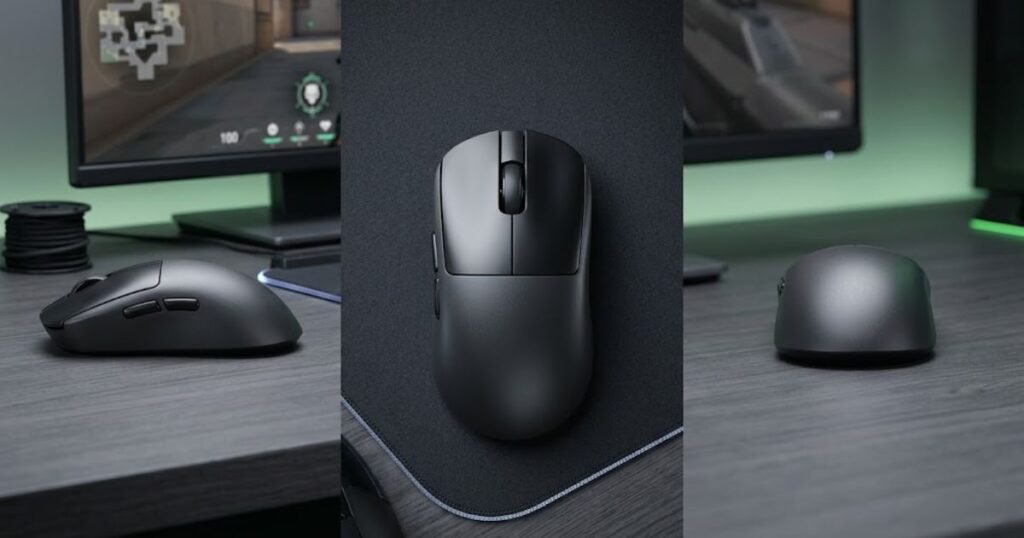
Instead of focusing on brands or professional player preferences, it is more useful to understand the physical shape characteristics that influence aim. Width, hump design, side curvature, and button positioning all affect how the mouse behaves in your hand.
The table below explains the core characteristics of a strong aiming mouse shape:
| Shape Characteristic | Aiming Benefit | Primary Advantage |
|---|---|---|
| Balanced Width | Improves side control | More reliable stopping power |
| Supportive Hump | Increases stability | Better grip consistency |
| Comfortable Side Curves | Improves grip security | Reduced hand tension |
| Proper Button Height | Improves finger control | Cleaner click execution |
| Consistent Rear Support | Improves grip repeatability | More predictable aim |
As shown above, strong aiming shapes combine stability, grip security, and predictable hand positioning. These traits help players maintain better control during flicks, tracking, and micro adjustments.
Why Mouse Width Affects Control and Precision
Mouse width affects aiming because it determines how effectively your fingers and thumb can control lateral movement. It helps create leverage during acceleration and stopping motions.
Narrower mice often feel faster and more agile because they allow greater finger involvement. Many fingertip players appreciate this because it makes quick directional changes easier to perform.
Wider mice generally provide more contact area and often feel more stable during controlled aiming movements. Some players find that wider shapes improve tracking consistency and stopping precision.
Players who are unsure which category fits them should explore a detailed narrow vs wide gaming mouse comparison before making a final decision.
The ideal width should provide enough control without forcing excessive grip pressure.
How Hump Height Changes Hand Stability
Hump height affects aiming because it changes how much support your palm and knuckles receive during gameplay. It helps determine how anchored your grip feels throughout a match.
Lower humps often provide greater freedom for finger movement. This design can feel more agile and responsive for players who rely heavily on fingertip control.
Higher humps generally create stronger contact points with the hand. Many claw grip and palm grip users prefer this added support because it improves stability during repeated swiping motions.
If hump design is one of your biggest concerns, a dedicated low hump vs high hump mouse guide can provide a much deeper comparison.
The right hump height should improve stability without making movement feel restricted.
Why Side Curvature Influences Grip Security
Side curvature influences aiming because it affects how securely your fingers hold the mouse during movement. It helps maintain control without requiring excessive grip force.
Straighter sides often feel versatile because they allow multiple grip styles to work comfortably. This flexibility appeals to players who prefer making small grip adjustments naturally.
More aggressive curves can create stronger contact points for the thumb and fingers. When the shape matches your hand properly, this often increases grip confidence during fast aiming movements.
The ideal side curvature should improve control while allowing your hand to remain relaxed.
How Button Height Affects Click Accuracy
Button height affects aiming because it changes finger positioning and click mechanics. It helps determine how naturally your fingers interact with the primary buttons.
Lower buttons often feel more direct because the fingers rest closer to the click surface. This can make burst firing and tap shooting feel more responsive during competitive gameplay.
Higher buttons may feel comfortable for some hand shapes, but excessive height can increase finger movement and slightly reduce efficiency during repeated clicks.
While button height is not usually the first feature players evaluate, it contributes to the overall feeling of precision and control.
Together, width, hump design, side curvature, and button positioning create the foundation of a mouse shape that supports consistent FPS aiming performance.
Understanding these shape characteristics makes it easier to evaluate specific mouse designs instead of relying solely on marketing claims or popularity.
Is a Symmetrical or Ergonomic Mouse Shape Better for FPS Aiming?
A symmetrical mouse shape is generally better for versatility and adaptability, while an ergonomic mouse shape helps provide additional support and comfort for specific grip styles. The better option depends on how you aim, grip the mouse, and control movement during gameplay.
The comparison below illustrates the visual differences between symmetrical and ergonomic mouse shapes:
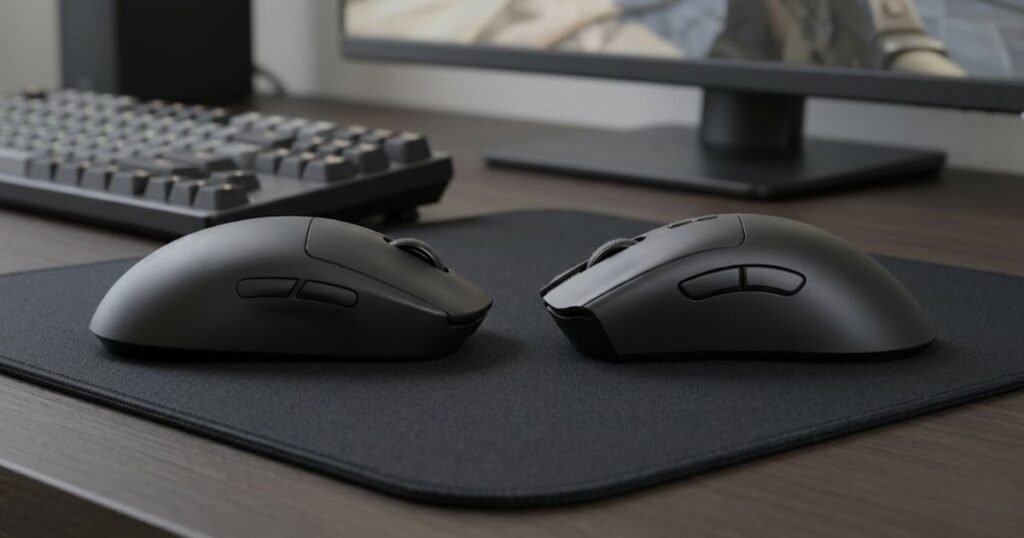
This debate has existed for years within the FPS community because both shape categories can perform at a high level. Some of the best Valorant and CS2 players use symmetrical mice, while others prefer ergonomic designs that provide more natural hand support.
Rather than asking which shape is universally superior, it is more useful to understand what each design does well and where each one may fit your personal aiming style.
The table below compares symmetrical and ergonomic mouse shapes for FPS aiming:
| Factor | Symmetrical Shape | Ergonomic Shape |
|---|---|---|
| Versatility | Excellent | Moderate |
| Grip Flexibility | Excellent | Good |
| Comfort | Good | Excellent |
| Tracking Stability | Good | Excellent |
| Competitive Popularity | Very High | High |
As shown above, symmetrical shapes excel in flexibility and broad compatibility, while ergonomic designs often focus on maximizing support and stability for a specific hand position.
Why Symmetrical Shapes Dominate Competitive FPS Gaming
Symmetrical mouse shapes dominate competitive FPS gaming because they allow greater grip flexibility and easier directional control. They help players perform a wide range of aiming movements without forcing the hand into a specific posture.
Most symmetrical mice place the sensor and shell geometry around a centered structure. This creates a balanced feeling when moving left, right, up, or down. Many players feel this balance improves consistency during flick shots and rapid target switching.
Symmetrical designs also tend to work well across claw grip, fingertip grip, and hybrid grip styles. This flexibility helps explain why so many competitive players continue choosing symmetrical shapes year after year.
Because of their versatility, symmetrical shapes remain one of the safest choices for FPS players seeking all-around aiming performance.
When Ergonomic Shapes Can Improve Aiming Performance
Ergonomic mouse shapes improve aiming performance when additional hand support creates better comfort and stability. They help reduce strain while providing stronger contact between the hand and the mouse.
Unlike symmetrical designs, ergonomic shapes intentionally favor the natural angle of a right-handed grip. This often creates a more relaxed wrist position and allows some players to maintain control with less effort.
Players who prioritize tracking, controlled swiping, or long gaming sessions often appreciate the additional support provided by ergonomic shells. When matched correctly to hand size and grip style, ergonomic shapes can feel extremely stable.
The main advantage of ergonomic mice is not speed. It is the ability to maintain consistent control over extended periods of gameplay.
Which Shape Type Fits Different FPS Playstyles
Different FPS playstyles often benefit from different shape priorities because aiming mechanics vary from game to game. The ideal shape depends on how you engage targets most frequently.
Players who rely heavily on flick shots, quick peeks, and rapid target acquisition often gravitate toward symmetrical designs. These shapes usually feel more agile and adaptable during explosive movement patterns.
Players who spend more time tracking moving targets may prefer ergonomic designs that provide additional hand contact and support. This can help maintain stability during continuous aiming movements.
Choosing between these categories becomes much easier when you understand how each shape complements your natural aiming habits.
If you want a deeper breakdown of the strengths and weaknesses of both categories, explore our complete symmetrical vs ergonomic mouse shape comparison.
Ultimately, neither category automatically guarantees better aim. The best shape is the one that allows your hand to perform consistently under pressure.
Which Mouse Shape Works Best for Your Grip Style?
The best mouse shape for your grip style is the shape that supports your natural contact points and movement mechanics. Different grip styles use different parts of the hand to control the mouse, which means they often benefit from different shape characteristics.
The image below demonstrates how different grip styles interact with different mouse shapes:
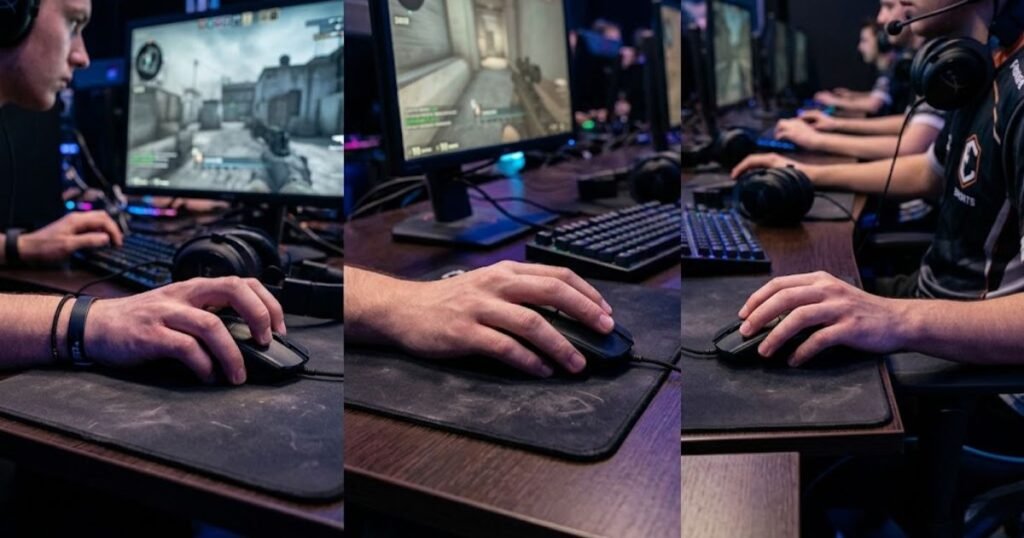
Many players focus on mouse specifications before understanding their grip style. However, grip style directly influences how you hold, move, stop, and reposition the mouse during gameplay.
A shape that feels amazing for a palm grip user may feel awkward for a fingertip grip player. This is why matching shape to grip style is one of the most important steps in choosing a gaming mouse.
The table below matches common grip styles with suitable mouse shape characteristics:
| Grip Style | Recommended Shape Traits | Primary Goal |
|---|---|---|
| Claw Grip | Moderate hump, strong rear support | Balance agility and stability |
| Palm Grip | Larger shell, full hand support | Maximum comfort and control |
| Fingertip Grip | Low profile, lightweight feel | Maximum finger mobility |
The table demonstrates that different grip styles place different demands on the mouse shell. Understanding those demands makes shape selection significantly easier.
Best Mouse Shapes for Claw Grip Players
The best shapes for claw grip players usually provide a moderate hump, strong rear support, and enough room for finger control. These characteristics help balance stability with fast movement capability.
Claw grip relies on both palm support and finger movement. Because of this hybrid approach, claw grip users often prefer shapes that provide an anchor point without restricting finger mobility.
A rear hump that supports the lower palm can improve consistency during aggressive swipes and repeated aim resets. At the same time, sufficient side control helps maintain precision during flick shots.
Claw grip players typically perform best when the shape balances support and freedom rather than maximizing either one.
Best Mouse Shapes for Palm Grip Players
The best shapes for palm grip players provide generous hand support and a stable contact area. These features help create a relaxed and controlled aiming experience.
Palm grip places a large portion of the hand directly on the mouse. As a result, shell size and support become more important than they are for other grip styles.
Many palm grip users prefer slightly larger mice with ergonomic characteristics because these designs naturally support the hand throughout long gaming sessions.
For palm grip players, comfort and stability often contribute directly to aiming consistency.
Best Mouse Shapes for Fingertip Grip Players
The best shapes for fingertip grip players provide low-profile designs, reduced bulk, and unrestricted finger movement. These characteristics help maximize precision through fingertip control.
Unlike palm and claw grip users, fingertip players rely heavily on finger movement to control the mouse. Excessive hump height or unnecessary bulk can interfere with that freedom.
Many fingertip players prefer smaller, lower-profile shapes that allow quick repositioning and precise micro adjustments. These designs often feel faster and more responsive in skilled hands.
For fingertip users, freedom of movement is usually more important than maximum hand support.
Matching mouse shape to grip style is often one of the fastest ways to improve long-term aiming consistency because it aligns the mouse with how your hand naturally wants to move.
Which Mouse Shape Is Best for Flick Shots and Fast Target Switching?
The best mouse shape for flick shots is a shape that allows fast directional changes while maintaining reliable stopping control. It helps players move aggressively toward targets without losing precision when it is time to stop the crosshair.
Flick aiming is one of the most demanding mechanics in FPS games because success depends on acceleration and stopping accuracy. A shape that feels unstable during either phase can make even well-practiced muscle memory feel inconsistent.
This is why some mice feel amazing for tracking but awkward for flicking. The shape characteristics that support explosive movements are not always the same characteristics that maximize stability during continuous target following.
Shape Features That Support Faster Flick Mechanics
Several mouse shape characteristics help support faster flick mechanics by improving leverage, control, and stopping confidence. These features allow players to move aggressively while maintaining precision.
The factors below explain which shape characteristics are commonly preferred by flick-oriented FPS players:
- Balanced Width: Helps generate strong side control during acceleration and stopping.
- Moderate Rear Support: Helps anchor the hand without limiting mobility.
- Low to Medium Weight Feel: Helps create faster directional changes.
- Controlled Side Curves: Helps maintain grip security during rapid movement.
- Compact Overall Size: Helps reduce unnecessary hand movement.
While no shape guarantees better flicking, these characteristics often appear in mice favored by players who rely heavily on first-shot precision and rapid target acquisition.
Why Rear Hump Placement Matters for Flick Aiming
Rear hump placement affects flick aiming because it changes how the hand anchors against the mouse during acceleration and stopping. It helps determine where stability is created throughout the movement.
The image below shows the type of aggressive mouse movement commonly used during flick aiming:
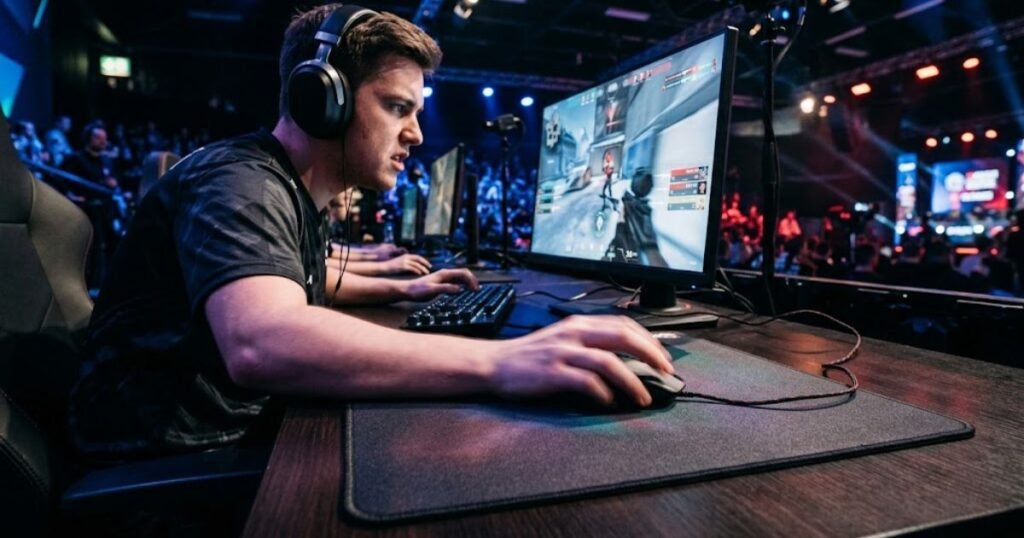
A more rear-focused hump often provides stronger palm contact, giving players a stable reference point during aggressive swipes. Many claw grip users appreciate this because it creates a predictable feeling when resetting after a flick.
A more centered hump usually feels more balanced and versatile. Some players prefer this because it allows easier transitions between flicking and tracking without strongly favoring either style.
The optimal hump position depends on how much support you want during fast aiming movements and how your grip naturally interacts with the shell.
Common Shape Problems That Cause Overflicking
Overflicking is often caused by shape mismatches that reduce stopping control rather than sensitivity settings alone. A shape that feels difficult to stabilize can make precise stopping significantly harder.
One common issue is a mouse that feels too narrow for the player’s hand. This may reduce side control and force the fingers to work harder during stopping movements. Another issue is insufficient palm support, which can make the mouse feel unstable at the end of a flick.
Excessive grip tension can also contribute to overflicking. When the shape forces the hand into an uncomfortable position, smooth control becomes more difficult during fast engagements.
Understanding these shape-related causes helps players identify whether their overflicking problem originates from mechanics, settings, or equipment fit.
Overall, the best flicking shapes balance mobility and stopping control. They allow explosive movement without sacrificing precision when it matters most.
Which Mouse Shape Is Best for Tracking Moving Targets?
The best mouse shape for tracking moving targets is a shape that maximizes stability, hand contact, and smooth control throughout long movements. It helps players maintain consistent crosshair placement while following enemy movement.
Unlike flick aiming, tracking emphasizes continuous control rather than explosive acceleration. The goal is not simply reaching the target. The goal is staying on the target as it changes direction, speed, and position.
Because of these differences, tracking-focused players often prioritize shape characteristics that provide support and stability instead of maximum agility.
The table below explains which shape characteristics commonly benefit tracking-focused FPS players:
| Shape Feature | Tracking Benefit | Primary Advantage |
|---|---|---|
| Larger Contact Area | Improves stability | Smoother crosshair movement |
| Supportive Palm Contact | Reduces hand movement variability | Better long-range tracking |
| Controlled Side Curves | Improves grip security | More predictable control |
| Balanced Width | Enhances directional control | Improved target following |
| Stable Hump Support | Maintains hand positioning | Consistent movement patterns |
As shown above, tracking-oriented shapes focus heavily on maintaining stability and predictable control throughout extended aiming sequences.
Why Tracking Requires Different Shape Priorities Than Flicking
Tracking requires different shape priorities because the objective is maintaining continuous control instead of producing a single explosive movement. It helps shift the focus from acceleration to consistency.
During tracking scenarios, players constantly make small corrections while following moving targets. Stability becomes more valuable because movement quality matters throughout the entire engagement rather than at a single moment.
Many shapes that feel extremely agile for flicking can feel less stable during extended tracking situations. Conversely, shapes that excel at tracking may feel slower during rapid target switching.
This difference explains why aiming preferences often vary across different FPS titles and playstyles.
How Larger Contact Areas Improve Tracking Stability
Larger contact areas improve tracking stability because they increase the amount of support between the hand and the mouse. This helps reduce unwanted movement variation during long engagements.
When more of the hand maintains consistent contact with the shell, the mouse often feels easier to control during smooth directional changes. Many tracking-focused players appreciate this because it helps maintain predictable crosshair movement.
Additional contact can also reduce the amount of grip pressure required to stay in control. Less tension often translates into smoother and more relaxed movement patterns during gameplay.
For players who prioritize tracking performance, stable hand contact frequently contributes to greater consistency over time.
Shape Characteristics Favored by Tracking Players
Tracking players often favor shapes that emphasize support, stability, and predictable movement behavior. These characteristics help create confidence during continuous target-following scenarios.
Many tracking-focused players prefer mice with balanced width, supportive humps, and comfortable side curvature. These traits often create a more planted feeling without completely sacrificing mobility.
A shape that feels secure in the hand allows players to focus on reading enemy movement rather than maintaining grip control. This becomes especially valuable in games that feature fast strafing, aerial movement, or extended duels.
While every player is different, tracking-oriented shapes generally prioritize consistency and stability above raw agility.
Understanding the difference between flick-focused and tracking-focused shape preferences helps players choose a mouse that better matches their actual aiming style instead of blindly following trends.
How Hand Size Changes the Best Mouse Shape for Aiming
Hand size plays a major role in mouse shape selection because it affects how your fingers, palm, and wrist interact with the shell. A shape that feels perfect for one player may feel completely wrong for another simply because their hand dimensions are different.
Many FPS players focus on shape categories without considering hand size. However, even an excellent design can become uncomfortable or inconsistent if the mouse is too large or too small for the user’s hand.
The goal is not to find the most popular shape. The goal is to find a shape that allows your hand to maintain natural control without creating unnecessary tension or instability.
The table below matches common hand sizes with shape characteristics that often work best:
| Hand Size | Recommended Shape Traits | Primary Benefit |
|---|---|---|
| Small Hands | Compact shell, lower profile | Better maneuverability |
| Medium Hands | Balanced dimensions | Maximum versatility |
| Large Hands | Larger shell, additional support | Improved comfort and stability |
As shown above, hand size influences how effectively a player can take advantage of a mouse shape. Proper sizing helps maximize both comfort and aiming consistency.
Best Shape Characteristics for Small Hands
Players with small hands generally benefit from shapes that allow easy access to buttons, comfortable grip positioning, and unrestricted movement. These characteristics help maintain control without forcing the hand to stretch excessively.
Oversized mice can make it difficult for smaller hands to maintain a stable grip. This often reduces confidence during fast movements and can make repositioning feel less natural.
Compact shapes frequently allow better finger placement and more efficient movement mechanics. This can make aiming feel more responsive without increasing physical effort.
For smaller hands, control often comes from accessibility rather than additional size or support.
Best Shape Characteristics for Medium Hands
Players with medium-sized hands usually have the widest range of viable shape options. These hand dimensions help accommodate many different shell sizes and grip styles.
Because medium hands often fit within the design targets used by manufacturers, players in this category can focus more on aiming style and grip preference than size limitations.
The decision typically becomes less about whether the mouse fits and more about which characteristics best support individual aiming habits.
This flexibility gives medium-hand players access to a broader range of high-performing shapes.
Best Shape Characteristics for Large Hands
Players with large hands generally benefit from shapes that provide additional support and sufficient contact area. These characteristics help prevent cramped positioning and unnecessary grip tension.
Very small mice can force large-handed players into uncomfortable positions that reduce stability during gameplay. This often becomes more noticeable during long gaming sessions.
Larger shapes can help distribute contact more naturally across the hand, allowing better control without requiring excessive grip force.
For large hands, proper support often contributes directly to long-term aiming consistency.
Hand size does not determine the exact mouse shape you should use, but it significantly narrows the range of shapes likely to feel comfortable and controllable.
Why Many FPS Players Choose the Wrong Mouse Shape
Many FPS players choose the wrong mouse shape because they prioritize popularity, specifications, or professional player preferences over personal fit. These decisions often lead to unnecessary aiming inconsistency despite using high-quality equipment.
The gaming mouse market is full of recommendations, reviews, and professional endorsements. While this information can be useful, it does not replace understanding how a shape interacts with your own hand and aiming mechanics.
A shape that works perfectly for a professional player may perform poorly for someone with different hand dimensions, grip habits, or gameplay priorities.
Copying Professional Players Without Matching Their Grip Style
Copying professional players often creates problems because mouse recommendations are heavily influenced by individual grip mechanics. The same shape can feel completely different depending on how the mouse is held.
Many players purchase a mouse solely because a favorite Valorant or CS2 professional uses it. However, professional success comes from years of skill development rather than shape alone.
If your grip style differs from the professional’s grip style, the shape may not provide the same benefits. In some cases, it can even create new comfort or control issues.
Professional recommendations should be viewed as references rather than universal solutions.
Prioritizing Weight While Ignoring Shape
Prioritizing weight while ignoring shape is one of the most common mistakes in modern FPS gaming. Weight influences movement feel, but shape determines how effectively the hand controls the mouse.
The popularity of lightweight mice has encouraged many players to focus almost entirely on weight specifications. While lower weight can improve maneuverability, it does not automatically improve aim.
A lightweight mouse with a poor shape fit can feel significantly worse than a slightly heavier mouse that naturally supports your grip and movement style.
Shape should usually be evaluated before weight because it has a larger impact on long-term comfort and consistency.
Buying a Mouse Based Only on Reviews
Reviews are useful because they provide information about quality, performance, and design. However, they cannot tell you how a shape will feel in your own hand.
Many highly rated gaming mice receive excellent reviews because they work well for a large number of players. That does not mean they will automatically suit your specific grip style or hand dimensions.
Reviews should be used to narrow options rather than make the final decision. Understanding your own requirements remains far more valuable than chasing review scores.
The best review is still the way a shape interacts with your own aiming mechanics.
The factors below explain the most common shape-selection mistakes made by FPS players:
- Following Trends: Choosing whatever mouse is currently popular.
- Ignoring Hand Size: Focusing on features while overlooking fit.
- Ignoring Grip Style: Buying shapes that conflict with natural hand positioning.
- Overvaluing Specifications: Prioritizing weight or sensor specifications over usability.
- Copying Professionals: Assuming the same shape will produce the same results.
These mistakes often lead players toward shapes that look impressive on paper but perform poorly in practice.
Avoiding these common errors makes it much easier to identify a mouse shape that genuinely improves your aiming consistency and overall gameplay experience.
How to Find the Best Mouse Shape for Your Aiming Style
The best mouse shape for your aiming style is the shape that helps your grip, hand size, and aiming mechanics work together naturally. It allows you to maintain control consistently without relying on constant grip adjustments or unnecessary hand tension.
By this point, you already understand how shape characteristics influence flicking, tracking, grip styles, and comfort. The final step is turning that information into a practical decision-making process that helps narrow down the right shape for your specific needs.
Most players do not need to test dozens of mice. They simply need a framework that helps eliminate shapes that clearly do not match their hand mechanics.
Identify Your Grip Style First
Your grip style is the foundation of mouse shape selection because it determines which parts of your hand control the mouse. It helps narrow down shape categories before you start comparing individual products.
Palm grip players typically benefit from shapes that provide more support. Claw grip players often prefer a balance between support and mobility. Fingertip grip players usually prioritize freedom of movement and lower-profile shells.
Understanding your grip style immediately removes many unsuitable options from consideration and makes the selection process far more efficient.
Grip style should always be identified before evaluating individual mouse shapes.
Evaluate Your Current Aim Problems
Evaluating your current aim problems helps identify which shape characteristics may be missing from your current setup. It allows you to solve real issues instead of chasing trends.
If you frequently overflick, you may need better stopping control. If tracking feels unstable, additional support or contact area may help. If your hand becomes uncomfortable after long sessions, shape support may be the missing piece.
The goal is not to find a perfect mouse on paper. The goal is to solve the specific aiming problems you experience during gameplay.
Understanding your weaknesses often reveals which shape characteristics deserve the highest priority.
Match Shape Characteristics to Your Gameplay Needs
Matching shape characteristics to gameplay needs helps ensure your mouse supports the way you actually play. It allows shape selection to become a practical decision instead of a guessing game.
A player who relies heavily on flick shots may value agility and side control. A player who spends more time tracking targets may value stability and support. Different aiming styles naturally prioritize different shape characteristics.
Once your grip style, hand size, and aiming priorities are understood, the list of suitable shapes becomes much smaller and easier to evaluate.
The best mouse shape is rarely the most popular one. It is usually the one that aligns most closely with your personal mechanics.
The following process can help identify your ideal aiming mouse shape:
- Identify Your Grip Style: Determine whether you use palm grip, claw grip, fingertip grip, or a hybrid variation.
- Measure Your Hand Size: Understand whether your hand falls into a small, medium, or large category.
- Analyze Your Aim Style: Determine whether you rely more on flicking, tracking, or a balanced approach.
- List Current Problems: Identify issues such as overflicking, instability, discomfort, or grip inconsistency.
- Match Shape Characteristics: Select width, hump design, and support levels that address those issues.
- Compare Shape Categories: Narrow choices between symmetrical and ergonomic options.
- Test for Consistency: Prioritize the shape that feels most repeatable during actual gameplay.
Following a structured process often produces better results than purchasing mice based solely on popularity or professional player recommendations.
In most cases, consistency is a better indicator of the right shape than short-term comfort or first impressions.
What Mouse Shape Do Most Competitive FPS Players Prefer?
Most competitive FPS players prefer medium-sized symmetrical shapes because they provide versatility, predictable control, and compatibility across multiple grip styles. These characteristics help support a wide variety of aiming techniques without forcing the hand into a specific position.
This does not mean every professional player uses the same shape. However, clear trends have emerged across games such as Valorant, Counter-Strike 2, and Apex Legends.
Understanding these trends can provide useful context, but they should not replace personal fit and comfort.
The table below highlights common shape preferences among competitive FPS players:
| Competitive Preference | Common Trend | Reason |
|---|---|---|
| Overall Shape Type | Symmetrical | Versatility and consistency |
| Mouse Width | Medium Width | Balanced control and mobility |
| Hump Design | Moderate Hump | Stability without restriction |
| Shell Size | Medium Size | Fits the widest range of players |
| Grip Compatibility | Claw-Friendly | Supports multiple aiming styles |
The table shows that professional preferences often lean toward versatility rather than extreme design choices.
Common Shape Trends Among Valorant Players
Valorant players often favor shapes that support precise flick shots, rapid target acquisition, and consistent crosshair placement. These requirements naturally align with balanced symmetrical designs.
Because Valorant rewards first-shot accuracy and disciplined positioning, many players prefer shapes that feel predictable during quick directional changes and micro adjustments.
This preference helps explain why medium-sized symmetrical mice remain highly popular within the Valorant community.
The goal is usually precision and repeatability rather than maximum comfort alone.
Common Shape Trends Among CS2 Players
CS2 players often prioritize stability, control, and repeatable movement patterns. These characteristics support the game’s emphasis on precise crosshair placement and disciplined aim mechanics.
Many CS2 players favor shapes that provide reliable stopping control and consistent grip positioning throughout long matches. While shape preferences vary, balanced designs continue to dominate at the highest levels of play.
These trends reflect the importance of consistency within one of the most mechanically demanding FPS titles.
Reliable control is often valued more than aggressive experimentation.
What You Should Learn From Professional Player Preferences
Professional player preferences are useful because they reveal which shape characteristics consistently perform well under competitive conditions. They help identify trends but should not dictate personal purchasing decisions.
The most important lesson is not which exact mouse professionals use. The more valuable lesson is understanding why certain shape characteristics repeatedly appear across competitive environments.
Rather than copying equipment directly, focus on the underlying design principles that support consistency and control.
Professional trends are best used as guidance, not as rules.
If you are still evaluating complete mouse options, our guide to the best gaming mouse for FPS games showcases examples of popular shapes currently favored by competitive players.
Ultimately, the best mouse shape for aiming is the one that allows your hand to perform consistently under pressure. Shape affects comfort, stability, control, and repeatability, making it one of the most important variables in FPS gaming. By understanding your grip style, hand size, and aiming mechanics, you can make a far more informed decision than simply following trends or specifications.
Frequently Asked Questions About Mouse Shape for Aiming
The questions below address common concerns FPS players have when choosing a mouse shape for better aiming performance. These answers focus on practical decision-making rather than repeating concepts already covered throughout the guide.
Does mouse shape matter more than mouse weight?
Mouse shape matters more than mouse weight because it directly affects how your hand controls movement, stability, and consistency during gameplay.
Can the wrong mouse shape hurt my aim?
The wrong mouse shape can hurt aim because it may create instability, unnecessary grip tension, and inconsistent movement patterns.
What is the safest mouse shape for most FPS players?
A medium-sized symmetrical shape is often considered the safest option because it works well across multiple grip styles and aiming preferences.
Do professional FPS players mostly use symmetrical mice?
Many professional FPS players use symmetrical mice because they provide versatility and balanced control across different aiming situations.
Is ergonomic always better for comfort?
Ergonomic shapes often provide more support, but comfort ultimately depends on how well the shape matches your hand and grip style.
Which shape is best for claw grip?
Claw grip players usually benefit from shapes that provide moderate hump support and strong rear stability without limiting finger movement.
Which shape is best for fingertip grip?
Fingertip grip players generally prefer lower-profile shapes that maximize finger mobility and precise control.
Should small hands use smaller mice?
Smaller hands often benefit from smaller shapes because they allow easier access to controls and more natural movement mechanics.
Can a wider mouse improve aiming stability?
A wider mouse can improve stability for some players by increasing contact area and enhancing side control.
Does hump height affect aim consistency?
Hump height affects aim consistency because it changes how the hand anchors against the mouse during movement.
Should I copy the mouse shape used by professional players?
You can learn from professional trends, but personal fit is usually more important than copying another player’s equipment.
What is the best way to find my ideal mouse shape?
The best way is to evaluate your grip style, hand size, aiming habits, and current aiming problems before comparing shape categories.
Final Thoughts on Choosing the Best Mouse Shape for Aiming
The best mouse shape for aiming is not necessarily the shape used by professional players, the newest release, or the most popular mouse on social media. It is the shape that allows your hand to stay comfortable, stable, and consistent during real gameplay.
Throughout this guide, we explored how shape influences flicking, tracking, grip styles, hand size compatibility, and overall aiming performance. While factors such as DPI, sensitivity, polling rate, and mouse weight still matter, shape remains one of the most personal and impactful variables in FPS gaming.
Players who understand their grip style, identify their aiming strengths and weaknesses, and choose a shape that supports their natural mechanics often develop more consistent aim over time. Small improvements in comfort and control can compound into meaningful performance gains across hundreds of matches.
If you are building a complete FPS setup, we recommend starting with a strong understanding of gaming mouse for FPS games fundamentals before comparing specific products. Once you understand which shape characteristics fit your needs, choosing the right mouse becomes significantly easier.
Remember that no mouse shape can replace practice, game sense, or experience. However, the right shape can remove unnecessary obstacles and allow your mechanics to perform at their highest potential.
The goal is not to find the perfect mouse for everyone. The goal is to find the shape that helps you aim with greater confidence, control, and consistency every time you queue into a match.
Thanks for reading. We hope this guide helps you find a mouse shape that feels natural, consistent, and confidence-inspiring every time you play.