
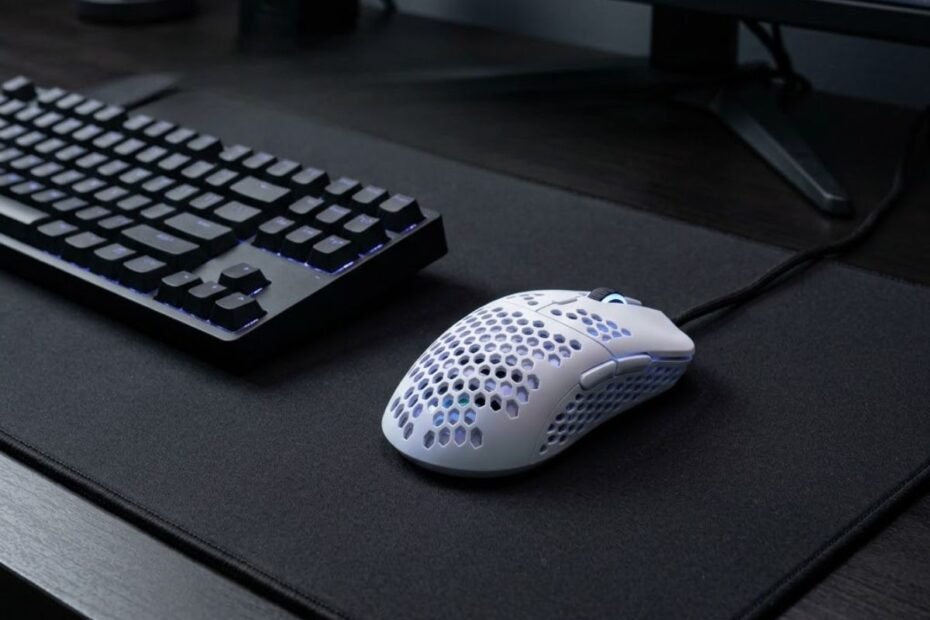
A lightweight gaming mouse is a gaming mouse built to reduce physical movement effort while still keeping the core features players expect, such as accurate tracking, responsive clicks, and a comfortable shape. In simple terms, it is a mouse made lighter so your hand can move it faster and with less strain during gameplay.
For FPS players, this matters because aiming is not only about sensor quality or DPI settings. Every flick, correction, and wide swipe depends on how easily the mouse starts moving, stops, and changes direction. A lighter mouse can make those movements feel less demanding, especially during long sessions.
However, lightweight does not automatically mean better for everyone. A mouse can be light and still feel wrong if the shape does not fit your grip, the size does not match your hand, or the weight feels too unstable for your aiming style.
What Is a Lightweight Gaming Mouse?
A lightweight gaming mouse is a gaming mouse designed with reduced weight to make movement easier and require less physical effort during gameplay. It usually weighs less than traditional gaming mice and is built for faster hand movement, smoother repositioning, and better comfort during repeated actions.
The main idea behind a lightweight mouse is simple: less weight means less force is needed to move it. That can help when you need to flick across the screen, track a moving target, or make small corrections around an enemy’s head. This is why many FPS players pay close attention to mouse weight when choosing gear.
Still, a lightweight gaming mouse is not defined by weight alone. Shape, balance, grip comfort, button placement, shell strength, cable feel, and wireless performance all affect how light the mouse feels in real use. A good lightweight mouse should feel easy to move without feeling loose, fragile, or hard to control.
What Makes a Mouse Lightweight?
A mouse becomes lightweight when its shell, internal structure, cable, battery, and materials are designed to remove unnecessary weight. Manufacturers usually reduce weight by using lighter plastics, simplified internal frames, smaller components, and more efficient wireless parts.
Some lightweight gaming mice use honeycomb shells to remove extra material from the body. Others use a solid shell but optimize the inside so the mouse stays light without visible holes. Both approaches can work well if the final shape feels stable and the build quality remains strong.
Weight reduction should not make the mouse feel cheap or weak. A good lightweight gaming mouse still needs firm buttons, a reliable scroll wheel, strong side walls, and a sensor that tracks accurately during fast movement.
The best lightweight mice are not just lighter on paper. They feel balanced in the hand and make aiming feel easier without taking away control.
How Lightweight Gaming Mice Differ From Traditional Gaming Mice
Lightweight gaming mice differ from traditional gaming mice because they prioritize lower movement effort instead of extra weight, large shells, or many additional features. Traditional gaming mice often feel more planted, while lightweight models usually feel faster and easier to reposition.
Older gaming mice commonly included heavier shells, thick cables, large batteries, adjustable weights, extra buttons, and bulky designs. Those features could make the mouse feel premium, but they also added weight. Modern lightweight mice often remove or simplify those features to focus on speed and efficiency.
This difference is especially noticeable in FPS games. A lighter mouse can feel easier to lift, reset, and move across a mouse pad. A traditional heavier mouse may feel steadier, but it can also require more effort during repeated flicks or long practice sessions.
In short, lightweight gaming mice are designed around movement efficiency, while traditional heavier mice often prioritize stability, feature density, or a more solid hand feel.
Why Weight Has Become an Important Mouse Specification
Mouse weight has become important because players now understand that aiming comfort depends on more than DPI, polling rate, or sensor quality. The weight of a gaming mouse directly affects how much effort it takes to move, stop, and correct the cursor during gameplay.
In FPS games, small differences in feel can become noticeable over time. A mouse that feels slightly heavy during the first match may feel tiring after several hours. A mouse that feels light and controlled can make repeated aim movements feel more natural.
For example, the image below shows a typical lightweight gaming mouse compared with a traditional gaming mouse:
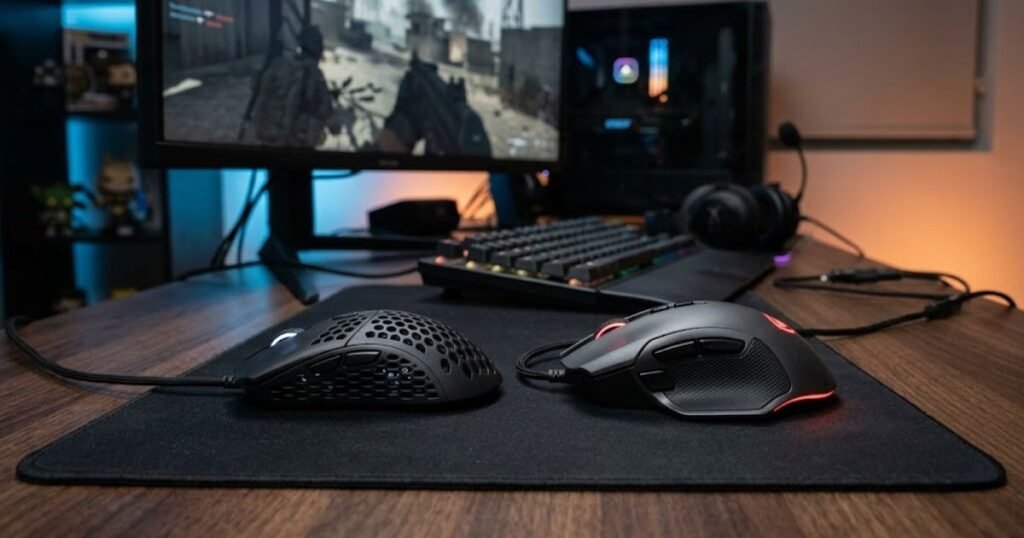
This is why weight is now listed as a major specification on many gaming mouse product pages. Players use it to compare how a mouse might feel before they test it in person. It is not the only spec that matters, but it is one of the easiest specs to understand.
Mouse weight matters because it changes the physical feel of aiming. For FPS players, that physical feel can affect comfort, consistency, and confidence during gameplay.
What Weight Is Considered Lightweight for a Gaming Mouse?
Most gaming mice are considered lightweight when they weigh between 60 and 74 grams, although exact classifications can vary between manufacturers. Mice below 60 grams are often called ultra lightweight, while mice above 75 grams usually move closer to medium or heavy categories.
There is no single official rule that every brand follows. One company may call a 78g mouse lightweight, while another may reserve that term for mice under 70g. For readers, the most useful approach is to treat weight ranges as practical reference points instead of strict industry laws.
These ranges help you understand how a mouse may feel before you compare specific models. They also help separate a true lightweight gaming mouse from a standard mouse that only feels light compared with older, heavier designs.
The table below explains common gaming mouse weight categories:
| Category | Common Weight Range | General Feel |
|---|---|---|
| Heavy gaming mouse | 90g+ | More planted, stable, and slower to reposition |
| Medium gaming mouse | 75g-89g | Balanced feel between speed and stability |
| Lightweight gaming mouse | 60g-74g | Easier to move, lift, and correct during FPS gameplay |
| Ultra lightweight gaming mouse | Below 60g | Very fast and low effort, but may feel less stable for some players |
As the table shows, a lightweight gaming mouse usually sits in the 60g to 74g range. This range gives many players a noticeable reduction in movement effort without pushing the mouse into the extreme feel of ultra lightweight models.
For most FPS players, this range is a practical starting point. It is light enough to feel faster than traditional gaming mice, but not so light that it automatically feels unstable or difficult to control.
Is 80 Grams Still Considered Lightweight?
An 80g gaming mouse is usually not considered truly lightweight by modern FPS standards, but it can still feel light compared with older heavy gaming mice. Whether 80g feels light depends on your previous mouse and your personal sensitivity to weight.
If you are coming from a 100g or 120g mouse, an 80g mouse may feel much easier to move. If you already use a 60g mouse, 80g may feel noticeably heavier. This is why weight should be judged relative to your current setup and not only by the number printed on a spec sheet.
In today’s FPS mouse market, 80g is better described as medium weight rather than lightweight.
What Is an Ultra Lightweight Gaming Mouse?
An ultra lightweight gaming mouse is usually a gaming mouse that weighs below 60 grams. These mice are designed for players who want the lowest possible movement effort and the fastest hand response.
Ultra lightweight mice can feel excellent for fast flicks, low sensitivity aiming, and large mouse pad movement. However, they are not automatically better for every player. Some people find them too quick, too sensitive to small hand movements, or harder to stop precisely.
The difference between lightweight and ultra lightweight is not only the number of grams. It is also the feeling of control. A mouse under 60g may feel exciting at first, but the best choice is still the one you can control consistently.
Overall, a lightweight gaming mouse is best understood as a mouse that reduces movement effort while staying controlled enough for real gameplay. For most FPS players, the 60g to 74g range is the safest definition.
Why Do Gaming Mice Have Different Weights?
Gaming mice have different weights because players have different preferences, grip styles, game genres, and movement habits. The ideal mouse weight is not the same for every person, which is why manufacturers produce mice across multiple weight categories.
Some players want a mouse that feels fast and effortless to move. Others prefer a heavier mouse because it feels more stable in the hand. Mouse weight is ultimately a balance between movement freedom and movement resistance, and every player experiences that balance differently.
Weight differences also exist because gaming genres place different demands on mouse movement. An FPS player who constantly flicks, tracks targets, and repositions the mouse may value a different weight than someone who primarily plays strategy or MMO games.
Rather than treating weight as a universally good or bad feature, it is more accurate to see it as a design choice that changes how a mouse feels during real gameplay.
How Mouse Weight Affects Movement Feel
Mouse weight affects movement feel because it changes how much force is required to start, stop, and redirect the mouse. Even when two mice have identical sensors, switches, and shapes, different weights can create noticeably different experiences.
A lighter mouse generally feels easier to accelerate and reposition. Small hand movements may feel quicker and require less effort. A heavier mouse usually feels more resistant, which can create a stronger sense of stability during movement.
Neither feeling is automatically superior. Some players enjoy a faster and more agile experience, while others prefer the confidence that comes from a slightly heavier and more grounded feel.
This is why weight remains one of the most discussed specifications in gaming mouse design despite advances in sensor technology and wireless performance.
Why Some Players Prefer Lighter Mice
Some players prefer lighter mice because they reduce physical effort during repeated movement. This can make aiming feel smoother and less demanding, especially during long gaming sessions where thousands of mouse movements occur.
Lower weight can also make lifting and repositioning the mouse feel easier. Players who use large mouse pads or low sensitivity settings often notice this difference more because they physically move the mouse farther during gameplay.
Many players also enjoy the feeling of responsiveness that comes from a lighter mouse. The mouse may feel easier to direct exactly where they want without feeling slowed down by extra weight.
For these players, comfort and movement efficiency are often the biggest reasons for choosing a lighter design.
Why Some Players Prefer Heavier Mice
Some players prefer heavier mice because they enjoy the additional sense of stability and control. A heavier mouse can feel more planted on the mouse pad, which some users find reassuring during precise movements.
Players who use higher sensitivity settings may also appreciate a slightly heavier feel because it can reduce the sensation of overreacting to small hand movements. Others simply prefer the tactile feeling of a denser mouse body.
Personal preference plays a major role here. Two players with identical setups can have completely different opinions about which weight feels more natural. This is one reason gaming mouse manufacturers continue offering products across multiple weight categories.
The existence of different weight preferences explains why lightweight mice have become popular without completely replacing heavier designs.
How Do Manufacturers Make Gaming Mice Lighter?
Manufacturers make gaming mice lighter through shell design, material selection, internal engineering, and component optimization. Modern lightweight mice are not simply smaller versions of traditional mice. They are engineered from the beginning with weight reduction as a primary goal.
Reducing weight requires careful decisions because every gram removed can affect durability, battery life, comfort, or structural strength. The challenge is not only making a mouse lighter, but making it lighter while maintaining performance and reliability.
The image below highlights several design approaches used to reduce gaming mouse weight:
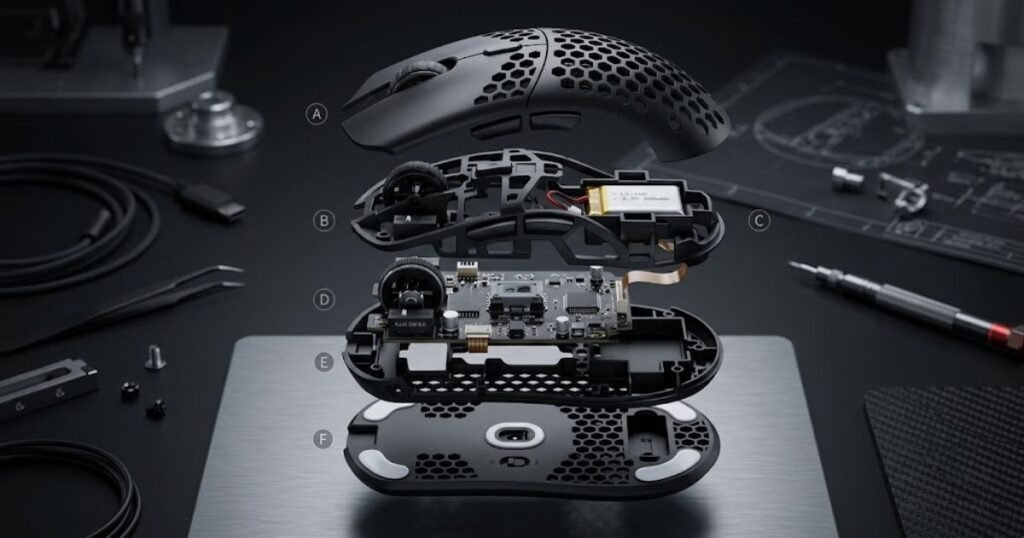
Today’s lightweight gaming mice achieve this balance through a combination of design techniques rather than relying on a single solution.
The factors below explain how manufacturers reduce mouse weight:
- Lightweight shell materials: Manufacturers use thinner and more efficient plastics that maintain strength while reducing overall mass.
- Internal frame optimization: Engineers remove unnecessary support structures and redesign internal layouts to eliminate excess material.
- Smaller batteries: Wireless mice often use more efficient batteries that provide good battery life without adding unnecessary weight.
- Reduced internal components: Modern electronics allow manufacturers to use smaller boards and components than older designs.
- Flexible cables: Wired lightweight mice often use softer cables that improve movement feel while contributing less weight.
Together, these design choices allow manufacturers to lower weight without dramatically reducing gaming performance or durability.
Honeycomb vs Solid Shell Designs
Honeycomb and solid shell designs represent two different approaches to lightweight mouse construction. Both aim to reduce weight, but they achieve that goal in different ways.
Honeycomb designs remove portions of the outer shell, creating visible openings across parts of the mouse body. This approach can reduce weight effectively while maintaining a familiar shape. Many early lightweight gaming mice used honeycomb structures to achieve aggressive weight reduction targets.
Solid shell designs keep the outer surface intact while reducing weight internally. Advances in materials and engineering have allowed many modern lightweight mice to reach competitive weights without requiring visible holes.
Today, both approaches can produce excellent lightweight gaming mice. The choice is usually based more on personal preference than on a major performance difference.
Lightweight Materials Used in Modern Gaming Mice
Modern gaming mice use advanced materials to reduce weight while preserving durability. Improvements in plastics, composites, internal frame design, and manufacturing processes have allowed companies to remove weight without creating fragile products.
Instead of relying solely on thinner shells, manufacturers often redesign how structural support is distributed throughout the mouse. This allows strength to remain in critical areas while unnecessary material is removed elsewhere.
The result is that many modern lightweight gaming mice feel significantly lighter than older models while still maintaining strong shells, reliable buttons, and long-term durability.
These material and engineering improvements are one of the main reasons lightweight gaming mice have become far more practical than they were a decade ago.
Why Have Lightweight Gaming Mice Become More Popular?
Lightweight gaming mice have become more popular because modern players increasingly value comfort, movement efficiency, and reduced physical effort during gameplay. As competitive gaming evolved, many players began paying closer attention to how mouse weight affects the overall gaming experience.
Years ago, gaming mice were often designed with additional features, larger bodies, and heavier construction because weight was associated with quality and durability. Over time, however, many players discovered that reducing unnecessary weight could make movement feel easier without sacrificing performance.
This shift in preference encouraged manufacturers to develop lighter products, leading to the wide range of lightweight gaming mice available today.
The popularity of lightweight gaming mice is not simply the result of marketing. It reflects a broader change in how players think about comfort, control, and long-term usability.
The Influence of Competitive FPS Gaming
Competitive FPS gaming played a major role in increasing interest in lightweight mice. Players in games such as Valorant, Counter-Strike 2, and Apex Legends often spend thousands of hours refining movement, aim, and consistency.
As competition became more demanding, small improvements in comfort and efficiency gained greater importance. Many competitive players began favoring mice that felt easier to move and reposition during repeated aiming actions.
This trend became more visible as professional players, streamers, and reviewers started sharing their preferences. Their experiences encouraged more players to experiment with lighter designs and evaluate how weight affected their own gameplay.
If you want a deeper explanation of the factors behind this trend, you can also explore why lightweight mice became popular.
Although professional preferences do not determine what every player should use, they helped bring attention to mouse weight as an important part of gaming mouse design.
The Impact of Modern Mouse Technology
Modern mouse technology has also contributed to the rise of lightweight gaming mice. Improvements in sensors, batteries, wireless connectivity, and manufacturing methods have made it easier to build lighter products without major compromises.
In the past, reducing weight often meant sacrificing durability, battery life, or build quality. Today’s gaming mice can remain lightweight while still offering reliable wireless performance, accurate tracking, and strong construction.
This technological progress allows manufacturers to focus on movement efficiency without forcing players to accept significant tradeoffs. As a result, lightweight mice are now more practical and accessible than ever before.
The combination of changing player preferences and advancing technology explains why lightweight gaming mice have become increasingly common in the modern gaming market.
How Does a Lightweight Gaming Mouse Feel During Gameplay?
A lightweight gaming mouse usually feels easier to move, stop, and reposition compared with a heavier gaming mouse. The most noticeable difference is often the amount of physical effort required to perform repeated movements during gameplay.
The exact experience varies depending on hand size, grip style, sensitivity, mouse pad surface, and personal preference. However, many players describe lightweight mice as feeling more agile and less demanding during extended use.
Rather than changing how the game works, mouse weight changes how the player interacts with the mouse. This is why two players using identical settings may still have very different opinions about weight.
The example below shows the type of fast mouse movement commonly associated with lightweight gaming mice:
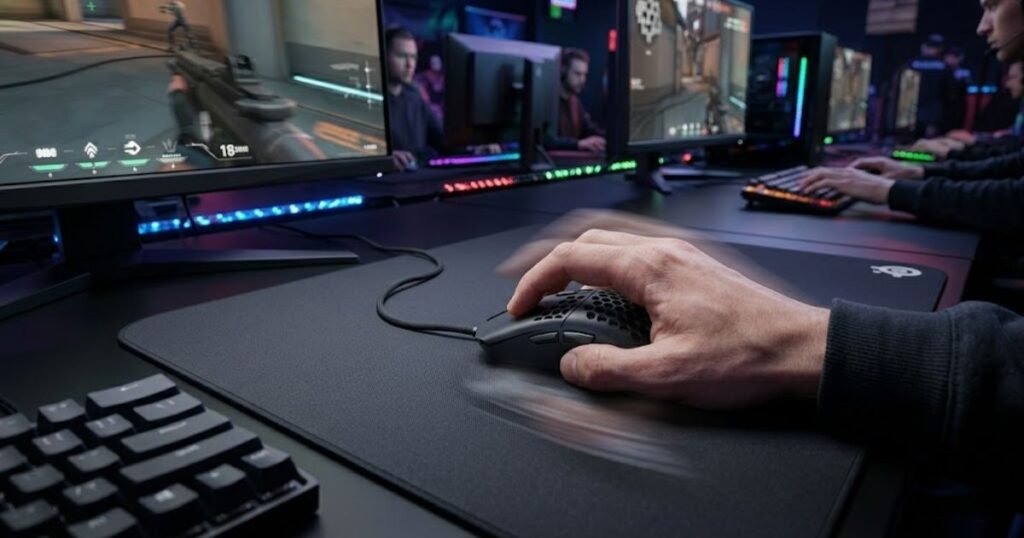
The table below explains how lightweight gaming mice commonly affect different aspects of gameplay:
| Gameplay Aspect | Typical Lightweight Mouse Experience |
|---|---|
| Flicking | Requires less effort to start and redirect movement |
| Tracking | Can feel smoother during continuous target following |
| Micro Adjustments | Small corrections may feel easier to perform |
| Repositioning | Often feels quicker and less physically demanding |
| Long Gaming Sessions | May reduce accumulated hand and arm fatigue |
As the table shows, the biggest differences usually appear in how movement feels rather than in raw gaming performance. The mouse itself does not improve skill, but it can change the amount of effort required to perform common actions.
This is why many discussions about lightweight mice focus on comfort and movement efficiency rather than direct performance gains.
How Lightweight Mice Affect Flick Shots
Lightweight mice can make flick shots feel easier because less effort is required to accelerate and redirect the mouse. When players perform rapid crosshair movements, lower weight may help the mouse feel more responsive to hand input.
The actual improvement varies from player to player. Some users immediately notice a difference, while others need time to adapt before they feel comfortable with the new movement characteristics.
It is important to remember that flick accuracy still depends on practice, muscle memory, and sensitivity settings. Mouse weight influences movement feel, but it does not replace skill development.
For many players, the benefit comes from comfort and consistency rather than from a dramatic increase in speed.
How Lightweight Mice Affect Tracking
Lightweight mice can make tracking feel smoother because maintaining continuous movement often requires less effort. Tracking situations occur when players follow a moving target instead of making a single rapid flick.
Lower weight may help reduce resistance during repeated directional adjustments, especially in games that require frequent target following. Some players feel this creates a more fluid experience during movement-heavy engagements.
However, tracking performance still depends heavily on mouse control, sensitivity, and overall technique. A lighter mouse changes the feel of movement, not the underlying mechanics of aiming.
As a result, players often describe lightweight mice as easier to move rather than objectively better at tracking.
How Lightweight Mice Affect Long Gaming Sessions
Lightweight mice may feel more comfortable during long gaming sessions because they reduce the effort required for repeated movement. Over hours of gameplay, even small differences in physical workload can become noticeable.
This does not mean every player will experience less fatigue. Factors such as posture, desk setup, grip style, mouse shape, and overall health also influence long-term comfort. Nevertheless, many players report that lighter mice feel less demanding over time.
Comfort is one of the main reasons lightweight gaming mice continue attracting attention from both casual and competitive players. A mouse that feels easier to use for several hours can contribute to a more enjoyable gaming experience.
Ultimately, the gameplay feel of a lightweight mouse is best described as lower effort rather than higher performance. The biggest difference is often how comfortable movement feels after extended use.
Lightweight Gaming Mouse vs Heavy Gaming Mouse
The biggest difference between a lightweight gaming mouse and a heavy gaming mouse is how much physical effort is required to move them. Lightweight mice prioritize easier movement and reduced resistance, while heavy mice prioritize a more substantial and stable feel.
Although both categories can perform well in modern games, they create noticeably different experiences in the hand. The difference is not about which one is objectively better. Instead, it is about how each design approaches movement, comfort, and control.
Understanding these differences helps explain why lightweight gaming mice have become increasingly common while heavier gaming mice continue to maintain a dedicated user base.
The table below compares the core characteristics of lightweight and heavy gaming mice:
| Factor | Lightweight Gaming Mouse | Heavy Gaming Mouse |
|---|---|---|
| Movement Effort | Lower | Higher |
| Mouse Repositioning | Easier | More deliberate |
| Long-Term Comfort | Often preferred | Depends on user preference |
| Movement Feel | Agile and responsive | Stable and planted |
| Typical User Preference | Movement-focused players | Stability-focused players |
Comparison between lightweight and heavy gaming mouse characteristics.
As the table shows, the difference between these categories is primarily about feel rather than capability. Both can provide excellent gaming experiences when matched with the right user preferences.
For a more detailed analysis of both categories, you can read this complete lightweight vs heavy gaming mouse comparison.
Why Do Lightweight Gaming Mice Usually Feel Faster?
Lightweight gaming mice usually feel faster because they require less force to start, stop, and redirect movement. This lower physical resistance often creates a stronger sense of responsiveness during gameplay.
The mouse itself does not move the cursor faster. Sensitivity settings still determine cursor speed. However, the reduced effort required to move the mouse can make actions feel quicker and more immediate.
Many players describe this sensation as increased agility rather than increased speed. The difference comes from how the hand interacts with the mouse rather than from any change in technical performance.
This is one of the primary reasons lightweight mice attract players who value movement efficiency.
Why Do Heavy Gaming Mice Often Feel More Stable?
Heavy gaming mice often feel more stable because their additional mass creates greater movement resistance. Some users enjoy this sensation because it makes movement feel more deliberate and controlled.
For these players, the extra resistance can create a stronger sense of confidence during slow and precise movements. The mouse may feel less likely to move unintentionally from small hand adjustments.
This preference varies significantly from person to person. What feels stable and controlled to one user may feel unnecessarily heavy to another.
The relationship between stability and agility is one reason mouse weight remains a highly personal choice.
Who Should Use a Lightweight Gaming Mouse?
Lightweight gaming mice are most suitable for users who prioritize movement efficiency, reduced physical effort, and long-term comfort. While they are commonly associated with FPS games, the benefits can extend beyond a single genre.
The image below shows the type of player who commonly benefits from a lightweight gaming mouse:
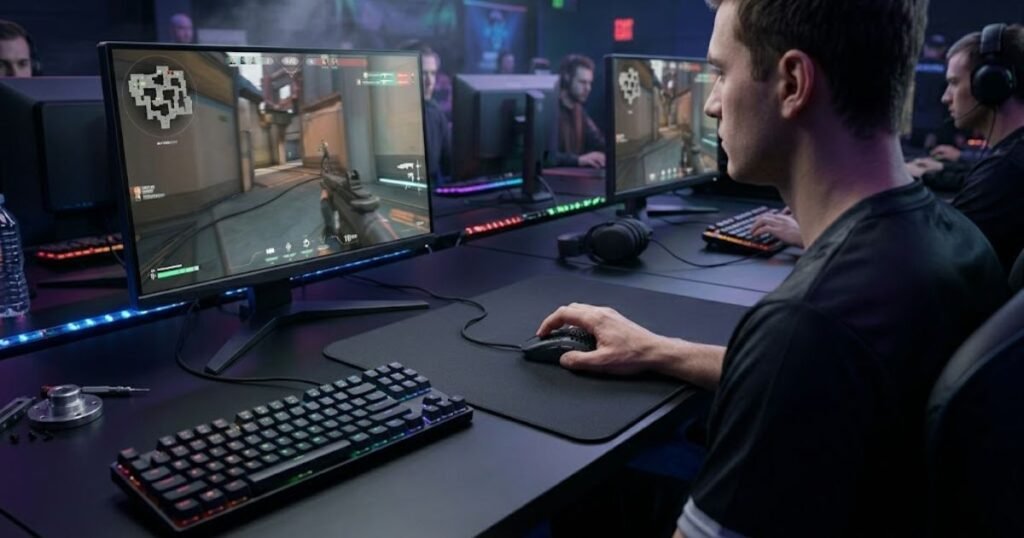
The goal is not to identify a perfect mouse for every player. Instead, it is to understand which types of users are most likely to appreciate the characteristics that lightweight gaming mice provide.
Several player profiles tend to benefit more frequently from lower mouse weight than others.
The table below explains which users commonly benefit from lightweight gaming mice:
| User Type | Suitability | Reason |
|---|---|---|
| FPS Players | High | Frequent aiming and mouse movement |
| Low Sensitivity Players | High | Larger physical mouse movements |
| Long-Session Gamers | High | Reduced movement effort over time |
| General Competitive Players | Moderate to High | Often value comfort and consistency |
| Casual Users | Moderate | Depends on personal preference |
As the table shows, lightweight gaming mice tend to appeal most strongly to users who move their mouse frequently or spend extended periods using a computer.
Why Do FPS Players Often Prefer Lightweight Gaming Mice?
FPS players often prefer lightweight gaming mice because these games involve constant aiming, target acquisition, repositioning, and directional changes. Lower weight can make these repeated movements feel less demanding over time.
The benefit is not necessarily increased accuracy. Instead, many players appreciate the reduction in physical effort required during extended gameplay sessions.
This preference has helped make lightweight mice one of the most discussed categories within the FPS gaming community.
As competitive gaming has evolved, movement efficiency has become an increasingly important factor in gaming mouse design.
Why Can Low Sensitivity Players Benefit More From Lightweight Mice?
Low sensitivity players often move their mice across larger physical distances than high sensitivity users. Because of this, they may notice mouse weight more clearly during everyday gameplay.
When large movements occur repeatedly, reducing the amount of effort required for each movement can make the overall experience feel more comfortable. This is one reason lightweight mice are frequently associated with low sensitivity setups.
The benefit is usually related to comfort and movement efficiency rather than direct performance improvements.
For players who regularly use large mouse pads and wide arm movements, weight can become a particularly noticeable factor.
Why Are Lightweight Mice Popular Among Long-Session Gamers?
Lightweight mice are popular among long-session gamers because repeated movement accumulates over time. Even small reductions in physical effort can become noticeable during several hours of continuous use.
Many users report that lightweight mice feel less demanding during extended gaming sessions. While comfort is influenced by many factors, mouse weight remains one of the easiest variables to notice.
Long-session comfort is often one of the most important reasons users switch from heavier gaming mice to lighter alternatives.
A mouse that feels comfortable after multiple hours may provide a better overall experience than one that only feels impressive during short periods of use.
Who May Not Like a Lightweight Gaming Mouse?
Some users may not enjoy lightweight gaming mice because they prefer a more stable, resistant, or substantial movement feel. Mouse weight preferences vary significantly between individuals, and lighter is not always better for every situation.
Understanding who may dislike lightweight mice helps create a more balanced view of gaming mouse design. Every weight category exists because different users value different characteristics.
Lightweight gaming mice are popular, but they remain one option among many rather than a universal solution.
If you want to explore situations where additional weight may be beneficial, you can learn more about heavy mouse advantages.
Why Do Some Players Prefer the Stability of Heavier Gaming Mice?
Some players prefer heavier gaming mice because additional weight creates a stronger feeling of resistance during movement. This resistance can make the mouse feel more grounded and predictable.
For these users, a lightweight mouse may feel overly sensitive to small hand movements. A heavier design can provide a movement style that feels calmer and more deliberate.
This preference is usually based on comfort rather than objective performance differences.
The perception of stability remains one of the most common reasons players continue choosing heavier mice.
Why Might High Sensitivity Players Prefer a Different Weight Range?
High sensitivity players often move the mouse shorter distances than low sensitivity users. Because of this, they may not experience the same level of benefit from aggressive weight reduction.
Some high sensitivity users enjoy lightweight mice, while others prefer slightly heavier designs that create a more controlled feeling during small adjustments.
The relationship between sensitivity and mouse weight is highly individual. There is no universal rule that applies to every player.
Ultimately, the best weight is the one that feels comfortable, controllable, and consistent for the individual user.
Frequently Asked Questions About Lightweight Gaming Mice
The questions below address some of the most common concerns players have when learning about lightweight gaming mice. These answers expand on key topics covered throughout this guide while helping clarify common misconceptions about mouse weight.
What Is a Lightweight Gaming Mouse?
A lightweight gaming mouse is a gaming mouse designed with reduced weight to make movement easier and require less physical effort during gameplay. Most modern lightweight gaming mice weigh between 60 and 74 grams.
How Many Grams Is Considered Lightweight for a Gaming Mouse?
A gaming mouse is generally considered lightweight when it weighs between 60 and 74 grams. Mice below 60 grams are often classified as ultra lightweight gaming mice.
Is an 80-Gram Gaming Mouse Still Considered Lightweight?
An 80-gram gaming mouse is usually considered medium weight by modern standards. However, it may still feel lightweight compared with older gaming mice that commonly exceeded 100 grams.
What Is the Difference Between a Lightweight and an Ultra Lightweight Gaming Mouse?
The main difference is weight. Lightweight gaming mice typically weigh between 60 and 74 grams, while ultra lightweight models usually weigh below 60 grams and focus on maximum movement efficiency.
Why Do FPS Players Often Use Lightweight Gaming Mice?
FPS players often use lightweight gaming mice because they can feel easier to move, reposition, and control during repeated aiming actions. Many players also appreciate the reduced physical effort during long gaming sessions.
Do Lightweight Gaming Mice Improve Aim?
A lightweight gaming mouse can make movement feel easier, but it does not automatically improve aim. Accuracy still depends on practice, sensitivity settings, mouse control, and overall skill.
Are Lightweight Gaming Mice Better for Low Sensitivity Players?
Lightweight gaming mice are often preferred by low sensitivity players because lower weight may reduce the effort required for large mouse movements across the mouse pad.
Can Lightweight Gaming Mice Reduce Hand Fatigue?
Lightweight gaming mice may help reduce movement effort over time, which some users find more comfortable during long gaming sessions. However, comfort is also influenced by shape, grip style, posture, and desk setup.
Are Lightweight Gaming Mice Only Designed for FPS Games?
Lightweight gaming mice are commonly associated with FPS games, but they can be used for many other genres and everyday computer tasks. Their core purpose is reducing movement effort rather than serving a specific game category.
Do Lightweight Gaming Mice Feel Less Durable?
Modern lightweight gaming mice can be highly durable despite weighing less than traditional models. Improvements in materials and engineering allow manufacturers to reduce weight without significantly compromising structural strength.
Who Might Not Like a Lightweight Gaming Mouse?
Players who prefer a more stable, resistant, or substantial movement feel may prefer a heavier gaming mouse. Mouse weight preferences vary considerably between individuals.
Should Mouse Weight Be the Most Important Buying Factor?
Mouse weight is important, but it should not be the only factor considered. Shape, size, grip compatibility, sensor performance, button quality, and overall comfort usually have a greater impact on long-term satisfaction.
Is a Lightweight Gaming Mouse Worth Considering?
A lightweight gaming mouse is worth considering if movement comfort, reduced physical effort, and easier handling are important to your gaming experience. Modern lightweight designs have become increasingly popular because they provide a balance between comfort, responsiveness, and usability without requiring major compromises.
For many players, the biggest benefit is not raw performance but the overall feeling of reduced effort during daily use. A lighter mouse can feel easier to move, easier to reposition, and more comfortable over extended periods. At the same time, weight remains a personal preference rather than a universal rule.
If you are currently researching gaming peripherals, exploring different categories of best gaming mouse for FPS games can help you understand how weight fits alongside shape, size, sensor performance, and other important factors.
What Should You Remember Before Choosing Mouse Weight?
The most important thing to remember is that mouse weight should be evaluated alongside comfort and usability. A lighter mouse is not automatically better if it does not fit your hand, grip style, or personal preferences.
Many players spend too much time chasing a specific weight number while overlooking factors that influence the overall experience more directly. Shape, size, balance, and comfort often have a greater impact than a difference of a few grams.
The best approach is to view weight as one piece of the larger gaming mouse equation. Understanding what a lightweight gaming mouse is allows you to make more informed decisions when comparing different designs and categories.
Whether you ultimately choose a lightweight, medium-weight, or heavy mouse, the goal is the same: finding a device that feels comfortable, controllable, and enjoyable to use. If you want to continue learning about gaming peripherals and mouse design, explore our complete guide to gaming mouse for FPS games.
Thanks for reading, and we hope this guide helped you better understand lightweight gaming mice.