
Understanding real-world wireless mouse battery life has become a vital performance consideration for competitive gamers making the permanent transition away from tethered cables. While peripheral manufacturers frequently promote continuous battery claims exceeding 70 to 100…
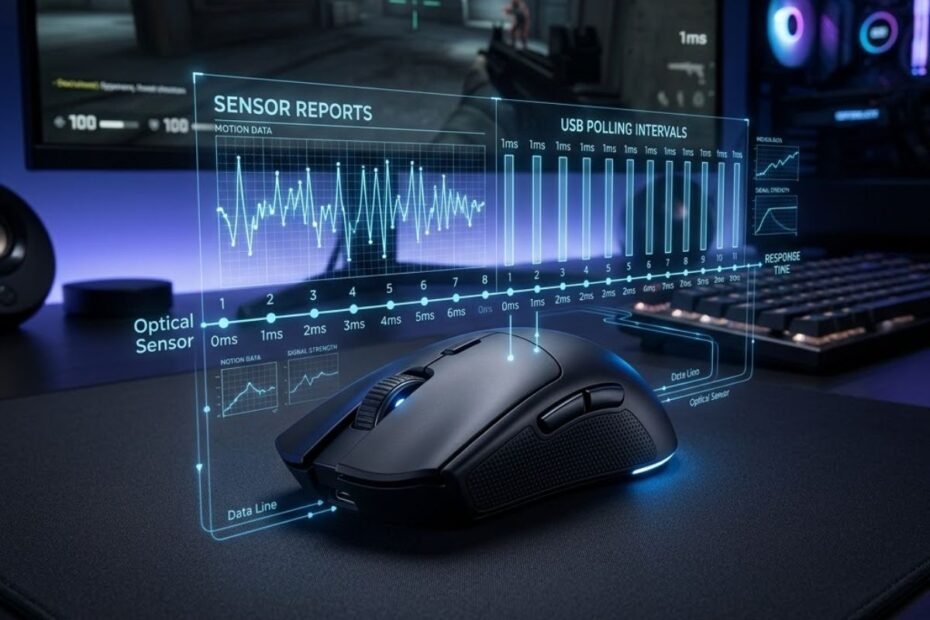
Polling Rate
Competitive first-person shooter players frequently face an important toggle in their mouse configuration software: whether they should keep motion sync on or off when competing in precision-driven titles like Counter-Strike 2 and Valorant. While modern…
Motion Sync On or Off for FPS: Does the Latency Penalty Matter?
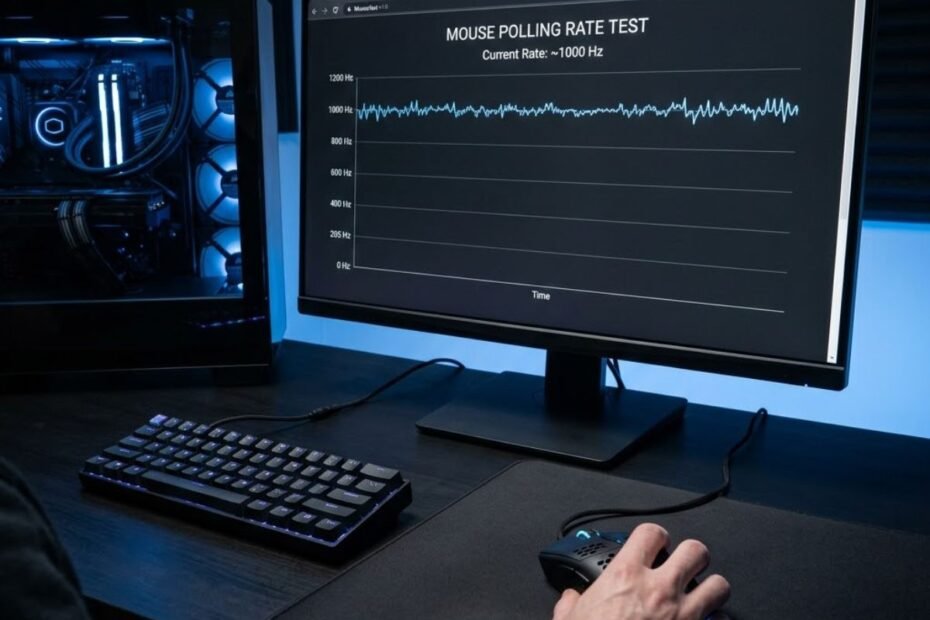
Mouse polling rate determines how often your gaming mouse reports its position to your computer every second. While gaming software can display a selected polling rate, measuring the actual report frequency is the only reliable…
How to Check Mouse Polling Rate Accurately: 3 Best Free Tools & Test Guide
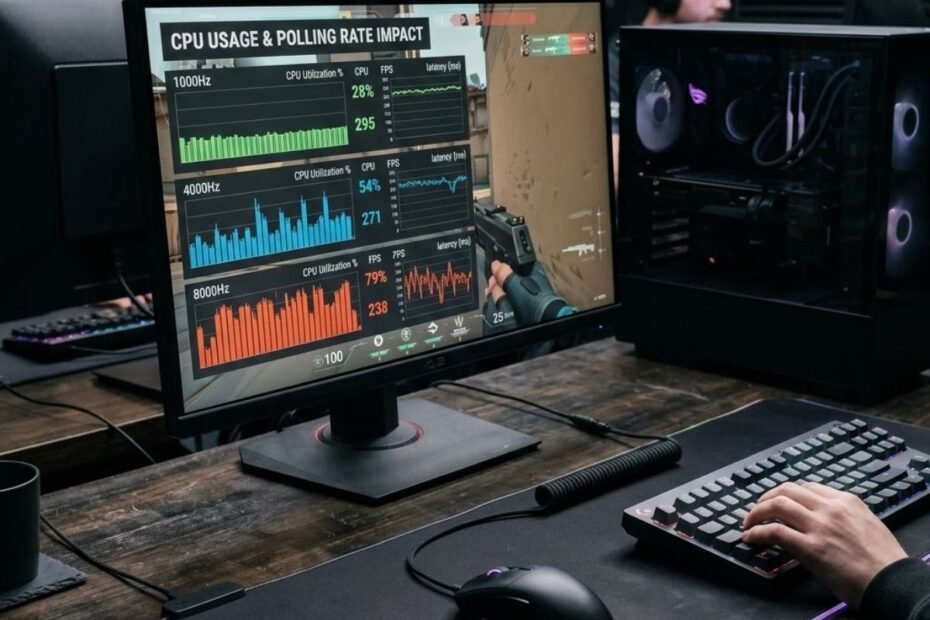
Polling rate increases CPU activity because the system must process more mouse reports every second. However, a higher polling rate does not automatically mean a major performance loss. The real impact depends on the polling…
Polling Rate and CPU Usage: Why 4000Hz & 8000Hz Cause FPS Drops in Games
Choosing between 1000Hz and 4000Hz polling rate is becoming increasingly common as modern gaming mice continue to push higher performance specifications. While both settings are capable of delivering responsive gameplay, many FPS players wonder whether…
1000Hz vs 4000Hz Polling Rate: Real-World Latency, Frame Pacing & Aim Test
1000Hz is the optimal polling rate for Valorant competitive play. While modern 2000Hz, 4000Hz, and 8000Hz mice offer marginal theoretical delay reductions under 0.75 milliseconds, 1000Hz delivers zero CPU bottlenecking, flawless frame-time pacing, and maximum…