
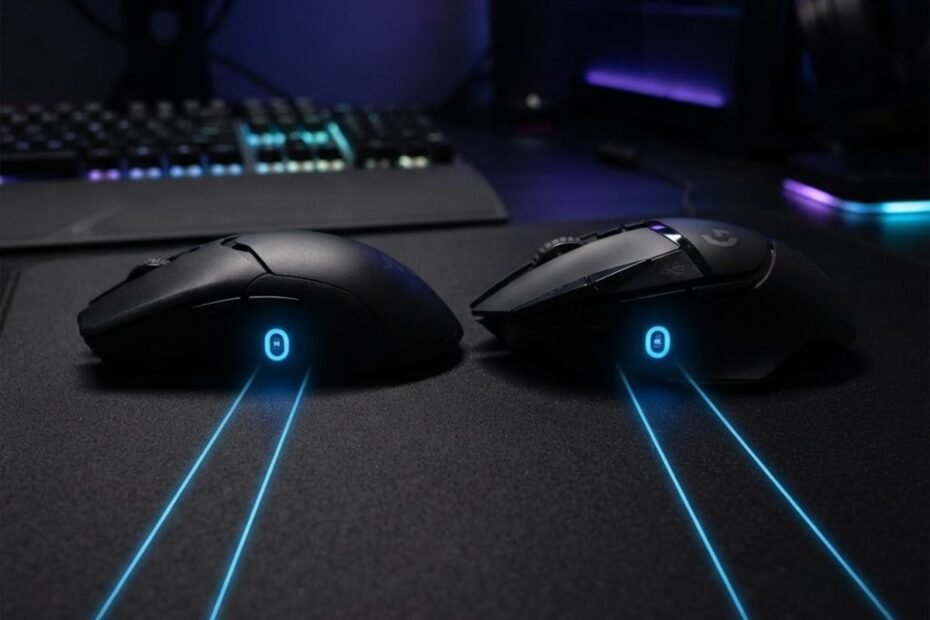
Many FPS players believe that a lighter mouse automatically delivers better tracking, while others assume a heavier mouse provides greater stability and accuracy. In reality, these ideas combine two different concepts. Mouse tracking is determined by the sensor’s ability to detect movement, whereas mouse weight mainly influences how players control the mouse during gameplay.
Understanding this distinction helps explain why two gaming mice with identical sensors can feel completely different in your hand while still producing the same tracking performance. This guide separates sensor technology from player perception, explains what tracking actually means, and clarifies where mouse weight truly matters in competitive FPS games.
What Does Mouse Tracking Actually Mean in Gaming?
Mouse tracking is a gaming mouse sensor’s ability to accurately convert physical movement into cursor movement on your screen. It measures how consistently the sensor follows every movement without skipping, spinning out, or losing positional accuracy.
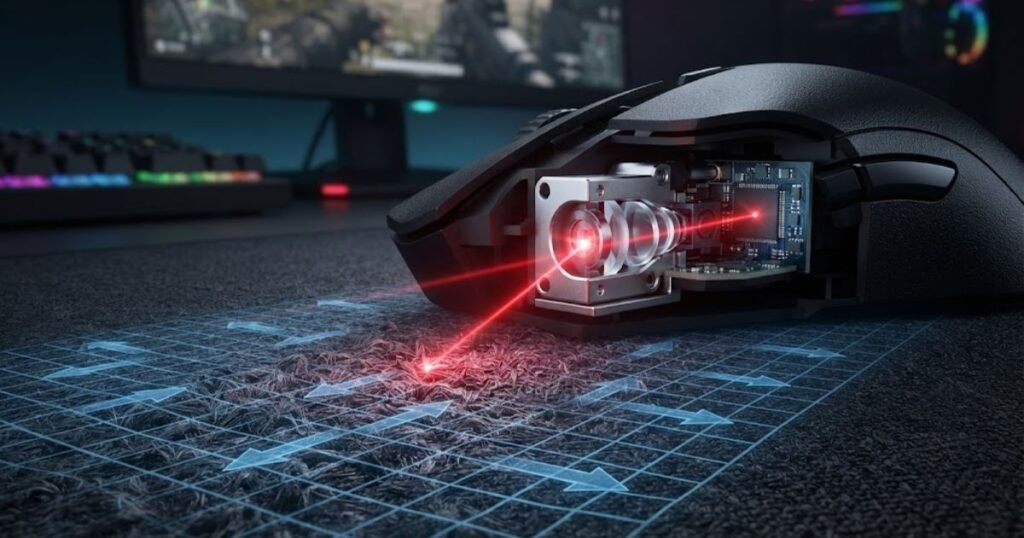
The illustration below shows how a modern gaming mouse sensor detects movement:
Many gamers mistakenly associate tracking with DPI or polling rate because these specifications often appear together in product marketing. However, tracking is a completely different measurement. A mouse can offer extremely high DPI or an 8,000 Hz polling rate while still relying on the same tracking principles as other modern gaming mice.
Every time you move your mouse, the sensor continuously captures microscopic images of the mousepad surface. Its onboard processor compares thousands of these images every second, calculating movement direction, speed, and distance before transmitting that information to the computer. As long as the sensor remains within its designed operating limits, movement stays accurate and consistent.
The table below explains the differences between the most common mouse performance specifications:
| Specification | What It Measures | Primary Purpose |
|---|---|---|
| Tracking | Movement accuracy | Determines how precisely the sensor follows physical movement. |
| DPI | Cursor sensitivity | Controls how far the cursor moves relative to physical movement. |
| Polling Rate | Reporting frequency | Determines how often the mouse sends updates to the computer. |
| IPS | Maximum tracking speed | Indicates the fastest movement the sensor can accurately follow. |
| Maximum Acceleration | Acceleration tolerance | Defines how much acceleration the sensor can handle before errors occur. |
The comparison shows that tracking is only one aspect of overall mouse performance. Other specifications describe different characteristics, but none of them directly represent how accurately the sensor follows movement.
How do modern gaming mouse sensors detect movement?
Modern gaming mouse sensors detect movement by analyzing thousands of microscopic images of the surface every second and calculating how those images change over time.
Unlike mechanical mice that relied on moving parts, today’s optical sensors illuminate the mousepad with an LED while an integrated processor continuously compares image patterns. This process allows the sensor to determine movement direction and distance with exceptional precision. Premium sensors found in competitive gaming mice can process these calculations thousands of times every second, enabling reliable tracking during both slow precision aiming and extremely fast swipes.
The sensor’s ability to maintain accurate tracking depends on its optical design, firmware optimization, image-processing algorithm, and the quality of the surface beneath it. These technical factors are responsible for tracking performance long before physical characteristics such as mouse weight enter the equation.
Understanding how gaming mouse sensors detect movement makes it easier to separate sensor capability from the way a mouse feels during gameplay. This distinction becomes essential when evaluating whether mouse weight has any real influence on tracking performance.
Why do gamers often confuse tracking with DPI and polling rate?
Many gamers confuse tracking with DPI and polling rate because all three specifications appear together on product pages, even though they describe different aspects of mouse performance.
Higher DPI simply increases cursor sensitivity, while polling rate determines how frequently movement data is reported to the computer. Neither specification guarantees that the sensor is more accurate. Likewise, a mouse with an extremely high DPI setting does not automatically produce smoother or more reliable tracking than a mouse configured at a lower sensitivity.
This misunderstanding has become even more common as manufacturers advertise increasingly larger specification numbers. Marketing often emphasizes 30,000 DPI or 8,000 Hz polling rates because they are easy to compare, whereas tracking quality depends on a combination of sensor engineering, firmware tuning, and real-world implementation that cannot be summarized by a single specification.
Recognizing the differences between these measurements provides a stronger foundation for understanding the relationship between mouse weight and tracking, which is the focus of the next section.
Does Mouse Weight Directly Affect Sensor Tracking Performance?
No, mouse weight does not directly affect sensor tracking performance. Modern gaming mouse sensors calculate movement independently of the mouse’s physical mass. Whether a mouse weighs 45 grams or 100 grams, the sensor follows the same optical tracking process as long as it remains within its operating limits.
This is one of the most common misconceptions among FPS players. Lightweight mice often feel more responsive, leading many people to assume the sensor has become more accurate. In reality, the improvement comes from how easily the mouse can be accelerated, stopped, and repositioned by the player rather than from any change in sensor capability.
Understanding this distinction also helps explain why comparing a lightweight vs heavy gaming mouse involves much more than tracking alone. Weight changes the physical handling characteristics of the mouse, while tracking accuracy continues to depend on the sensor itself.
Why doesn’t sensor performance depend on mouse weight?
Sensor performance is determined by electronic hardware and optical processing, not by the physical weight of the mouse.
The optical sensor continuously analyzes the surface beneath the mouse by capturing thousands of images every second. This process is controlled by the sensor, its firmware, and the onboard processor. None of these components measure how heavy the mouse is before calculating movement.
Even if two gaming mice use identical sensors but have completely different weights because of their shell design or battery size, both sensors are capable of delivering the same level of tracking accuracy under identical testing conditions. The difference players notice usually comes from how their hand moves the mouse rather than how the sensor reads the surface.
This explains why modern gaming sensors remain consistent across a wide range of mouse designs. Weight changes the player’s interaction with the mouse, but it does not change how the sensor interprets movement.
What actually determines tracking accuracy?
Tracking accuracy depends on the quality of the sensor implementation, the surface being used, and the condition of the mouse rather than its weight.
The factors below have a much greater influence on tracking accuracy than mouse weight:
- Sensor quality: Modern flagship sensors deliver more consistent tracking across different movement speeds.
- Firmware optimization: Well-tuned firmware ensures the sensor processes movement accurately without unwanted smoothing or instability.
- Mousepad surface: Clean, consistent surfaces provide better image recognition for optical sensors.
- Lift-off distance: Proper lift-off distance helps maintain reliable tracking during repositioning.
- Sensor lens condition: Dust or debris covering the sensor window can reduce tracking reliability.
- Surface compatibility: Some materials allow optical sensors to perform more consistently than others.
These technical factors have a measurable impact on tracking performance because they directly influence the information received by the sensor. By comparison, changing mouse weight alone does not modify how the sensor captures or processes movement.
The table below compares factors that directly and indirectly influence mouse tracking:
| Factor | Direct Impact on Tracking | Reason |
|---|---|---|
| Sensor quality | High | Determines how accurately movement is detected. |
| Firmware | High | Controls sensor processing and movement interpretation. |
| Mousepad surface | High | Affects image recognition beneath the sensor. |
| Lift-off distance | Medium | Influences tracking during repositioning. |
| Mouse weight | Indirect | Changes player control instead of sensor accuracy. |
The comparison highlights that tracking accuracy is primarily a function of sensor technology and implementation. Mouse weight only influences how the player moves the mouse, making it an indirect factor rather than a direct determinant of tracking performance.
Recognizing the difference between sensor capability and player control makes it much easier to understand why lightweight mice often feel easier to use, even though their sensors are not inherently more accurate. The next section focuses on why this perception is so common among FPS players.
Why Do Lightweight Mice Often Feel Easier to Track With?
Lightweight gaming mice often feel easier to track with because they require less physical effort to start, stop, and redirect during aiming. This improved feeling comes from reduced inertia and better hand control rather than any increase in sensor accuracy. In other words, the sensor performs the same job, but the player can move the mouse with less resistance.
The comparison below illustrates why lightweight mice often feel easier to control:
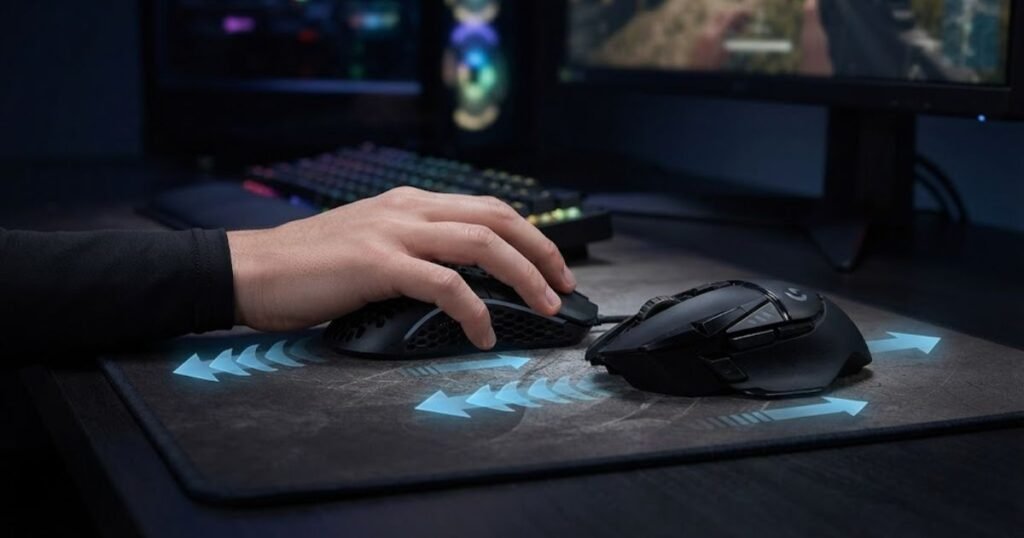
This distinction is important because many FPS players interpret smoother movement as better tracking. While the overall aiming experience may improve, the sensor is still processing movement exactly as it would in a heavier mouse equipped with the same hardware.
For this reason, a lightweight gaming mouse is often preferred by competitive players who value speed and effortless control, even though its tracking performance depends on the sensor rather than its weight.
How does lower inertia improve mouse control?
Lower inertia allows players to change direction more quickly and stop the mouse with less physical effort.
Every movement begins by overcoming inertia. Because a lighter mouse has less mass, it responds more readily when accelerating, decelerating, or making rapid directional changes. This makes movements feel smoother during target switching, micro corrections, and continuous tracking scenarios.
The effect becomes especially noticeable during fast-paced FPS games where players constantly alternate between precise adjustments and explosive flicks. Less resistance allows the hand to maintain a more natural rhythm without fighting unnecessary momentum.
Although these improvements make aiming feel more responsive, they originate from the player’s physical interaction with the mouse instead of any change in sensor behavior.
Why is smoother movement often mistaken for better tracking?
Smoother mouse movement is frequently mistaken for better tracking because players naturally associate easier control with greater accuracy.
When a mouse glides effortlessly across the mousepad, maintaining crosshair alignment requires fewer corrective movements. The overall experience feels cleaner and more predictable, leading many players to believe the sensor is performing better than before.
In reality, the sensor continues reporting movement with the same level of precision. What changes is the player’s ability to execute consistent movements, especially during extended practice sessions or repeated target transitions.
The table below compares perceived tracking improvements with actual tracking performance:
| Player Perception | What Actually Changes | Does Sensor Tracking Improve? |
|---|---|---|
| Mouse feels faster | Lower inertia reduces physical effort. | No |
| Micro adjustments feel easier | Hand control becomes more precise. | No |
| Tracking feels smoother | Movement requires fewer corrections. | No |
| Stopping feels more accurate | Reduced momentum improves braking control. | No |
| Aiming feels more consistent | Player movement becomes more repeatable. | No |
The comparison demonstrates that lightweight mice primarily improve the player’s control over movement rather than the sensor’s ability to detect movement. Separating perception from hardware capability helps explain why two mice with identical sensors can produce the same tracking accuracy while feeling completely different in actual gameplay.
Understanding this difference prepares us for the next question: although weight does not directly affect tracking, can it indirectly influence tracking consistency during long gaming sessions?
When Can Mouse Weight Indirectly Influence Tracking Consistency?
Mouse weight can indirectly influence tracking consistency when it affects a player’s ability to maintain stable, repeatable mouse control over time. Although the sensor continues tracking accurately, physical fatigue and reduced movement efficiency may gradually make aiming less consistent during long gaming sessions.
The example below demonstrates how physical fatigue can influence long gaming sessions:
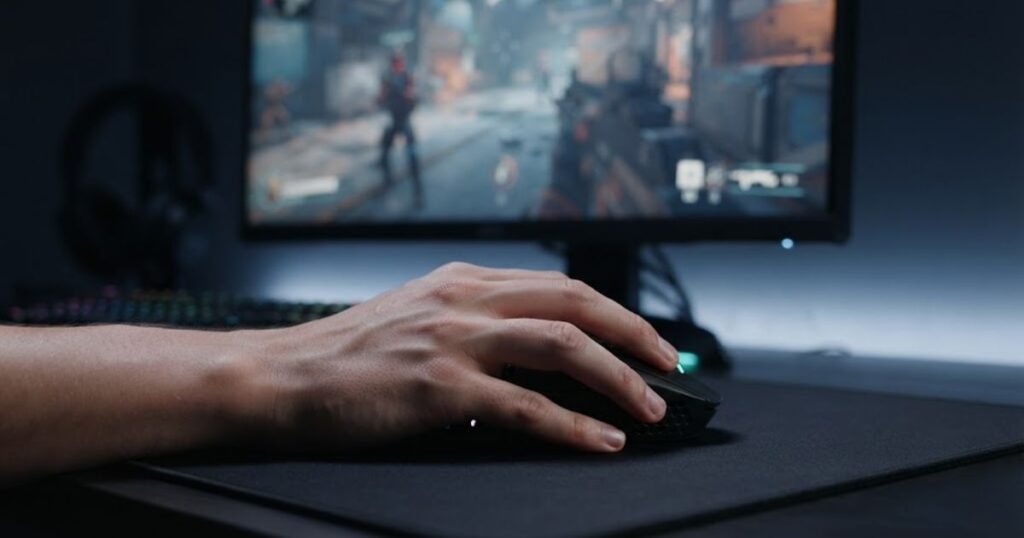
This indirect relationship explains why two players using identical mice may experience different tracking consistency. The sensor reports movement with the same precision, but the player’s physical condition determines how consistently those movements can be repeated throughout an entire match.
How can physical fatigue reduce tracking consistency?
Physical fatigue can reduce tracking consistency by making mouse movements less controlled and more difficult to repeat over long periods of play.
During extended gaming sessions, the muscles responsible for controlling the wrist, hand, and forearm gradually become less efficient. As fatigue builds, maintaining smooth crosshair movement often requires greater effort, especially when following moving targets or making continuous corrections.
This does not mean the mouse sensor becomes less accurate. Instead, the player’s movement becomes slightly less stable, increasing the likelihood of inconsistent tracking, overshooting targets, or making unnecessary corrective movements.
Many competitive players notice this effect after several hours of practice because physical endurance becomes just as important as mechanical skill. As a result, hand fatigue during long gaming sessions is often discussed alongside mouse weight when evaluating long-term aiming performance.
Recognizing the difference between physical fatigue and sensor performance helps players identify the true source of inconsistent tracking instead of blaming the hardware.
Why does consistent movement matter more than individual fast movements?
Consistent mouse movement produces more reliable tracking than occasional fast or precise movements because FPS games reward repeatability over isolated moments of accuracy.
Tracking opponents requires hundreds of small adjustments throughout a match rather than a single perfect movement. Players who can reproduce the same smooth motion repeatedly are more likely to maintain stable crosshair placement, especially during prolonged engagements.
Even small variations in hand movement accumulate over time. Slightly inconsistent stopping distance, uneven pressure, or changing grip tension may reduce overall tracking consistency despite the sensor continuing to perform flawlessly.
The following process explains how players can maintain more consistent tracking during long gaming sessions:
- Choose a comfortable mouse weight: Select a weight that feels natural instead of chasing the lightest specification available.
- Maintain a relaxed grip: Avoid unnecessary muscle tension that increases fatigue over time.
- Develop repeatable mouse movements: Practice smooth tracking patterns instead of relying on sudden corrections.
- Take regular breaks: Short recovery periods help maintain consistent muscle control during extended play.
- Keep your setup consistent: Using the same sensitivity, mousepad, and sitting position improves long-term movement consistency.
Building consistent movement habits allows players to preserve tracking quality throughout an entire gaming session instead of only performing well during the first few matches.
The table below summarizes the indirect relationship between mouse weight and tracking consistency:
| Factor | Directly Affects the Sensor? | Influences Tracking Consistency? |
|---|---|---|
| Mouse Weight | No | Yes, through player control and endurance. |
| Physical Fatigue | No | Yes, by reducing movement consistency. |
| Grip Stability | No | Yes, by improving repeatable control. |
| Sensor Quality | Yes | Yes, through accurate movement detection. |
| Mousepad Surface | Yes | Yes, by providing reliable sensor input. |
The comparison shows that mouse weight contributes to tracking consistency through the player’s physical control rather than by changing the sensor’s performance. Understanding this distinction prevents players from expecting hardware alone to solve aiming inconsistencies.
Tracking consistency becomes even more interesting when different aiming situations are considered. Continuous target tracking, rapid direction changes, and fast flicks place very different demands on mouse weight, which is the focus of the next section.
How Does Mouse Weight Affect Different Types of Tracking Movements?
Mouse weight influences different aiming movements in different ways because each movement places unique physical demands on the player’s hand. While the sensor continues tracking accurately regardless of weight, the amount of effort required to move, stop, and redirect the mouse changes depending on the aiming task. As a result, a weight that feels comfortable for one type of movement may feel less efficient for another.
The comparison below highlights how different aiming movements change the feel of mouse weight:
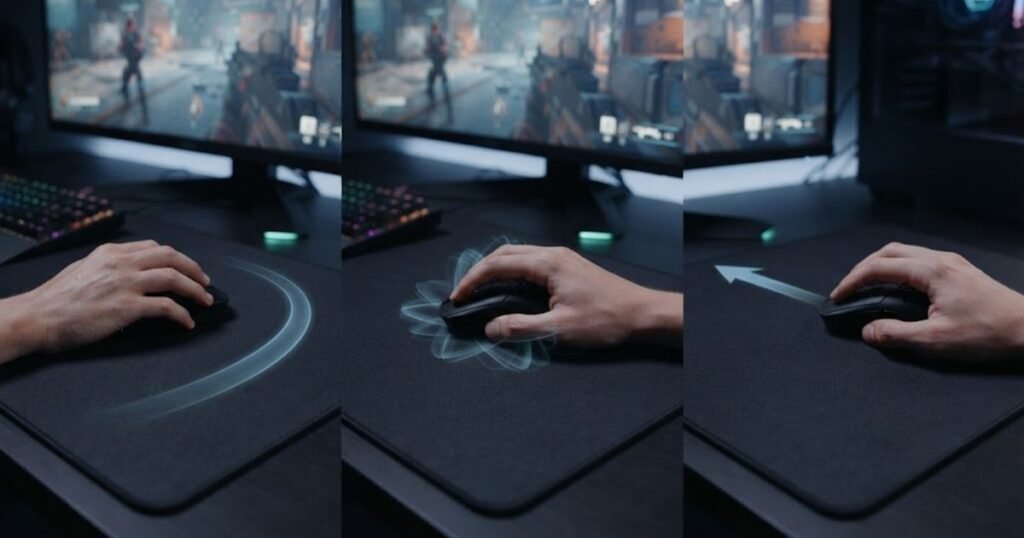
This is why professional FPS players often evaluate mouse weight based on their preferred aiming style rather than assuming lighter or heavier mice are universally better. The goal is not to improve sensor tracking but to find a balance that supports consistent control across different situations.
How does mouse weight affect continuous target tracking?
Continuous target tracking benefits from smooth, repeatable mouse movement rather than extremely fast acceleration.
Following a moving opponent requires hundreds of small adjustments that keep the crosshair aligned without introducing unnecessary corrections. During this type of aiming, maintaining a stable rhythm is often more important than moving as quickly as possible.
A lightweight mouse may reduce the effort needed for these repeated adjustments, while a heavier mouse can provide a stronger sense of momentum that some players find easier to control during slow, deliberate tracking. Neither approach changes the sensor’s accuracy because both rely on the same tracking technology.
The ideal choice depends on which weight allows the player to maintain smooth movement throughout an engagement instead of fighting against unnecessary physical resistance.
How do mouse weight differences affect rapid directional changes?
Rapid directional changes place greater demands on acceleration and stopping control, making mouse weight feel more noticeable during high-speed aiming.
Quick target transitions require the mouse to accelerate, stop, and immediately reverse direction. Lower-weight mice generally require less effort to perform these movements, allowing players to react more quickly when switching between multiple targets.
By comparison, heavier mice generate greater momentum during fast movements. Some players appreciate the additional sense of stability, while others find that extra momentum requires more effort to brake precisely before reaching the target. These differences affect handling characteristics rather than sensor performance.
This behavior becomes particularly noticeable during flick shots, where rapid acceleration and precise stopping distance play a larger role than continuous tracking alone.
The table below compares how different aiming scenarios change the way mouse weight feels during gameplay:
| Aiming Scenario | Lightweight Mouse | Heavier Mouse |
|---|---|---|
| Continuous Tracking | Requires less effort for repeated adjustments. | May feel steadier for slower movements. |
| Target Switching | Accelerates and changes direction quickly. | Requires more effort to overcome momentum. |
| Micro Corrections | Feels agile for fine positioning. | May provide a more deliberate sense of control. |
| Stopping Precision | Easier to stop rapidly. | May require stronger braking control. |
| Long Gaming Sessions | Often reduces physical effort. | May increase physical workload over time. |
The comparison illustrates that different aiming situations emphasize different handling characteristics. Rather than making tracking inherently better or worse, mouse weight changes how the player experiences each movement, making personal preference and aiming style more important than the number shown on a specification sheet.
Understanding these movement differences also highlights why many tracking issues originate from factors unrelated to weight. The next section examines the hardware and environmental factors that have a much greater impact on tracking performance than mouse weight alone.
What Factors Affect Mouse Tracking More Than Weight?
Sensor quality, surface compatibility, firmware optimization, and mouse condition all have a much greater impact on tracking performance than mouse weight. While weight changes how a mouse feels in your hand, these technical factors directly determine whether the sensor can detect movement accurately and consistently.
This distinction is important because many players try to solve tracking issues by changing to a lighter or heavier mouse. In reality, tracking problems are far more likely to originate from the sensor, the mousepad, or the surrounding hardware than from the number of grams listed in the specifications.
Which hardware components have the biggest impact on tracking?
The quality of the sensor and its implementation have the greatest influence on tracking accuracy because they determine how movement is detected and processed.
Modern flagship sensors are capable of maintaining reliable tracking across a wide range of movement speeds and surfaces. However, the sensor is only one part of the system. Manufacturers also tune firmware, lift-off distance, motion processing, and power management to ensure consistent real-world performance.
The factors below have the most direct influence on mouse tracking:
- Sensor implementation: The same sensor can perform differently depending on how the manufacturer tunes its firmware and processing algorithms.
- Mousepad surface: A clean, consistent surface provides clearer image data for the optical sensor to analyze.
- Mouse feet: Smooth and evenly worn mouse feet help maintain stable movement across the mousepad.
- Lift-off distance: A properly calibrated lift-off distance prevents unwanted cursor movement while repositioning the mouse.
- Sensor cleanliness: Dust or debris covering the sensor lens may interfere with accurate surface detection.
- Firmware updates: Manufacturers occasionally improve tracking stability through firmware optimization.
These hardware-related factors directly influence the information received and processed by the sensor, making them significantly more important than mouse weight when evaluating tracking performance.
How do player habits influence tracking performance?
Consistent technique and equipment setup often contribute more to reliable tracking than changing the physical weight of the mouse.
Players naturally develop muscle memory through repeated practice. Frequently switching sensitivity, grip style, or equipment makes it more difficult to build consistent movement patterns, even when using a high-end gaming mouse.
Maintaining the same setup allows the brain to reproduce familiar movements with greater precision. Over time, this consistency contributes more to stable tracking than constantly searching for a different mouse weight.
The table below compares the factors that have the strongest influence on tracking performance:
| Factor | Level of Impact | Reason |
|---|---|---|
| Sensor implementation | Very High | Directly determines movement detection accuracy. |
| Mousepad quality | High | Provides consistent optical data for the sensor. |
| Mouse feet condition | High | Maintains smooth and predictable movement. |
| Player technique | High | Improves movement consistency through muscle memory. |
| Grip consistency | Medium | Helps reproduce repeatable mouse movements. |
| Mouse weight | Indirect | Changes handling feel rather than sensor capability. |
The comparison demonstrates that tracking accuracy depends on a combination of sensor technology, hardware quality, and player consistency. Mouse weight remains part of the overall aiming experience, but it has a much smaller influence on tracking performance than many gamers initially expect.
What Are the Most Common Myths About Mouse Weight and Tracking?
Many beliefs about mouse weight and tracking are based on personal experience rather than how modern gaming sensors actually work. Because changes in handling are immediately noticeable, players often assume that any improvement in aiming must also indicate better sensor tracking. In reality, perception and hardware performance are not always the same.
Which misconceptions cause the most confusion?
The myths below continue to spread because players naturally associate improved control with improved tracking.
The table below compares common myths with the technical reality:
| Common Myth | Technical Reality |
|---|---|
| Lighter mice always have better tracking. | Tracking accuracy depends on the sensor, not the mouse’s weight. |
| Heavy mice track more accurately because they are stable. | Additional stability comes from handling characteristics rather than sensor performance. |
| Higher DPI automatically improves tracking. | DPI changes cursor sensitivity, not tracking accuracy. |
| Changing mouse weight fixes tracking issues. | Most tracking problems originate from the sensor, mousepad, firmware, or setup. |
| Professional players use lightweight mice because the sensors are better. | Most professionals choose lightweight mice to reduce physical effort, not because the sensors track differently. |
The comparison reinforces one central idea throughout this guide: sensor performance and mouse weight should be evaluated separately. Understanding the difference allows players to make better equipment decisions without relying on misleading assumptions.
Should FPS Players Prioritize Mouse Weight or Sensor Quality?
FPS players should prioritize sensor quality first and then choose a mouse weight that matches their aiming style and comfort. A modern flagship sensor provides the foundation for reliable tracking, while mouse weight determines how naturally and consistently a player can control that tracking during real gameplay.
This order of priority helps avoid one of the most common buying mistakes. Many players focus exclusively on finding the lightest mouse available, even though an excellent sensor, a comfortable shape, and a consistent setup usually contribute far more to long-term aiming performance.
How should different types of FPS players choose mouse weight?
The ideal mouse weight depends on personal preference, grip style, and the type of movements a player performs most often.
There is no universal weight that guarantees better tracking for everyone. Some players prefer extremely lightweight mice because they reduce physical effort during long sessions, while others perform better with moderately heavier mice that provide a stronger sense of stability. The best choice is the one that allows movements to remain natural and repeatable throughout an entire match.
The table below provides general recommendations for different types of FPS players:
| Player Profile | Recommended Priority | Reason |
|---|---|---|
| Competitive FPS players | High-end sensor + lightweight design | Supports fast reactions while maintaining reliable tracking. |
| Players focused on long sessions | Comfortable weight before minimum weight | Reduces unnecessary physical strain over time. |
| New FPS players | Comfortable shape + quality sensor | Developing consistent mouse control is more important than chasing specifications. |
| Experienced aim trainers | Choose the weight that best matches existing muscle memory | Consistency usually produces better results than frequent equipment changes. |
The recommendations show that mouse weight should always be evaluated alongside sensor quality, comfort, and long-term consistency instead of being treated as an isolated specification.
Players comparing multiple models should also consider the overall balance between performance, comfort, and features when selecting the best gaming mouse for FPS games for their preferred playstyle.
Final Verdict
Mouse weight does not directly affect tracking accuracy, but it significantly influences how players control and maintain that tracking during gameplay. Modern gaming sensors perform independently of the mouse’s physical weight, meaning a lighter mouse does not automatically produce better tracking and a heavier mouse does not inherently provide greater accuracy.
Throughout this guide, we have separated sensor performance from player perception. Tracking accuracy comes from sensor quality, firmware implementation, surface compatibility, and overall hardware design. Mouse weight, on the other hand, changes the physical experience of aiming by influencing acceleration, stopping control, endurance, and movement consistency.
Rather than searching for a specific weight that promises better tracking, FPS players should focus on building a balanced setup that combines a reliable sensor with a comfortable mouse shape, an appropriate weight, and consistent practice. This approach produces more meaningful improvements than relying on any single specification alone.
Ultimately, the best mouse is not the lightest or the heaviest model available. It is the one that allows you to maintain precise, repeatable control while the sensor consistently translates every movement exactly as intended.
Frequently Asked Questions
The following questions address additional concerns that FPS players often have about mouse weight and tracking. These answers expand on topics covered in this guide without repeating the main sections.
Can two gaming mice with the same sensor have different tracking experiences?
Yes. Even when two mice use the same sensor, differences in weight, shape, mouse feet, and firmware tuning can make them feel different during gameplay. The sensor may track equally well, but the overall handling experience can vary.
Does reducing mouse weight improve aim immediately?
No. A lighter mouse may feel easier to control, but improving aim still depends on practice, muscle memory, and consistent technique rather than weight alone.
Is there an ideal mouse weight for tracking in FPS games?
No universal weight exists. The ideal choice depends on your grip style, sensitivity, arm movement, and personal comfort instead of a specific number of grams.
Can a poor mousepad cause tracking problems?
Yes. Uneven textures, excessive wear, or dirt on a mousepad can reduce the quality of the surface that an optical sensor reads, leading to inconsistent tracking.
Does mouse weight matter more at low sensitivity?
Players using low sensitivity often move the mouse farther, making weight feel more noticeable. However, the sensor itself continues tracking accurately regardless of the chosen sensitivity.
Can wireless gaming mice track as accurately as wired models?
Yes. Modern low-latency wireless gaming mice equipped with flagship sensors provide tracking performance that is effectively equivalent to wired models in competitive play.
Do professional FPS players always choose lightweight mice?
No. While many professionals prefer lightweight mice, their decisions also depend on shape, comfort, sensor performance, and years of developed muscle memory.
Can changing mouse feet improve tracking?
New mouse feet do not improve the sensor itself, but smoother gliding can make movement feel more consistent, helping players maintain steadier control.
How can I tell whether my tracking issue comes from the sensor or my technique?
If tracking problems occur only during certain movements or after long practice sessions, technique is often the cause. If the cursor skips or behaves unpredictably across different applications and surfaces, hardware or surface issues are more likely.
Should I replace my mouse if tracking feels inconsistent?
Not necessarily. Before replacing the mouse, inspect the sensor lens, clean the mousepad, update firmware, and confirm that your settings and hardware are functioning correctly.
Does higher polling rate improve tracking accuracy?
Higher polling rates reduce input reporting delay, but they do not increase the sensor’s ability to detect movement accurately.
What should I prioritize when buying a gaming mouse for FPS?
Start with a reliable sensor, choose a comfortable shape, select a weight that matches your aiming style, and maintain a consistent setup. Together, these factors have a much greater impact on long-term performance than focusing on weight alone.
Conclusion
Mouse weight influences how you control a gaming mouse, but it does not determine how accurately the sensor tracks movement. Modern gaming sensors are designed to deliver consistent tracking regardless of weight, while the player’s comfort, technique, and hardware setup ultimately shape the overall aiming experience.
Understanding the difference between sensor performance and physical handling makes it easier to choose a mouse based on practical needs instead of common misconceptions. Rather than chasing the lightest or heaviest model available, focus on finding a gaming mouse that combines a dependable sensor, a comfortable shape, and a weight you can control confidently over long gaming sessions.
Thank you for reading. We hope this guide helps you better understand the relationship between mouse weight and tracking so you can choose the setup that best fits your playstyle.