
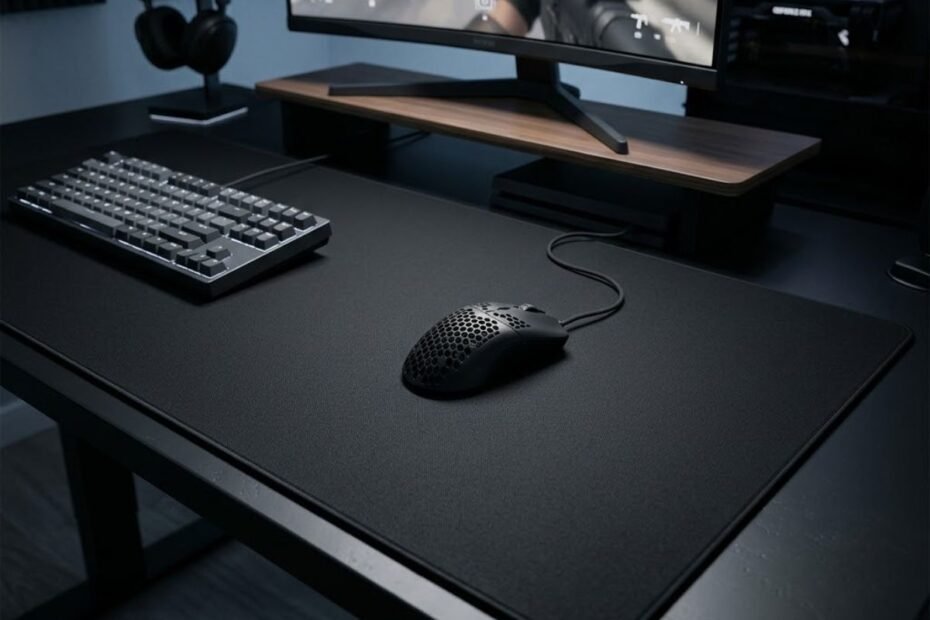
A speed mouse pad is a gaming mouse pad surface designed to provide easier, faster-feeling mouse movement by reducing resistance between the mouse skates and the pad. The result is a surface that feels smooth and free during swipes, tracking, and other continuous movements.
The word “speed” refers to how the surface feels during mouse movement. It does not mean that the mouse sensor becomes faster, your DPI increases, or your in-game sensitivity changes. Instead, the surface changes how easily the mouse moves across the pad.
What Is a Speed Mouse Pad?
A speed mouse pad is a surface that prioritizes low resistance and easy glide, allowing the mouse to move across the pad with less drag. Compared with a more control-oriented surface, a speed pad generally feels freer during movement and requires less effort for longer swipes.
A speed surface is easiest to understand by looking at how the mouse interacts with the pad during movement:
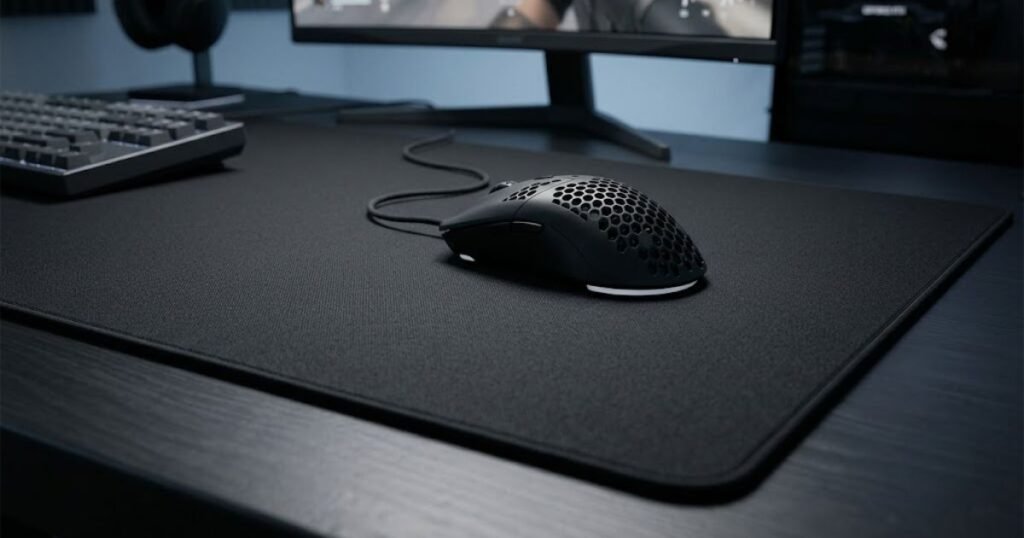
The main characteristic of a speed mouse pad is its movement feel. When you move the mouse across the surface, the glide tends to feel smooth and unrestricted rather than heavy or resistant. This can be particularly noticeable during wide mouse movements where the mouse travels farther across the pad.
What Does “Speed” Mean on a Mouse Pad?
“Speed” describes the movement characteristics of the surface rather than the actual speed of the mouse hardware. A faster-feeling surface allows the mouse to glide more easily, while a slower surface provides more resistance against movement.
This distinction matters because a speed mouse pad does not change the technical settings of your gaming mouse. Your DPI, polling rate, sensor behavior, and in-game sensitivity remain the same. What changes is the amount of resistance you feel while moving the mouse.
In practical terms, a speed surface emphasizes:
- Easier glide: The mouse moves across the surface with relatively little resistance.
- Free movement: Longer swipes can feel less restricted.
- Smooth transitions: Continuous mouse movement can feel more fluid.
- Lower drag: The surface does not provide as much resistance as a control-oriented pad.
These characteristics describe the surface itself. They do not mean that every speed mouse pad will feel identical, because surface construction, texture, mouse skates, and other factors can change the overall glide experience.
In short, a speed mouse pad is defined by how freely the mouse moves across its surface. Its “speed” comes from the pad’s movement characteristics, not from changing the mouse’s DPI, sensitivity, or sensor performance.
Why Does a Speed Mouse Pad Feel Faster?
A speed mouse pad feels faster because the mouse can glide across its surface with relatively low resistance. This makes starting, continuing, and changing mouse movement feel easier, especially during longer swipes.
The important distinction is between movement speed and movement resistance. A mouse does not physically move faster because it is placed on a speed pad. Instead, less resistance means you need less effort to move the mouse, which creates the faster-feeling glide associated with speed surfaces.
Lower Resistance Makes Mouse Movement Easier
When a mouse moves across a surface, the contact between the mouse skates and the pad creates resistance. A speed-oriented surface is designed to keep that resistance relatively low, allowing the mouse to travel more freely across the pad.
This difference is most noticeable during movements that cover a larger distance. A broad swipe can feel smoother because the mouse is not fighting as much surface resistance throughout the movement. The same principle can also make repeated or continuous movements feel less restricted.
Surface resistance is one of the main factors behind how a mouse pad feels during movement, but it is not the only variable involved. The texture and condition of the surface can also change the way the mouse interacts with the pad.
That is why two mouse pads that are both described as fast can still feel noticeably different when you use them. Their overall glide depends on the specific surface characteristics and the equipment moving across them.
Mouse Skates Also Change the Glide Feel
The mouse pad is only one side of the contact between the mouse and the surface. The mouse skates also affect how easily the mouse moves. Different skate materials, shapes, and conditions can change the amount of resistance you feel during movement.
For example, a speed-oriented pad paired with mouse skates that produce more resistance may not feel as fast as expected. Likewise, the same pad can feel different when used with a different mouse or skate setup.
Several factors can change how fast a mouse pad feels during movement:
| Factor | Effect on Perceived Speed |
|---|---|
| Surface resistance | Changes how freely the mouse glides |
| Surface texture | Changes the feel of movement across the pad |
| Mouse skates | Change the contact between the mouse and surface |
| Mouse weight | Changes how much effort is needed to move the mouse |
| Hand pressure | Can change the amount of resistance felt during movement |
Understanding mouse pad friction also helps explain why differences in surface resistance can change the way a mouse starts, glides, and stops during movement.
In conclusion, a speed mouse pad feels faster because it allows the mouse to move with relatively little resistance. However, the final glide experience is influenced by the entire mouse and surface setup, not by the pad alone.
Speed vs. Control Mouse Pads: What Is the Difference?
Speed and control mouse pads differ mainly in how much resistance they provide during mouse movement. A speed surface emphasizes easier glide and freer movement, while a control surface provides more resistance and a more deliberate movement feel.
The difference is easiest to notice when you move the mouse across the pad. A speed surface generally lets the mouse travel more freely, while a control surface creates more resistance that can make movements feel more planted.
How Speed and Control Surfaces Feel Different
A speed surface is designed around easy movement. The mouse tends to glide freely across the pad, which can make broad movements feel less restricted. A control surface introduces more resistance, giving the hand stronger physical feedback as the mouse moves.
The difference between speed and control surfaces is most noticeable in the way the mouse feels during movement:
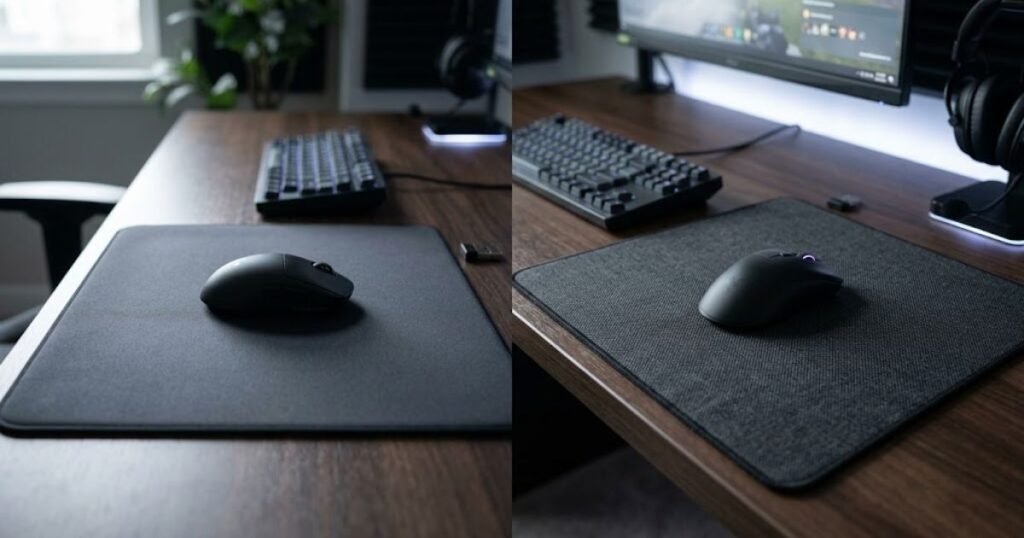
This does not mean that every speed pad or control pad feels the same. Surface texture, construction, mouse skates, and other parts of the setup can change the final experience. The labels describe the general behavior of the surface rather than a universal measurement shared by every product.
The main differences between common mouse pad surface types are:
| Surface Type | Glide Feel | Resistance | Movement Character |
|---|---|---|---|
| Speed | Fast and free | Lower | Fluid and less restricted |
| Balanced | Moderate | Moderate | Mix of glide and resistance |
| Control | Slower and more deliberate | Higher | More planted and resistant |
Manufacturers can also use different surface classifications. For example, SteelSeries describes its QcK Performance line with Speed, Balance, and Control surface options, with each designed around different movement characteristics.
SteelSeries’ Speed surface is described as having ultra-low dynamic friction and a smooth glide, while its Control surface is designed to provide more drag and movement feedback.
Why Speed Does Not Mean Better Aim
A speed mouse pad is not automatically better for aiming simply because the mouse glides more easily. Easier movement can be useful for players who prefer a freer surface, but aiming also requires the ability to control movement and stop the mouse accurately.
A control surface can provide more physical resistance during movement, which some players may find easier to manage when making deliberate adjustments. The relevant difference is therefore how the surface interacts with the player’s movement rather than which category is universally superior.
This distinction is especially important when choosing a surface for FPS games. A player who prefers unrestricted movement may find a speed surface more natural, while another player may prefer the additional resistance of a control surface.
If you are specifically comparing the two surface categories from a broader selection perspective, a control mouse pad represents the other side of the speed-versus-control spectrum, with greater emphasis on resistance and deliberate movement.
In conclusion, speed and control mouse pads are different because they prioritize different movement characteristics. Speed surfaces emphasize freer glide, while control surfaces emphasize resistance and deliberate movement. Neither label alone determines how well a player will aim.
How Does a Speed Mouse Pad Affect FPS Aim?
A speed mouse pad can make FPS mouse movement feel more fluid, especially during large swipes, continuous tracking, and quick transitions between targets. However, the same low-resistance feel can require more deliberate control when stopping the mouse precisely.
The important point is that a speed surface changes the physical feel of aiming, not the game’s aiming mechanics. Your crosshair still moves according to the same mouse sensitivity and input settings. What changes is how easily your hand can move the mouse across the surface.
Speed Surfaces and Large Mouse Movements
Large mouse movements are one of the situations where a speed surface can feel most noticeable. When an FPS player needs to move the mouse across a significant portion of the pad, lower resistance allows the movement to feel freer and less restricted.
This can matter when the player uses broad arm movements to reposition the crosshair. Instead of the surface creating substantial drag throughout the swipe, the mouse can travel more freely across the available space.
The benefit here is primarily about movement feel. A speed pad does not automatically make a player’s large swipes more accurate or faster in an objective sense. It simply changes how much resistance the player experiences while making those movements.
Speed Surfaces and Tracking
Tracking requires continuous mouse movement as the crosshair follows a moving target. A speed-oriented surface can make this type of movement feel smooth because the mouse can glide without as much resistance.
A broad mouse movement on a speed surface shows why lower resistance can make continuous FPS movement feel more fluid:
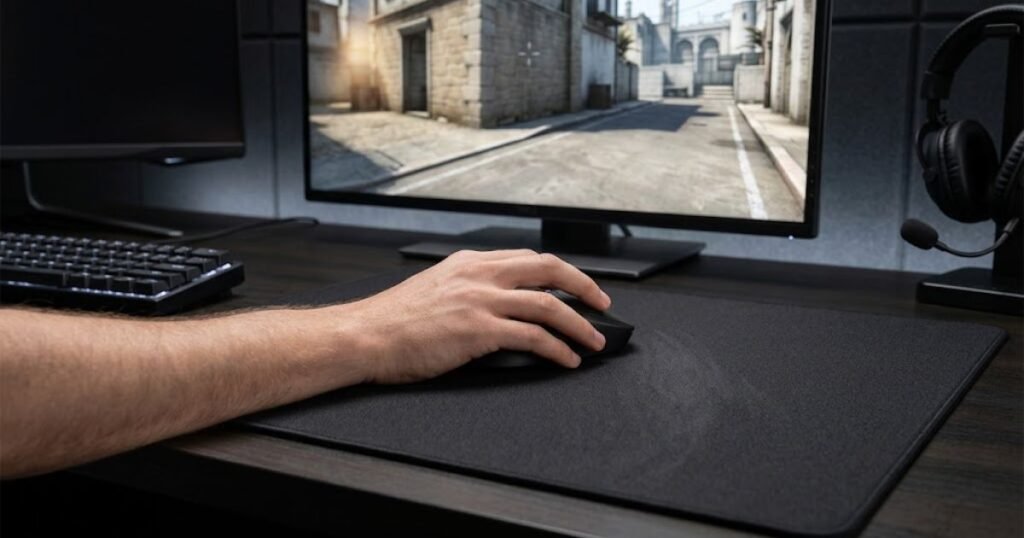
That freer movement can be noticeable when the hand needs to make repeated directional adjustments. The player can move the mouse continuously without the surface feeling as resistant as a more control-oriented pad.
However, surface speed should not be confused with tracking accuracy. A lower-resistance surface changes how the mouse moves, but it does not guarantee better target tracking. The player’s hand control, movement technique, and consistency still determine how accurately the crosshair follows the target.
Speed Surfaces and Stopping Control
Stopping the mouse is a different part of aiming from moving it. Because a speed surface allows freer movement, some players may notice that stopping requires more deliberate hand control than it does on a surface with greater resistance.
This becomes relevant after a fast swipe or target transition. The player needs to reduce the mouse’s movement and settle the crosshair at the intended position. A surface with less resistance can make this feel different from a more controlled surface that provides stronger physical feedback.
For that reason, a speed surface should be evaluated as a balance between movement freedom and stopping control. The faster-feeling glide can be useful for players who prefer unrestricted movement, but the surface still needs to feel predictable when the mouse stops.
Different FPS aiming actions can produce different movement experiences on a speed-oriented surface:
| FPS Action | Potential Feel on a Speed Surface |
|---|---|
| Large swipes | Easier and less restricted |
| Continuous tracking | Smooth and fluid |
| Target transitions | Free and fast-feeling |
| Micro-adjustments | More dependent on hand control |
| Stopping | May require more deliberate control |
These differences explain why the same speed surface can feel excellent for one aiming style and less natural for another. The relevant question is not whether the pad makes someone aim better, but whether its movement characteristics match the way they control the mouse.
In conclusion, a speed mouse pad mainly affects the feel of FPS aiming by making movement more fluid and less restricted. Large swipes and continuous tracking may feel easier, while precise stopping can require greater control from the player.
Who Should Use a Speed Mouse Pad?
A speed mouse pad may suit players who prefer low resistance, easy gliding, and a freer movement feel. It can be a good fit for people who dislike excessive drag and want the mouse to move across the surface with less physical resistance.
The right surface depends on how the mouse feels in your hand rather than simply choosing the category labeled “speed.” Two players can use the same pad and have very different preferences because their movement habits, mouse setup, and preferred level of resistance are not identical.
A Speed Mouse Pad May Suit You If You Prefer Freer Movement
A speed-oriented surface may feel natural if you generally prefer the mouse to move easily across the pad without much resistance. The following characteristics can help you determine whether that type of surface matches your preferred movement feel:
- You prefer low resistance: You like the mouse to glide without feeling heavily restricted by the surface.
- You use broad mouse movements: You often move the mouse across a large portion of the pad and prefer less resistance during those movements.
- You prefer a smooth glide: You want continuous movement to feel fluid rather than heavily resisted.
- You dislike excessive drag: A highly resistant surface feels slow or tiring during normal mouse movement.
- You value movement freedom: You prefer a surface that lets the mouse travel easily instead of providing strong resistance.
These characteristics describe surface preference rather than gaming skill. Preferring a speed pad does not mean a player will automatically aim more accurately or perform better in an FPS game.
When a Speed Surface May Feel Too Fast
A speed mouse pad may feel less comfortable if you prefer stronger resistance or a more planted movement experience. The lower-resistance glide that makes a speed surface attractive to some players can feel difficult to manage for someone who relies heavily on surface resistance for feedback.
Some signs that a speed-oriented surface may not match your preferred movement feel include:
- You frequently overshoot your intended position: The freer glide may make the surface feel less predictable during your movements.
- You prefer stronger stopping feedback: A surface with more resistance may feel easier to control when you want deliberate movement.
- You prefer a more planted feel: A speed-oriented surface may feel too loose if you are accustomed to greater drag.
- You find low resistance distracting: A very free glide may require an adjustment period if your previous pad provided substantially more resistance.
This does not mean that a player who initially finds a speed surface too fast cannot adapt to it. The important factor is whether the surface eventually feels predictable and comfortable during normal use.
In conclusion, a speed mouse pad is most likely to suit players who naturally prefer freer movement and lower resistance. If you rely on stronger surface feedback or prefer a more planted feel, a higher-resistance surface may feel more natural.
What Makes a Mouse Pad Feel Fast?
A mouse pad feels fast when its overall surface and setup allow the mouse to glide easily, but the material alone does not determine how fast it feels. Surface texture, construction, mouse skates, mouse weight, hand pressure, and surface condition can all change the final movement experience.
This is why two mouse pads that are both marketed as speed surfaces can still feel different in actual use. The speed label describes a general movement characteristic, while the specific interaction between the mouse and pad determines how that characteristic feels in your setup.
Surface Texture Can Change the Glide Feel
Surface texture affects how the mouse skates interact with the pad during movement. A smoother or more uniform surface can produce a different glide sensation from a surface with more noticeable texture, even when both are designed to provide relatively fast movement.
The texture can also affect how consistent the surface feels across different movements. A player may notice differences when moving slowly, swiping quickly, or changing direction because the hand is interacting with the surface in different ways.
Surface Construction Also Matters
Mouse pads can use different types of surface construction, including cloth, hybrid, hard, and glass designs. These categories describe how the pad is constructed, but they should not be treated as automatic indicators of speed.
The final glide feel comes from the interaction between the mouse, its skates, and the surface beneath it:
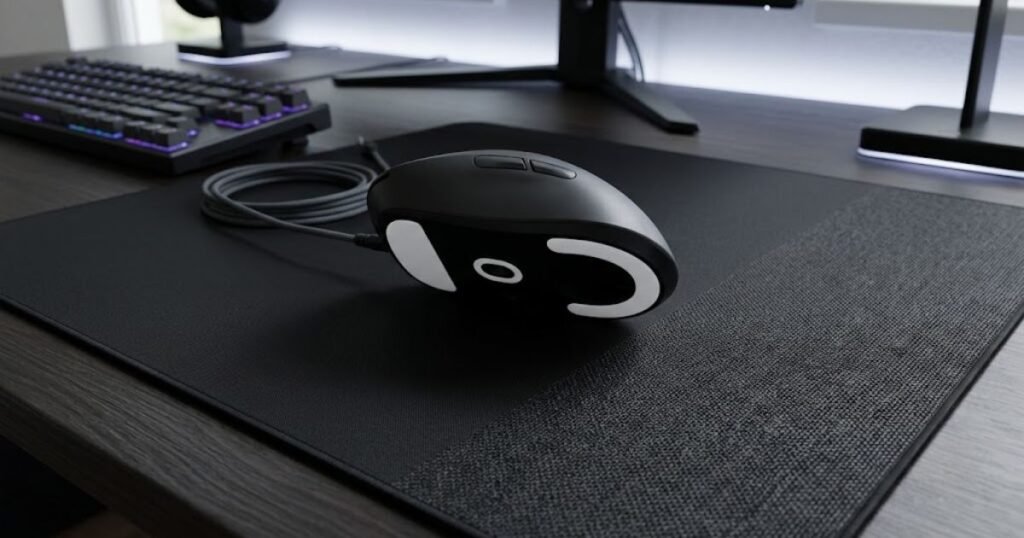
A particular construction can be designed around a fast glide, but the actual movement characteristics depend on the specific surface design. Two pads made from different materials can provide a similar movement feel, while two pads using the same broad material category can feel noticeably different.
Mouse Skates and Mouse Weight Affect the Experience
The mouse itself is another part of the surface interaction. Mouse skates determine how the mouse contacts the pad, while mouse weight affects how much force is needed to start and maintain movement.
Hand pressure can also change the experience. Pressing the mouse more firmly against the pad increases the contact force and can make movement feel different from using a lighter grip.
Surface condition is another variable worth considering. Dust, wear, moisture, and changes from regular use can affect how consistently the mouse moves across the pad over time.
These factors can influence how fast or slow a mouse pad feels during everyday use:
| Factor | Why It Matters |
|---|---|
| Surface texture | Changes how the mouse skates interact with the surface |
| Surface construction | Influences the physical characteristics of the contact surface |
| Mouse skates | Change how the mouse glides across the pad |
| Mouse weight | Changes the force required to move the mouse |
| Hand pressure | Can change the contact force between the mouse and pad |
| Surface condition | Can affect the consistency of the glide over time |
These variables explain why the same speed classification does not guarantee an identical experience across different mouse pads. The surface is only one part of the system, and the mouse, skates, and user’s interaction with the pad also contribute to the final feel.
In conclusion, a mouse pad feels fast because of the combined behavior of its surface and the equipment interacting with it. Surface texture and construction establish the basic character, while mouse skates, weight, pressure, and surface condition can change how that character feels in practice.
How Can You Tell If a Mouse Pad Is a Speed Surface?
You can identify a speed surface by paying attention to how easily the mouse starts moving, how freely it glides, and how predictable the movement feels when you stop. Product descriptions can provide useful information, but the actual surface behavior is what determines how the pad feels in use.
A simple movement test can help you evaluate a mouse pad without relying entirely on the label used by the manufacturer or retailer:
- Start the mouse from a stationary position: Notice how much resistance you feel when you begin moving the mouse.
- Perform a long swipe: Move the mouse across a large section of the pad and pay attention to how freely it travels.
- Test continuous movement: Move the mouse smoothly in one direction to evaluate the consistency of the glide.
- Make a quick directional change: Change direction several times and notice whether the surface feels free or resistant.
- Test precise stopping: Stop the mouse at a specific point and evaluate how predictable the surface feels when you slow down.
The goal of this test is not to produce a laboratory measurement. Instead, it helps you understand the surface’s movement characteristics and whether the amount of resistance feels appropriate for your normal mouse use.
It is also important to perform the test with the mouse and skates you actually use. Changing the mouse, skates, or even the amount of pressure applied to the mouse can change the perceived glide.
In conclusion, a speed surface is best identified by its actual movement behavior. Easy starting movement, free gliding, and relatively low resistance are useful indicators, but the complete setup determines how the surface feels in practice.
Is a Speed Mouse Pad Better for FPS Gaming?
A speed mouse pad is not inherently better for FPS gaming because surface speed is a movement characteristic rather than a direct measure of aiming performance. A speed surface may suit players who prefer freer movement, while another player may prefer greater resistance and stopping feedback.
The important question is what type of movement feel you prefer during gameplay. FPS performance involves more than how freely the mouse glides, so a faster-feeling surface should not be treated as an automatic upgrade.
When Speed Can Be Useful for FPS Players
A speed-oriented surface can be useful when a player prefers easy mouse movement and does not want the pad to create substantial resistance during broad or continuous movements. This can make the surface feel natural for certain aiming styles without changing the player’s sensitivity or mouse settings.
However, the same characteristics can be less suitable for someone who depends on stronger physical resistance to feel in control of the mouse. The relevant difference is therefore the player’s interaction with the surface, not the speed label by itself.
Why There Is No Universal Best Surface
Mouse pad preference depends on several parts of the setup and the way a player controls the mouse. Sensitivity, mouse shape, mouse weight, skates, aiming technique, and familiarity with a particular surface can all influence the final experience.
The relationship between movement priorities and surface characteristics can be summarized as follows:
| Movement Priority | Surface Characteristic That May Fit |
|---|---|
| Easier mouse movement | Lower-resistance speed surface |
| Stronger movement resistance | More control-oriented surface |
| Balance between glide and resistance | Balanced surface |
| Large, unrestricted movements | Speed-oriented surface |
| More deliberate movement feedback | Control-oriented surface |
This does not establish a ranking between surface types. It simply shows that different surfaces emphasize different movement characteristics. A player’s preferred balance between glide and resistance is more relevant than choosing a category because it is labeled “fast.”
In conclusion, a speed mouse pad can be a suitable FPS surface for players who prefer freer movement, but it is not universally better for aiming. The most relevant consideration is whether its movement characteristics match the player’s preferred level of resistance and control.
Frequently Asked Questions About Speed Mouse Pads
Speed mouse pads are mainly defined by their glide characteristics, but questions often come up about friction, FPS gaming, materials, stopping control, and how to tell whether a particular surface is a good fit.
What Is a Speed Mouse Pad?
A speed mouse pad is a surface designed to provide relatively low resistance and easier mouse movement, creating a faster-feeling glide during use.
Is a Speed Mouse Pad Low Friction?
Generally, speed mouse pads are designed around relatively low resistance, which contributes to their easier and faster-feeling glide.
Does a Speed Mouse Pad Make a Mouse Move Faster?
A speed mouse pad does not increase the mouse’s sensor speed or physical input speed. It reduces the resistance the user feels while moving the mouse across the surface.
Is a Speed Mouse Pad Good for FPS Gaming?
A speed mouse pad can suit FPS players who prefer freer mouse movement and lower resistance, but it does not automatically improve aiming performance.
Are Speed Mouse Pads Good for Tracking?
A speed surface can make continuous mouse movement feel smooth and unrestricted, which may suit players who prefer that type of movement during tracking.
Are Speed Mouse Pads Good for Flick Shots?
A speed surface can make quick mouse movements feel freer because of its lower resistance, but accurate flicking still depends on the player’s ability to control and stop the mouse.
Are Speed Mouse Pads Harder to Stop On?
Some players may find a lower-resistance surface requires more deliberate stopping control because the mouse can glide more freely.
Does a Speed Mouse Pad Increase DPI or Sensitivity?
No. A speed mouse pad does not change DPI, polling rate, or in-game sensitivity. It changes the physical resistance and glide feel between the mouse and surface.
Can a Speed Mouse Pad Be Made From Cloth?
Yes. A speed mouse pad can use a cloth surface. The material alone does not determine whether a pad is classified as speed because surface construction and friction characteristics also affect its movement feel.
Are Hard Mouse Pads Always Speed Pads?
No. Hard construction does not automatically mean a mouse pad is a speed surface. The actual movement characteristics of the specific surface determine how it feels.
How Is a Speed Mouse Pad Different From a Control Mouse Pad?
A speed mouse pad emphasizes easier glide and lower resistance, while a control mouse pad provides more resistance and a more deliberate movement feel.
How Do You Know If a Speed Mouse Pad Is Right for You?
A speed mouse pad may be a good fit if you prefer low resistance, freer movement, and smooth gliding. If you prefer stronger resistance and a more planted feel, another surface type may feel more natural.
Conclusion
A speed mouse pad is a mouse pad surface designed around easier glide and relatively low resistance. Its “speed” refers to how freely the mouse moves across the surface, not to higher DPI, sensitivity, polling rate, or sensor performance.
The way a speed pad feels can also vary depending on surface texture, construction, mouse skates, mouse weight, hand pressure, and surface condition. For FPS gaming, this can make large swipes and continuous movements feel more fluid, while precise stopping may require more deliberate control.
Ultimately, a speed mouse pad is best understood as a surface preference rather than a universal performance upgrade. If you prefer freer mouse movement and lower resistance, its characteristics may fit your setup. If you prefer stronger resistance and a more planted feel, a control-oriented surface may be more suitable.
Thanks for reading GearTP. We hope this guide helped you understand what a speed mouse pad is and whether its movement feel matches your gaming setup.