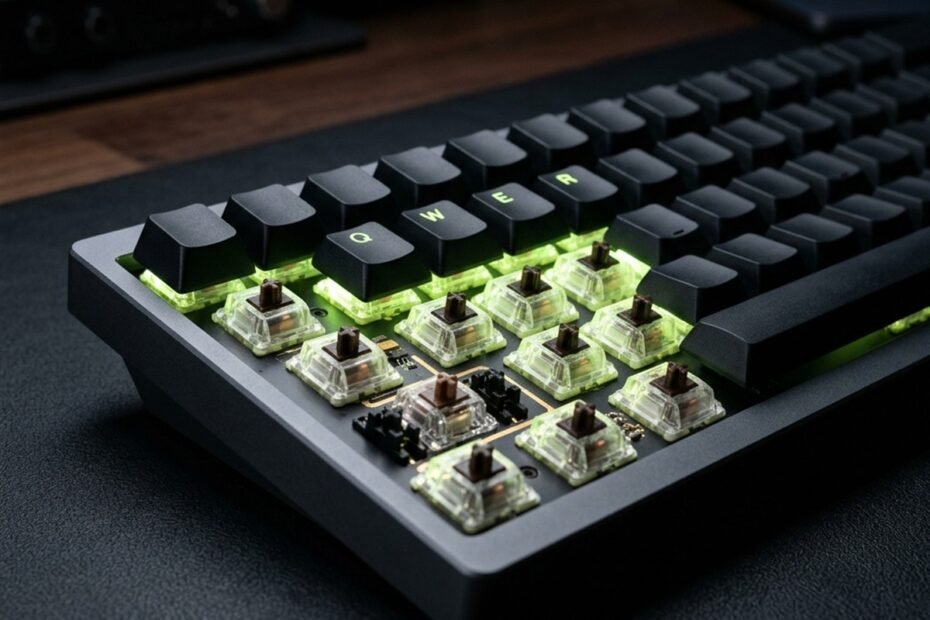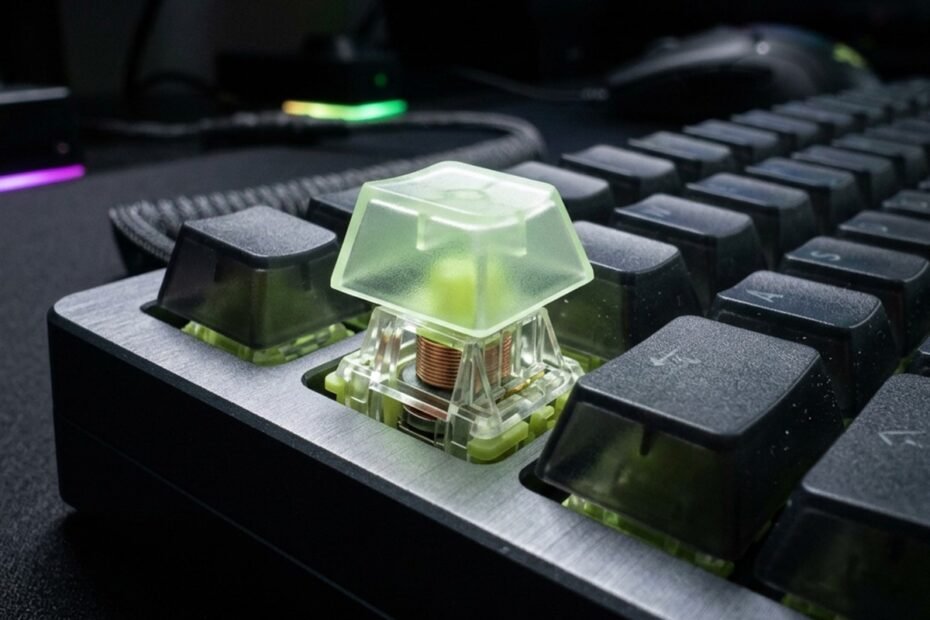
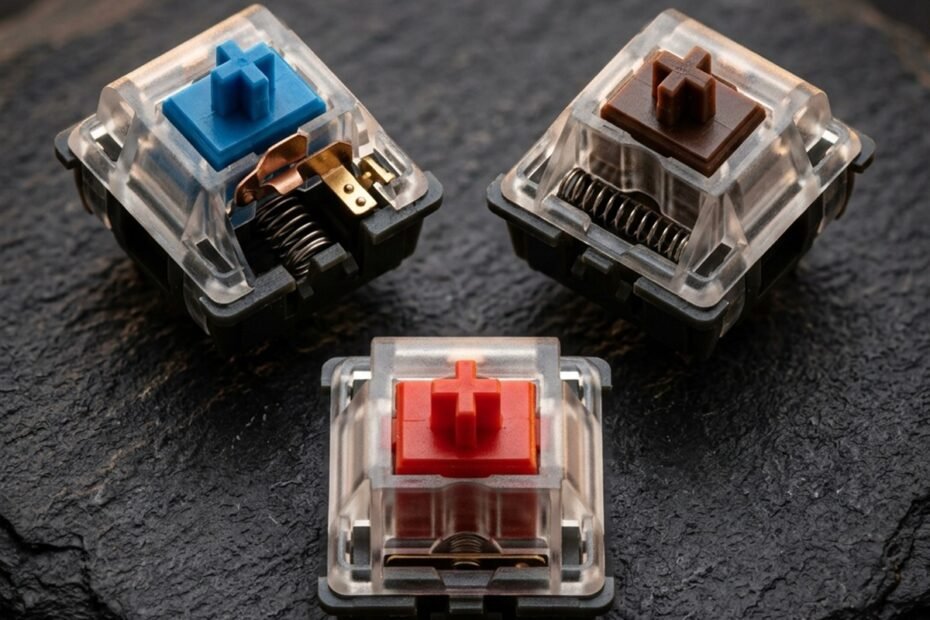
When selecting a mechanical keyboard, the switch type dictates more than ninety percent of your physical typing experience, auditory environment, and competitive responsiveness. The market predominantly divides into three foundational mechanical architectures: smooth linear switches,…
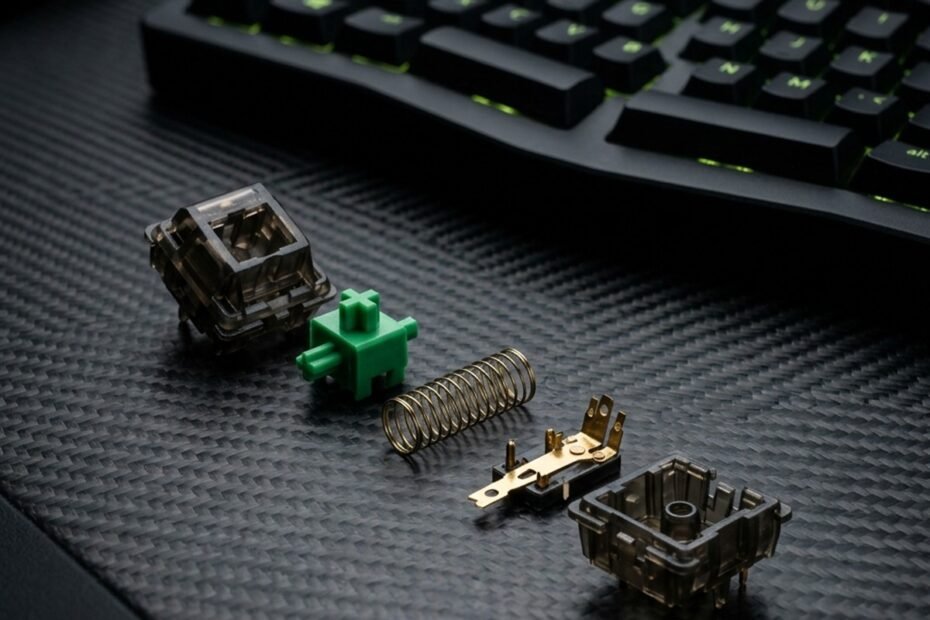
Mechanical Keyboard
For decades, conventional computer keyboards have relied on inexpensive rubber dome membranes to register user inputs. While cost-effective, these rubber sheets require keys to be pressed completely to the bottom before an electrical contact registers,…
What Is a Mechanical Keyboard Switch: The Complete Guide to Components, Mechanics, and Actuation
For more than four decades, mechanical keyboards have relied on physical metal leaves striking together to register keystrokes. While dependable, this traditional contact architecture inherently introduces physical friction, contact bounce noise, and rigid mechanical reset…
What Is a Hall Effect Keyboard: The Complete Guide to Magnetic Switches and Analog Gaming Performance
In competitive first-person shooter games like Counter-Strike 2 and Valorant, gunplay precision is fundamentally tied to character movement deceleration. For decades, traditional mechanical keyboards forced players to adapt to rigid physical reset points that introduced…