
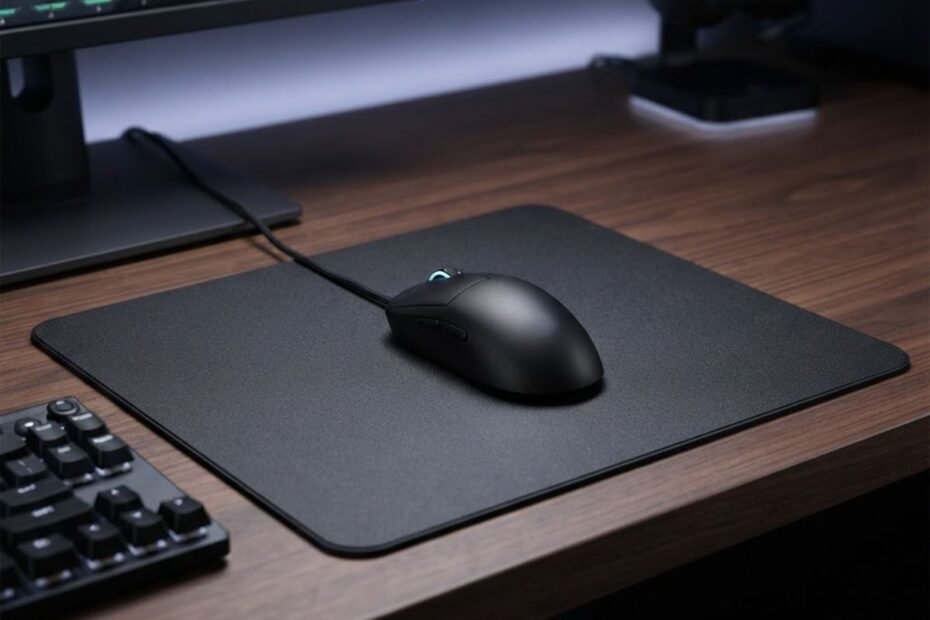
Hard mouse pad advantages mainly come from a low-resistance surface, fast glide, rigid construction, and simple routine maintenance. These characteristics can make mouse movement feel freer and more responsive, especially for players who prefer less resistance under their mouse. However, a hard mouse pad is not automatically better for every player because the same low-friction feel can also change stopping control and overall comfort.
The key is to understand what a hard surface actually changes. Instead of choosing a mouse pad simply because it feels fast, players should look at how its surface affects movement, physical feedback, and everyday use. This guide breaks down the main advantages first, then examines how those characteristics fit different FPS setups.
What Are the Main Hard Mouse Pad Advantages?
Hard mouse pads offer four main advantages: lower movement resistance, faster-feeling glide, a firm physical surface, and relatively simple cleaning. Together, these characteristics create a mouse surface that feels more direct and less restrictive than many soft surfaces.
How Low Friction Makes Mouse Movement Feel Freer
One of the main hard mouse pad advantages is lower resistance during mouse movement. A hard surface can allow the mouse feet to move across the pad with less drag, so the mouse may feel easier to start and move across the desk.
This lower resistance is especially noticeable when making larger movements. Instead of feeling like the mouse is being held back by the surface, the movement can feel lighter and more fluid. The exact amount of resistance still depends on the specific material, surface texture, and mouse feet, so not every hard mouse pad will feel identical.
For FPS players, this characteristic can be useful when a setup requires frequent or wide mouse movements. However, lower resistance should be understood as a surface characteristic rather than a guaranteed improvement in aim. A player still needs to control the mouse accurately after movement begins.
GearTP’s guide to mouse pad friction explains how surface resistance influences the way a mouse starts, moves, and stops across a gaming surface.
In short, lower resistance is one of the defining advantages of a hard surface because it can make mouse movement feel freer without requiring as much physical effort.
Why Hard Surfaces Can Feel Faster During Mouse Movement
Hard mouse pads can feel faster because their rigid surfaces generally allow the mouse to glide with less resistance than many traditional cloth surfaces. This creates a more immediate movement feel, particularly when the mouse is moved quickly across the pad.
A faster-feeling surface can be noticeable during rapid direction changes, long swipes, and other movements where the mouse needs to travel across a larger portion of the pad. The surface does not compress underneath the mouse in the same way a soft pad can, which contributes to its distinct physical feel.
It is important to separate glide speed from aim performance. A mouse that moves more easily is not necessarily easier to control. The benefit is primarily the reduced resistance and freer movement, while the player’s sensitivity, technique, and ability to stop the mouse still determine how that speed is used.
For that reason, faster glide should be viewed as a characteristic that some players prefer, rather than a universal performance advantage.
How a Rigid Surface Changes the Physical Feel
Another hard mouse pad advantage is its rigid construction. Unlike a soft mouse pad, a hard surface does not compress significantly under the mouse or change shape as pressure is applied during normal movement.
A hard surface creates a noticeably different physical foundation for the mouse:
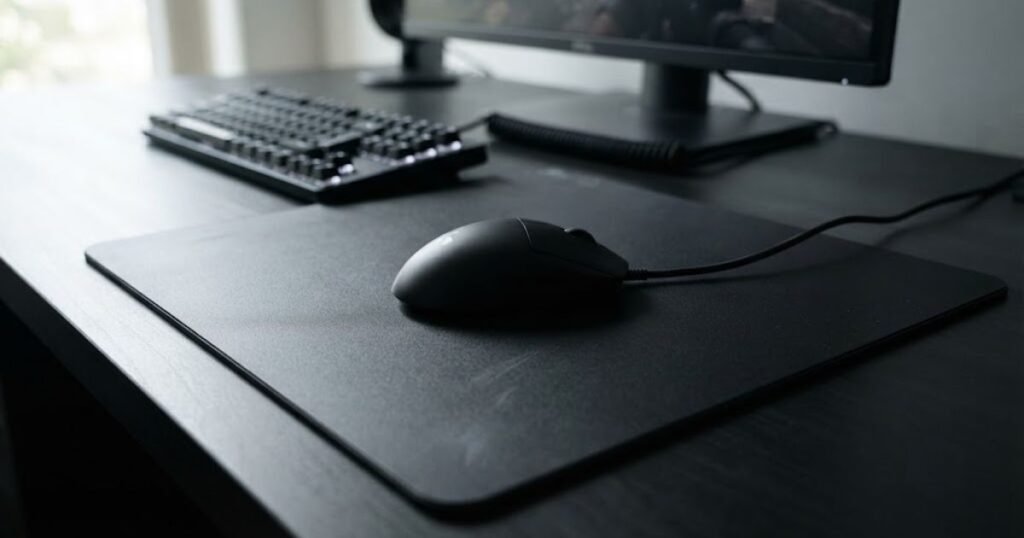
This gives the player a firmer and more direct surface feel. The mouse moves across a solid plane rather than a cushioned fabric surface, which can make the interaction between the mouse feet and pad feel more immediate.
That difference can matter to players who dislike the softer or more cushioned sensation of fabric mouse pads. A rigid surface can also maintain the same basic physical structure when the player moves the mouse from one area of the pad to another.
However, a firm surface is a preference rather than an objective improvement. Some players may prefer the cushioning and softer contact provided by a fabric pad, while others may prefer the direct feel of a rigid surface.
The main advantage here is therefore physical consistency in the surface itself. A hard pad provides a firm foundation for mouse movement without relying on a compressible surface.
Why Hard Surfaces Are Relatively Easy to Clean
Hard mouse pads are also relatively easy to clean during normal use. Their smooth, rigid surfaces can generally be wiped down more directly than fabric surfaces, making routine removal of dust, fingerprints, and surface residue straightforward.
This can be particularly useful for players who use their mouse pad for long gaming sessions. Dust and debris can accumulate where the mouse travels most often, so being able to wipe the surface helps keep the playing area clean.
Cleaning does not mean every hard mouse pad should be treated with the same products or methods. Surface materials and coatings can differ, so the manufacturer’s care instructions should take priority when a specific product requires special handling.
The maintenance advantage is therefore simple: a hard surface can make routine surface cleaning more convenient, provided the appropriate cleaning method is used for that particular material.
The main advantages can be summarized by looking at what each characteristic changes during everyday use:
| Advantage | What Changes | Why It Matters |
|---|---|---|
| Lower resistance | The mouse moves with less drag | Creates a freer movement feel |
| Fast glide | The mouse can move easily across the surface | Supports players who prefer less resistance |
| Rigid construction | The surface remains firm during use | Provides a direct and stable physical feel |
| Easy routine cleaning | Surface residue can be wiped away | Makes everyday maintenance simpler |
These advantages explain why hard mouse pads appeal to players who want a fast, firm, and relatively low-maintenance surface. The benefits are primarily related to how the mouse interacts with the surface, rather than a promise of better aim for every player.
How Do Hard Mouse Pads Affect FPS Mouse Movement?
Hard mouse pads can make FPS mouse movement feel faster and less resistant, which can be noticeable during rapid swipes, continuous tracking, and quick direction changes. The main effect is not that the surface makes a player aim better automatically, but that it changes how easily the mouse moves across the pad.
Why Fast Glide Can Help With Rapid Swipes
Rapid swipes require the mouse to travel across the surface quickly, often with a relatively large hand movement. A low-resistance hard surface can make this movement feel more immediate because less surface resistance is working against the mouse.
This can be useful during situations that require a quick change in aim direction. When the mouse moves easily across the pad, the player may spend less physical effort overcoming surface resistance and more of the movement can come from the hand and arm itself.
The benefit is most noticeable for players who already prefer a freer movement style. A player who prefers more resistance may instead find the same glide harder to manage, particularly when a fast movement needs to end precisely.
In other words, the advantage of fast glide is mainly about how the movement feels and how much resistance the surface introduces, not about automatically making a flick more accurate.
How Lower Resistance Changes Continuous Tracking
Continuous tracking involves keeping the mouse moving while following a target rather than making one isolated movement. A lower-resistance surface can make this type of movement feel smoother because the mouse is not working against as much surface drag.
This can be especially noticeable when the player’s hand needs to make repeated directional adjustments. The mouse can continue moving with relatively little resistance, which may suit players who prefer a fluid tracking feel.
However, smooth movement still depends on the player’s control. If the surface feels too fast for a particular setup, maintaining precise movement can become more demanding. Sensitivity, mouse weight, mouse feet, and individual technique all influence how the same hard surface feels.
That distinction matters because a hard pad changes the physical conditions of the movement, while the player’s control determines how effectively those conditions are used.
Why Faster Movement Does Not Automatically Mean Better Aim
A faster-feeling mouse pad does not guarantee better FPS aim. Lower resistance can make the mouse easier to move, but aiming also requires the player to control acceleration, direction changes, stopping, and small corrections.
For example, a player may appreciate being able to move the mouse quickly toward a target but still need enough control to stop at the intended position. If the surface provides less resistance than the player is accustomed to, the transition from fast movement to precise stopping can feel different.
This is why hard mouse pad advantages should be considered in terms of movement characteristics rather than treated as direct aim improvements. The surface can change the physical response of the mouse, but the result still depends on how well that response matches the player’s technique.
How Mouse Sensitivity Changes the Way a Hard Pad Feels
Mouse sensitivity can significantly change how a hard surface is experienced. A player using larger physical movements may notice the low resistance across a wider area of the pad, while a player using smaller movements may experience the surface primarily through short, controlled adjustments.
With a setup that requires frequent wide movements, low surface resistance can make the mouse feel easier to move across the available space. With a setup based on smaller movements, the same surface may make the mouse feel particularly responsive because relatively little physical motion is required to produce an on-screen change.
There is no single sensitivity range that makes a hard mouse pad appropriate for every FPS player. The important factor is the relationship between sensitivity, physical movement distance, surface resistance, and the player’s preferred level of control.
The main FPS movement effects can be summarized as follows:
| FPS Movement | Hard Surface Characteristic | Player Consideration |
|---|---|---|
| Rapid swipes | Low movement resistance | Can make large movements feel freer |
| Continuous tracking | Fast, low-resistance glide | May suit players who prefer fluid movement |
| Direction changes | Easy mouse movement | Stopping control remains important |
| Small adjustments | Low surface resistance | Can feel highly responsive depending on sensitivity |
Overall, the FPS advantage of a hard mouse pad comes from its movement characteristics rather than a guaranteed improvement in aim. Low resistance can make swipes and tracking feel freer, but the ideal surface still depends on how its glide matches the player’s sensitivity and stopping control.
Does a Hard Mouse Pad Provide More Consistent Surface Feedback?
A hard mouse pad can provide a more consistent physical surface because its rigid construction does not compress under normal mouse movement in the same way a soft pad can. This can make the surface feel more uniform from one movement to another, although glide consistency still depends on the material, surface condition, debris, and wear.
How Rigidity Reduces Surface Compression
A rigid hard mouse pad maintains its basic shape while the mouse moves across it. Unlike a soft surface that can compress slightly under pressure, a hard surface provides a firm plane for the mouse feet to travel across.
This matters because changes in pressure from the hand or wrist are less likely to change the physical shape of the surface itself. The player therefore interacts with a surface that remains structurally firm during normal use.
The benefit is mainly a consistent physical foundation. It does not mean every hard mouse pad has identical glide characteristics, because the surface material and finish still determine how the mouse moves across it.
In practical terms, rigidity can make the surface feel more uniform because the pad itself is less affected by pressure during movement.
Why Consistent Surface Feel Matters for Repeated Movements
Repeated mouse movements are easier to become familiar with when the physical surface behaves predictably. If the surface maintains a similar feel across the areas where the mouse is used, the player can develop a more familiar response to that surface.
This can be relevant during repeated aiming movements in FPS games. The player may perform similar swipes or corrections many times during a session, so a predictable physical surface helps keep the movement environment familiar.
However, consistency should not be confused with accuracy. A consistent surface gives the player a more predictable physical condition, but it does not determine how accurately the player moves the mouse.
The practical advantage is therefore repeatability in surface feel. The player knows what the surface is likely to feel like when the mouse moves across it, provided the surface remains in good condition.
Why Surface Wear and Debris Can Still Change Glide
A hard surface is not immune to changes over time. Dust, debris, residue, scratches, and general wear can alter the condition of the area where the mouse travels.
Small particles can also come between the mouse feet and the pad surface. Depending on the material and condition of the pad, this can change how smooth the movement feels or introduce unwanted variation during use.
Surface wear is another consideration. Frequent mouse movement concentrates contact in particular areas, so the condition of those areas can gradually change. The exact rate and type of wear depend on the hard pad material, coating, mouse feet, and usage.
This means the consistency advantage of a hard mouse pad comes from its rigid construction, not from a guarantee that the surface will remain unchanged forever.
Several factors determine how consistent a hard mouse pad feels during regular use:
| Factor | Why It Matters |
|---|---|
| Rigid construction | Keeps the surface physically firm during mouse movement |
| Surface material | Influences the glide characteristics of the pad |
| Debris | Can interfere with smooth contact between the mouse feet and surface |
| Surface wear | May gradually change how the mouse moves across frequently used areas |
| Cleaning | Helps maintain the intended surface condition during regular use |
A hard mouse pad can provide a stable physical foundation because its rigid surface does not compress like a soft pad. The consistency benefit is strongest when the surface is kept clean and remains in good condition, so rigidity should be viewed as one part of overall surface consistency rather than a guarantee of identical glide forever.
Why Are Hard Mouse Pads Easy to Maintain?
Hard mouse pads are generally straightforward to maintain because their rigid surfaces can be wiped directly, making it easier to remove dust, fingerprints, sweat, and other surface residue. The exact cleaning method should still follow the manufacturer’s guidance for the specific material and surface finish.
Why Dust and Debris Matter for Mouse Glide
Dust and small particles can accumulate on any mouse pad, but they are particularly noticeable when they sit directly in the path of the mouse feet. Keeping the surface clean helps maintain the intended contact between the mouse and the pad.
On a hard pad, loose debris is usually visible or accessible on the surface, making routine wiping relatively simple. Removing those particles can also help prevent them from interfering with normal mouse movement.
The important point is that easy cleaning is a maintenance advantage, not a reason to assume a hard pad will never require cleaning. Regular use still exposes the surface to dust and debris.
How Sweat and Moisture Affect Surface Condition
Long gaming sessions can leave sweat, skin oils, and moisture on the area where the mouse is used. These residues can change the surface feel and make the pad less pleasant to use if they are allowed to build up.
A hard surface makes routine wiping convenient, which can help restore a cleaner playing area. Players should avoid assuming that every hard surface can be cleaned with the same chemicals or tools, because coatings and materials can differ between products.
Following the manufacturer’s cleaning recommendations is the safest way to maintain a specific hard mouse pad without unnecessarily affecting its surface.
How to Clean a Hard Mouse Pad Without Damaging the Surface
The basic cleaning process is simple, but the exact products and method should depend on the manufacturer’s instructions for the pad.
Routine surface cleaning is one of the practical benefits of a rigid mouse pad:
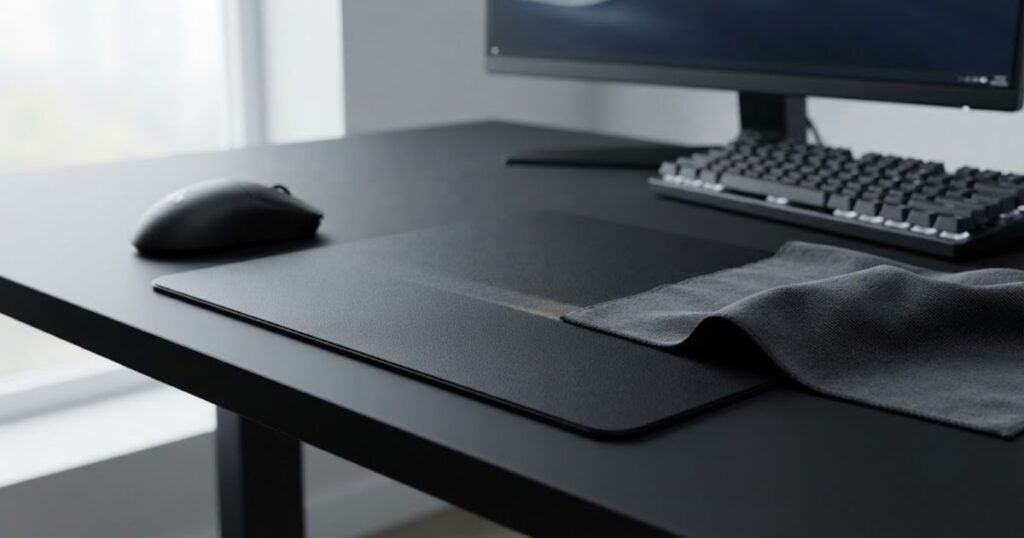
A simple maintenance process is:
- Remove the mouse and any other objects from the pad.
- Remove loose dust and debris from the surface.
- Clean the surface according to the manufacturer’s material and care guidance.
- Allow the pad to dry completely before placing the mouse back on it.
- Check the surface for remaining residue or debris before returning to normal use.
Regular maintenance helps preserve the intended surface condition and keeps debris from becoming part of the mouse movement environment.
The main maintenance considerations for a hard mouse pad are:
| Maintenance Factor | Hard Surface Advantage | Practical Consideration |
|---|---|---|
| Dust | Can usually be wiped from the surface | Routine cleaning helps keep the glide area clear |
| Sweat and oils | Surface can be wiped directly | Use the cleaning method recommended for the material |
| Loose debris | Easy to identify and remove from the surface | Check the area used most frequently |
| Surface care | Simple routine maintenance | Follow the manufacturer’s care instructions |
The maintenance advantage of a hard mouse pad is mainly its accessible, wipeable surface. Keeping that surface clean can help preserve its intended feel, while following the manufacturer’s care instructions helps avoid damaging the material or finish.
Are Hard Mouse Pads Good for FPS Games?
Hard mouse pads can be a good fit for FPS players who prefer fast glide, low resistance, and a firm surface. Their main advantage in competitive shooters is the way they change the physical feel of mouse movement, but the fit still depends on the player’s sensitivity, movement habits, and preference for stopping control.
When Fast Glide Can Be Useful for FPS Movement
Fast glide can be useful when an FPS player needs to move the mouse quickly across the pad. A hard surface with low resistance can make rapid movement feel less restricted, which can suit players who regularly make wide swipes or quick changes in aim direction.
This characteristic can be especially noticeable when the player’s mouse movement covers a large portion of the available pad. Less resistance means the hand does not have to work against as much surface drag during the movement.
However, fast glide is only useful when it matches the player’s preferred level of control. A player who is comfortable with more resistance may not experience the same benefit from a hard surface.
The FPS advantage is therefore best understood as a movement preference: hard pads can make fast mouse movement feel easier, but the player still has to control that movement precisely.
When Low Resistance Can Become a Drawback
Low resistance can become a drawback when the mouse feels too free for the player’s preferred stopping behavior. FPS aiming is not only about moving toward a target. It also requires the player to slow down and stop the mouse at the intended position.
On a surface with very little resistance, the player may need to provide more active control during the final part of a movement. This can be noticeable when transitioning from a fast swipe into a small correction.
The effect is highly individual. A player accustomed to low-resistance surfaces may find this natural, while someone coming from a slower surface may need time to adjust.
For this reason, low resistance should be treated as a characteristic to match with your technique rather than as an automatic FPS advantage.
Why Stopping Control Still Depends on the Player
Stopping control comes from the interaction between the surface, mouse feet, sensitivity, and the player’s hand control. A hard mouse pad can influence how quickly the mouse continues to move, but it cannot determine where the player ultimately stops it.
This distinction is important for FPS games because precise aiming often requires a combination of fast movement and controlled deceleration. A surface that feels excellent during the initial movement may feel different during the final adjustment.
Players should therefore evaluate a hard mouse pad based on the entire movement cycle rather than only the first part of a swipe. Starting movement, maintaining movement, changing direction, and stopping all contribute to how the surface feels during actual gameplay.
A hard pad can provide the physical conditions for fast movement, but stopping precision remains a skill and setup consideration.
Which FPS Players May Prefer a Hard Surface?
A hard mouse pad may appeal to FPS players who specifically prefer a low-resistance, firm, and fast-feeling surface. The strongest fit is usually determined by the player’s existing movement preferences rather than by the game alone.
These preferences can indicate that a hard mouse pad may fit an FPS setup:
- Players who prefer low resistance during mouse movement.
- Players who like a fast and unrestricted glide.
- Players who prefer a firm surface instead of a cushioned one.
- Players who are comfortable controlling the mouse actively during stops and corrections.
- Players who value a surface that is straightforward to maintain.
These characteristics describe a preference profile rather than a requirement for competitive FPS gaming. Players with different movement habits may prefer a surface with more resistance or a softer physical feel.
The main FPS situations can be viewed through these surface characteristics:
| FPS Preference | Hard Pad Characteristic | Possible Fit |
|---|---|---|
| Fast movement | Low resistance | Players who prefer freer mouse movement |
| Rapid swipes | Fast glide | Players who make frequent large movements |
| Firm surface feel | Rigid construction | Players who dislike soft surface compression |
| Active stopping | Lower passive resistance | Players comfortable controlling deceleration themselves |
Hard mouse pads can suit FPS players who value fast, low-resistance movement and a firm surface. The important question is not whether hard pads are universally better for FPS gaming, but whether those characteristics match the player’s sensitivity, movement style, and preferred level of stopping control.
What Are the Trade-Offs of a Hard Mouse Pad?
Hard mouse pads trade some comfort, stopping resistance, and flexibility for the low-resistance movement and firm surface that define their design. These trade-offs do not make a hard pad unsuitable, but they can matter depending on how you use your mouse and what you expect from the surface.
Why a Firm Surface May Feel Less Comfortable
A hard mouse pad provides a firm surface with little cushioning underneath the mouse. This can feel precise and direct, but it does not provide the softer contact that some players prefer from a fabric mouse pad.
Comfort can become more noticeable during long gaming sessions, particularly when the hand or wrist frequently rests near the edge of the pad. The experience also depends on the player’s setup, desk height, wrist position, and personal preference.
This means the rigid construction that some players value can be a disadvantage for others. A firm surface should therefore be considered alongside comfort rather than evaluated only by its movement characteristics.
In practical terms, players who strongly prefer a cushioned surface may need to spend more time adjusting to the physical feel of a hard pad.
Why Low Friction Can Reduce Passive Stopping Resistance
A low-resistance surface allows the mouse to move easily, but that also means the surface provides less passive resistance when the player wants to slow down. The player may need to rely more on hand control to decelerate and stop the mouse.
This can be noticeable during movements that begin quickly and finish with a precise adjustment. The same surface characteristic that makes the initial movement feel free can make the stopping phase feel less restrained.
The effect is not inherently negative. Players who already control their mouse comfortably on low-resistance surfaces may prefer this behavior, while players who rely on more surface resistance for stopping may find it less familiar.
The trade-off is therefore between easier movement and the amount of resistance available during deceleration.
Why Rigid Pads Are Less Flexible for Storage and Transport
A rigid mouse pad cannot be rolled or folded in the same way as a flexible fabric pad. This can make storage and transportation less convenient, especially when the pad needs to be moved between different gaming setups.
Desk space can also become a consideration. A hard pad needs to remain flat during use, so the available surface area and storage location should be considered before buying one.
For a permanent desktop setup, this may have little practical impact. For players who regularly travel with their gaming equipment, the rigid construction can be more noticeable.
The trade-off is straightforward: a solid construction provides a firm surface, but it also reduces portability and flexibility.
How Mouse Skates Can Change the Experience
Mouse skates play an important role in how a hard mouse pad feels because they are the part of the mouse that directly contacts the surface. Different skate materials and designs can change the amount of resistance and the overall glide experience.
The relationship between the mouse feet and the hard surface is an important part of the overall experience:
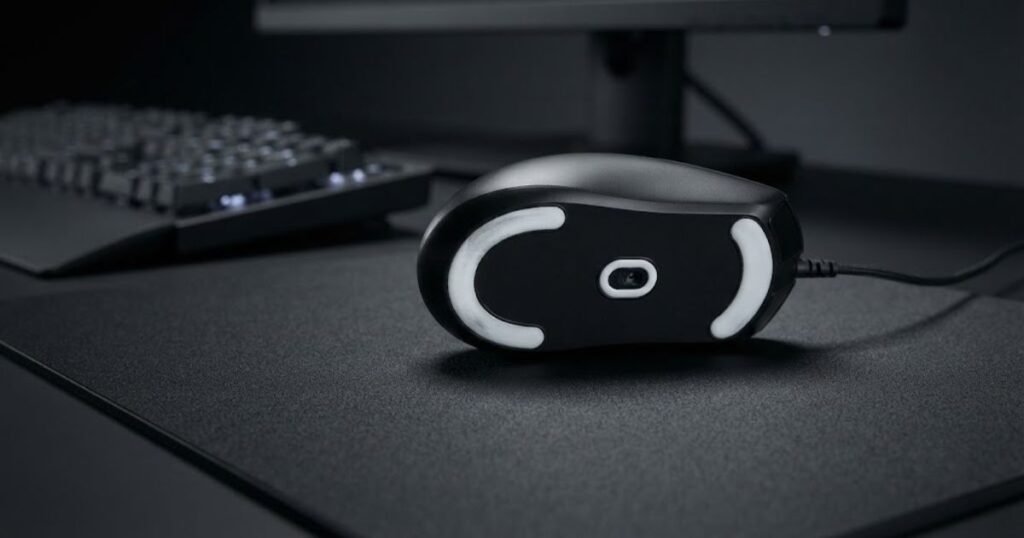
This interaction can be more noticeable on a low-resistance hard surface. A change in mouse feet may therefore produce a noticeable change in how freely the mouse moves, even when the pad itself has not changed.
Players considering a hard pad should account for the condition and material of their existing mouse skates rather than evaluating the pad in isolation. Worn or damaged feet can also affect the movement experience.
For players interested in the relationship between mouse feet and surface feel, mouse feet materials for FPS gaming provide an important part of the overall glide equation.
The main trade-offs come from the same physical characteristics that define a hard mouse pad:
| Trade-Off | Why It Happens | What to Consider |
|---|---|---|
| Firmer feel | Rigid surface construction | Consider your preferred level of cushioning and comfort |
| Less passive stopping resistance | Low surface resistance | Consider how you control deceleration and small corrections |
| Limited flexibility | Hard construction cannot be rolled or folded like fabric | Consider desk space, storage, and transportation |
| Stronger interaction with mouse skates | Mouse feet directly contact the hard surface | Check skate condition and material |
Hard mouse pads are therefore a trade-off between movement characteristics and physical preferences. Their firm, low-resistance design can be exactly what some players want, while comfort, stopping feel, portability, and mouse skate interaction may matter more to others.
Who Should Consider a Hard Mouse Pad?
A hard mouse pad is worth considering for players who prefer low-resistance movement, fast glide, a firm surface, and simple routine maintenance. The best fit depends on whether those characteristics match the way you normally move and control your mouse.
Players Who Prefer Low-Resistance Movement
Players who dislike noticeable drag during mouse movement may appreciate a hard mouse pad. Its rigid surface can provide a freer movement experience, which can be useful when the mouse needs to move across a larger portion of the pad.
This preference is more important than simply choosing a pad because it is labeled as fast. The useful question is whether you personally prefer less resistance when starting and continuing a mouse movement.
If your current surface feels restrictive and you consistently prefer a freer glide, the low-resistance characteristic of a hard pad may align more closely with your preferred movement feel.
Players Who Prefer a Firm Surface
A hard mouse pad may also suit players who prefer a solid surface beneath the mouse rather than the softer feel of fabric. The rigid construction creates a firm foundation that does not compress in the same way as a soft pad during normal use.
This can make the physical interaction with the mouse feel more direct. Players who dislike a cushioned or flexible surface may find this characteristic more comfortable from a movement perspective, even though physical comfort remains subjective.
The important consideration is surface preference rather than a claim that rigid construction is inherently better.
Players Who Value Easy Surface Maintenance
Players who want straightforward everyday cleaning may also consider a hard mouse pad. A rigid surface can generally be wiped directly, making routine removal of dust, sweat, and other residue relatively simple.
This can be useful for people who spend long periods at their gaming setup and want a surface that is easy to maintain between sessions. The specific cleaning method should still follow the manufacturer’s instructions for the material and finish.
Easy maintenance is therefore a practical convenience that can make a hard pad more appealing to players who prioritize a simple desk setup.
Players Comfortable With Active Stopping Control
A hard mouse pad may also be a better fit for players who are comfortable controlling the mouse actively when slowing down and stopping. A low-resistance surface does not provide as much passive resistance as some slower surfaces, so the player’s hand control becomes an important part of the movement experience.
A hard mouse pad is most relevant when its surface characteristics match the player’s preferred movement style:
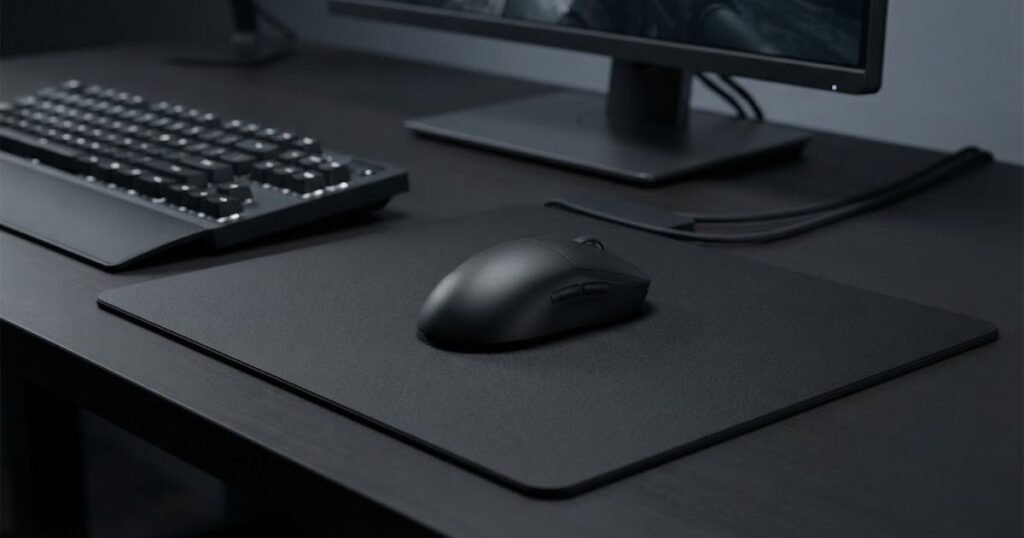
This matters most when a movement begins quickly and then needs to end precisely. Players who already prefer this type of control may find the surface natural, while players who depend more heavily on surface resistance may prefer a different feel.
The deciding factor is therefore not simply whether the pad is hard, but whether its movement behavior matches the player’s existing control style.
These preferences can indicate that a hard mouse pad may fit your setup:
- A preference for low resistance during mouse movement.
- A preference for fast and unrestricted glide.
- A preference for a firm surface instead of a cushioned one.
- Comfort with actively controlling the mouse during stopping and corrections.
- A preference for straightforward surface maintenance.
A hard mouse pad can make sense when several of these preferences match your normal gaming habits. If your priorities are different, another surface type may provide a more suitable physical feel.
How Should You Evaluate a Hard Mouse Pad for Your Setup?
You should evaluate a hard mouse pad by looking at its surface material, dimensions, mouse skates, sensitivity, movement range, and verified manufacturer specifications. These factors help you determine whether the pad’s physical characteristics match your existing setup instead of choosing based on speed alone.
Check the Surface Material
The surface material influences how the mouse interacts with the pad. Hard mouse pads can use different materials and surface treatments, so the label “hard” does not describe one identical glide experience.
When evaluating a specific pad, look for the manufacturer’s description of the surface material and construction. This provides a more reliable basis for understanding the product than assuming every hard pad will feel the same.
The goal is to identify the physical characteristics of the actual surface you are considering.
Match the Surface With Your Mouse Skates
Your mouse skates should be considered alongside the pad because they are the contact point between the mouse and the surface. Their material, condition, and design can influence how the combination feels during movement.
A hard mouse pad can make differences in mouse feet more noticeable because the surface itself is designed for direct, low-resistance contact. If the existing skates are worn or damaged, replacing or checking them may be relevant before judging the pad’s performance.
Evaluating the mouse and pad as a complete setup gives you a more realistic idea of how the surface will feel.
Consider Your Sensitivity and Movement Range
Your mouse sensitivity affects how much physical movement you make during gameplay. A player who regularly uses broad mouse movements may interact with a larger area of the pad, while a player using smaller movements may spend more time in a limited section of the surface.
Think about how much space you normally need rather than choosing a pad based only on its surface type. The goal is to make sure the available surface supports your normal movement range without creating unnecessary restrictions.
Check the Available Dimensions
Hard mouse pads come in different physical sizes, and the rigid construction means the pad needs to remain flat on the desk. Before buying, check the manufacturer’s listed dimensions and compare them with the available space on your desk.
This is particularly important if your setup uses broad mouse movements. A surface that feels good but does not provide enough usable space may become inconvenient during regular gameplay.
Size should therefore be evaluated as part of the overall setup rather than treated as a secondary specification.
Verify Product Specifications From the Manufacturer
When evaluating a specific hard mouse pad, verify important specifications directly from the manufacturer’s product information. Material, dimensions, construction, and other technical details can vary between products even when they share the same general surface category.
The right hard mouse pad should be evaluated as part of the complete mouse and desk setup:
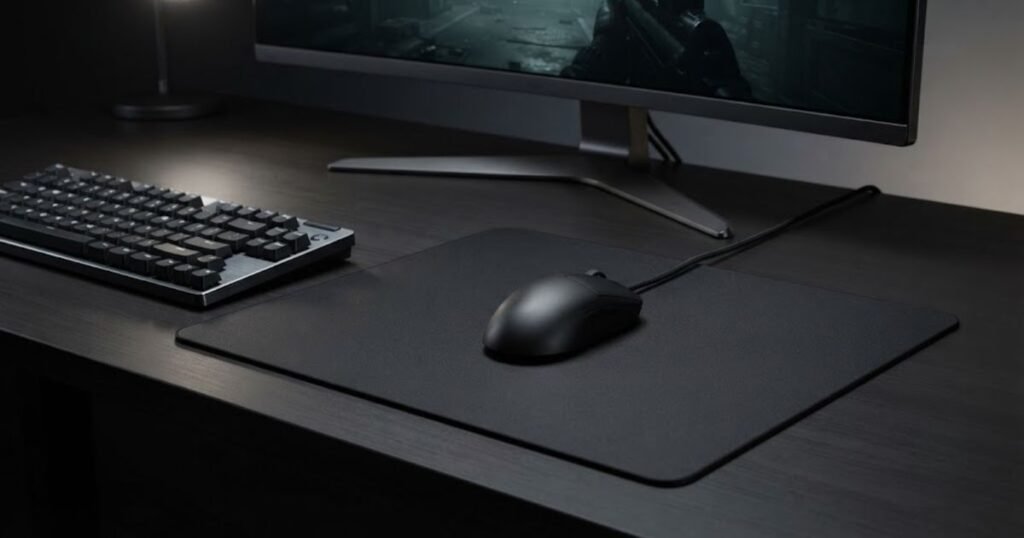
This is especially important when comparing products because assumptions based on the category alone can lead to inaccurate expectations. Manufacturer specifications provide the clearest reference for what a particular product actually uses.
Use this process when evaluating a hard mouse pad:
- Identify whether you prefer low-resistance or higher-resistance movement.
- Check the condition and characteristics of your current mouse skates.
- Confirm the surface material and construction of the hard mouse pad.
- Compare the pad’s dimensions with your available desk space and movement range.
- Verify the product specifications through the manufacturer’s official information.
This process keeps the decision focused on your actual setup rather than on the assumption that every hard mouse pad provides the same experience. A suitable choice comes from matching the surface, size, mouse, and movement preferences together.
Hard Mouse Pad Advantages vs. the Trade-Offs
Hard mouse pads prioritize low resistance, fast glide, a firm surface, and straightforward maintenance, while their trade-offs mainly involve comfort, stopping feel, flexibility, and interaction with mouse skates. Understanding both sides helps you judge whether the surface characteristics actually match your setup.
When the Advantages Match Your Priorities
A hard mouse pad can make sense when the characteristics you value most are easy mouse movement, a firm physical surface, and simple maintenance. These benefits are particularly relevant when you already know that you prefer less resistance rather than choosing a hard pad simply because it is marketed as fast.
Your priorities should come from how the mouse currently feels during normal use. If you prefer a freer glide and a solid surface, the main characteristics of a hard pad may align well with your setup.
The important point is that the advantages have value when they solve a preference or limitation you actually experience. A surface characteristic does not become a universal benefit simply because it is different from another type of mouse pad.
When the Trade-Offs Matter More
The trade-offs become more important when your setup depends on cushioning, stronger passive resistance, flexible storage, or a particular mouse skate combination. In those situations, the characteristics that make a hard pad attractive may not match what you want from the surface.
For example, a player who prefers more resistance when stopping the mouse may find a low-resistance surface less familiar. Someone who frequently transports gaming equipment may also find a rigid pad less convenient than a flexible one.
The same principle applies to comfort and mouse feet. A hard surface changes the physical interaction between the mouse and pad, so the complete setup matters more than the surface category alone.
Ultimately, the value of a hard mouse pad depends on the balance between its movement characteristics and the physical preferences of the player. The right choice is the one whose characteristics fit the way you actually use your mouse.
FAQ About Hard Mouse Pad Advantages
These frequently asked questions cover the core meaning of hard mouse pad advantages, the technical characteristics that affect mouse movement, and the practical considerations players may want to understand before choosing a hard surface.
What are the main advantages of a hard mouse pad?
The main advantages are low movement resistance, fast glide, rigid surface construction, and relatively simple routine maintenance. These characteristics create a distinct physical feel compared with softer mouse pad surfaces.
What is a hard mouse pad?
A hard mouse pad is a mouse surface made with a rigid material that maintains its shape during normal use. Unlike a soft fabric pad, it does not rely on a flexible or compressible surface.
What makes a hard mouse pad different from a soft mouse pad?
The main difference is the physical construction of the surface. A hard mouse pad provides a rigid surface, while a soft mouse pad typically uses a flexible material that can compress slightly under pressure.
What does fast glide mean on a hard mouse pad?
Fast glide means the mouse can move across the surface with relatively little resistance. This can make mouse movement feel freer, particularly during larger or faster movements.
Do hard mouse pads have less friction?
Many hard mouse pads are designed with relatively low surface resistance, which can make the mouse feel easier to move. The actual friction level varies according to the surface material, texture, mouse skates, and specific product.
How does a hard mouse pad affect FPS aiming?
A hard mouse pad can make rapid mouse movement feel less restricted because of its low-resistance surface. However, it does not automatically improve aim because stopping, corrections, sensitivity, and hand control still affect the result.
Are hard mouse pads good for high DPI?
A hard mouse pad can suit high-DPI setups because its low-resistance surface can provide a responsive movement feel. DPI alone does not determine whether the surface will suit a particular player.
8. Do hard mouse pads provide consistent glide?
A rigid surface can provide a consistent physical foundation because it does not compress like a soft surface. Glide can still change because of surface material, debris, wear, and the condition of the mouse skates.
Are hard mouse pads easier to clean?
Hard mouse pads are generally straightforward to wipe because their rigid surfaces can be cleaned directly. The appropriate cleaning method depends on the material and the manufacturer’s care instructions.
Do hard mouse pads help with flick shots?
A hard surface can make rapid mouse movement feel easier because it typically offers low resistance. This may suit players who prefer fast swipes, but flick-shot accuracy still depends on the player’s control and stopping technique.
Can a hard mouse pad wear down mouse skates faster?
Mouse skate wear depends on the surface, skate material, condition, and amount of use. Because the skates directly contact the hard surface, their condition can influence how the setup feels over time.
Should you switch from a soft mouse pad to a hard mouse pad?
Consider switching if you prefer lower resistance, faster glide, and a firmer surface and are comfortable with the related trade-offs. If you prefer more cushioning or passive stopping resistance, a hard surface may not match your preferences.
Overall, hard mouse pad advantages come from a specific combination of surface characteristics rather than a universal promise of better performance. Understanding those characteristics helps you decide whether a hard surface matches your mouse, sensitivity, and preferred movement feel.
Final Takeaway on Hard Mouse Pad Advantages
Hard mouse pad advantages come down to a few clear characteristics: low movement resistance, fast glide, rigid construction, and straightforward surface maintenance. These qualities can make a hard surface appealing to players who prefer freer mouse movement and a firm physical feel.
At the same time, those characteristics create trade-offs. A hard surface may provide less cushioning, less passive stopping resistance, and less flexibility for storage or transport. The interaction with mouse skates can also affect how the surface feels in actual use.
For FPS players, the most useful way to evaluate a hard mouse pad is to consider how its surface characteristics fit the existing setup. Sensitivity, movement range, mouse skates, available desk space, comfort, and stopping preferences all matter.
A hard mouse pad is therefore not automatically a better choice than another surface type. Its advantages are most meaningful when low resistance, fast glide, rigid construction, and easy maintenance match what the player actually wants from a mouse pad.
Thanks for reading, and we hope this guide helps you choose a mouse pad that fits your setup and gaming style.